How Much Does It Cost to Build a Gymnasium? 2026 Financing Guide
Discover how much it costs to build a gymnasium in 2026. Explore hard costs, soft costs, and strategic financing options like municipal bonds and USDA loans.
Baseline Construction Costs: What You Are Actually Financing
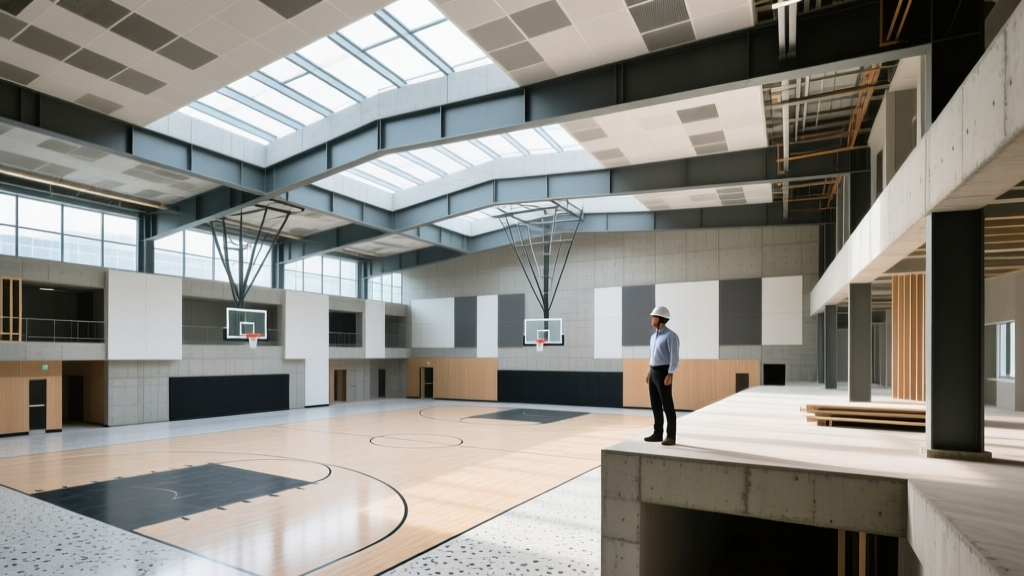
When evaluating how much does it cost to build a gymnasium, project sponsors must look beyond basic square-footage multipliers. The final capital requirement is dictated by the facility's intended use, structural span requirements, and mechanical load demands. In 2026, the national average for a standard K-12 educational gymnasium ranges from $380 to $475 per square foot, while private multi-sport complexes can achieve lower per-square-foot costs ($240 to $320) due to reduced finish work and optimized pre-engineered metal building (PEMB) envelopes.
| Facility Type | Avg. Size (Sq Ft) | Cost Per Sq Ft (2026) | Total Estimated Capital | Primary Structural System |
|---|---|---|---|---|
| K-12 School Gymnasium | 12,000 - 18,000 | $380 - $475 | $4.5M - $8.5M | Steel bar joist with masonry/CMU veneer |
| Collegiate / Competition Arena | 30,000 - 60,000 | $550 - $720 | $16.5M - $43.2M | Long-span steel truss with curtain wall |
| Private Multi-Sport Complex | 40,000 - 80,000 | $240 - $320 | $9.6M - $25.6M | Pre-engineered metal building (PEMB) with fabric roof |
| Community Center / YMCA | 15,000 - 25,000 | $410 - $500 | $6.1M - $12.5M | Structural steel with insulated metal panels (IMP) |
Deconstructing the Capital Stack: Hard vs. Soft Costs
Securing a construction loan or issuing bonds requires a precise breakdown of where capital will be deployed. Lenders and municipal underwriters will scrutinize your cost segregation. A common pitfall in gymnasium financing is undercapitalizing the soft costs, which frequently balloon during the permitting and architectural design phases.
Hard Costs (75% - 82% of Total Budget)
- Sitework & Foundations (12-15%): Gymnasiums require massive, unbroken concrete slab-on-grade foundations. Post-tensioned slabs are increasingly standard to prevent differential settlement that could ruin expensive hardwood flooring systems.
- Superstructure & Envelope (30-35%): Steel erection, roof decking, and exterior cladding. Long-span clear-span trusses (often 90 to 120 feet) command a premium over standard structural steel.
- MEP Systems (20-25%): High-bay HVAC is the hidden cost multiplier. Conditioning a 30-foot-tall volume of air requires specialized destratification fans and displacement ventilation to maintain court-level comfort without wasting energy at the ceiling.
- Interior Finishes & Flooring (10-15%): Includes acoustic wall paneling, bleacher systems, and MFMA-certified maple hardwood or high-performance polyurethane sports floors.
Soft Costs (18% - 25% of Total Budget)
- Architectural & Engineering (A/E) Fees: Typically 8% to 12% of hard costs. Structural engineering for seismic or high-wind zones will push this toward the upper limit.
- Permitting, Impact Fees & Testing: Varies wildly by municipality, but soil borings, concrete cylinder testing, and special inspections for long-span steel welds are mandatory line items.
- Owner's Contingency: Lenders require a minimum 5% to 10% hard-cost contingency held in reserve before issuing a notice to proceed.
Strategic Financing Vehicles for Gymnasium Projects
The source of your capital dictates your project timeline, procurement method (e.g., design-bid-build vs. design-build), and long-term debt service. Select the vehicle that aligns with your entity's tax status and revenue generation capability.
1. Municipal General Obligation (GO) Bonds
Best For: Public school districts and municipal parks departments.
GO bonds are backed by the full faith, credit, and taxing power of the issuing municipality. Because they carry the lowest risk profile, they offer the lowest interest rates. According to the U.S. Securities and Exchange Commission (SEC), municipal bond interest is often exempt from federal and sometimes state income taxes, making them highly attractive to institutional investors. However, issuing GO bonds typically requires a public referendum and voter approval, which can delay project starts by 12 to 18 months.
2. USDA Community Facilities (CF) Direct Loans
Best For: Rural school districts, tribal entities, and non-profit community centers.
If your project is located in a rural area (population under 20,000), the USDA Rural Development Community Facilities program is arguably the most favorable financing tool available in 2026. The USDA offers direct loans with amortization periods stretching up to 40 years, drastically lowering annual debt service payments. Interest rates are tiered based on median household income and can be fixed for the life of the loan, providing unmatched budget certainty for cash-strapped rural districts.
3. Commercial Construction to Permanent Loans
Best For: Private sports academies, for-profit indoor recreation centers, and private schools.
Private developers rely on commercial lenders. In the current rate environment, these loans are typically priced at the Secured Overnight Financing Rate (SOFR) plus a spread of 225 to 350 basis points. Lenders will require a minimum Debt Service Coverage Ratio (DSCR) of 1.25x, meaning your pro-forma net operating income (from memberships, tournament hosting fees, and concessions) must exceed your annual loan payments by 25%. You will need to inject 20% to 30% equity upfront.
Value Engineering to Reduce Principal Borrowing
Every $100,000 cut from the hard costs reduces your 30-year debt service by roughly $160,000 (assuming a 5.5% interest rate). Implement these specific value engineering (VE) strategies during the schematic design phase to shrink your financing requirement without compromising the athlete experience.
Structural Envelope Swaps
Instead of traditional structural steel bar joists with masonry backup walls, consider a Pre-Engineered Metal Building (PEMB) system with insulated metal panels (IMPs). For private sports complexes, a tension fabric structure (such as those utilizing high-tensile architectural membranes) supported by aluminum or steel arches can reduce superstructure costs by 18% to 24% while providing excellent natural daylighting, which slashes daytime HVAC and lighting loads.
Flooring and Acoustic Treatments
While elite collegiate facilities demand MFMA-certified Northern Hard Maple installed over a resilient sleeper system (costing $14 to $22 per sq ft installed), multi-purpose community gyms can utilize 8mm to 12mm poured polyurethane or heavy-duty interlocking vinyl sports tiles. These synthetic alternatives cost $6 to $10 per sq ft, offer superior durability for non-sporting events (like banquets or trade shows), and eliminate the need for annual sanding and refinishing, reducing long-term O&M expenses.
Step-by-Step Capital Assembly Framework
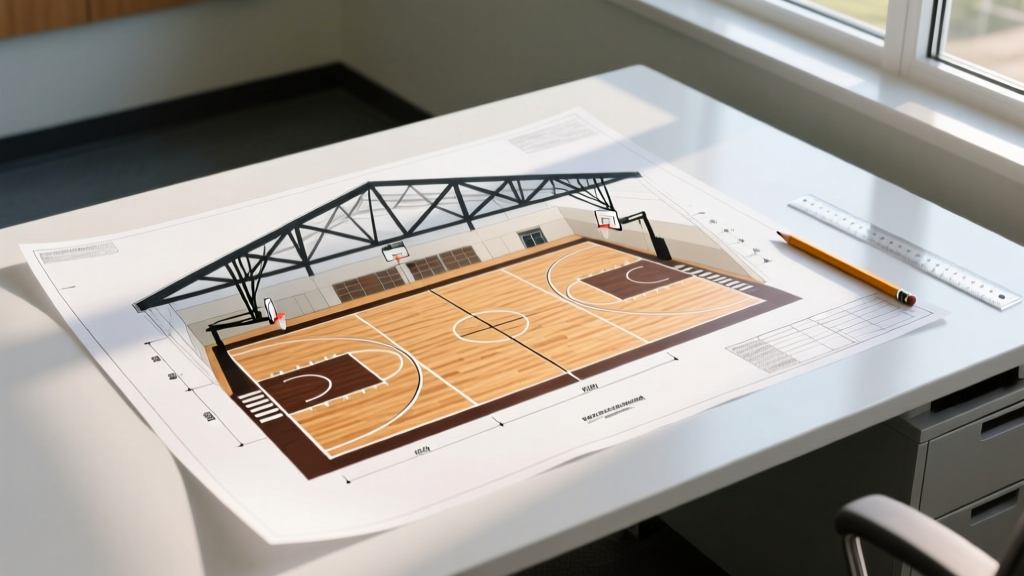
- Conduct a Feasibility & Revenue Study: Before approaching lenders, commission a third-party market study validating your revenue assumptions (e.g., projected club membership absorption rates or tournament hosting capacity).
- Secure Bridge Financing or Seed Capital: You will need liquid capital to fund the $150,000 to $300,000 required for architectural schematics and geotechnical engineering before a primary lender will underwrite the construction loan.
- Issue an RFP for a Design-Build Team: For commercial and private projects, a design-build delivery method locks in a Guaranteed Maximum Price (GMP) early, which lenders prefer over the open-ended financial risk of design-bid-build.
- Submit for Credit Enhancement or Bond Rating: If issuing municipal debt, engage a bond counsel and secure a credit rating from Moody's, S&P, or Fitch. Higher ratings directly translate to lower coupon rates and millions in savings over a 30-year term.
- Close and Draw: Execute the loan documents, establish the draw schedule tied to AIA G702/G703 pay applications, and issue the Notice to Proceed (NTP) to the general contractor.
Financial Advisor Insight: 'Do not value engineer the HVAC and building envelope to pay for aesthetic lobby finishes. In a high-volume gymnasium, a poorly insulated roof or undersized destratification system will result in utility penalties and localized condensation issues that will degrade your structural steel and flooring assets within five years.' — Director of Capital Planning, National Interscholastic Athletic Facilities Association
Written by
Elena RodriguezElena Rodriguez is a civil engineer and technical writer specializing in concrete technology, masonry systems, and ASTM/ACI compliance. She earned her B.S. in Civil Engineering from Texas A&M University and spent a decade at a materials testing laboratory, performing over 2,000 concrete compressive strength tests and masonry prism evaluations. Elena is an ACI-certified Field Testing Technician (Grade I) and a member of ASTM Committee C12 on Natural Building Stone. She currently consults on forensic engineering cases involving concrete failures and moisture intrusion. Based in San Antonio, TX, Elena is a proud member of the Society of Women Engineers (SWE) and coaches her daughter's FIRST Robotics team.
More from Elena Rodriguez
View all
Walls & Panels
Cost Analysis: Light Gauge Steel Framing Advantages and Disadvantages
Evaluate light gauge steel framing advantages and disadvantages through a strict cost analysis lens, comparing material, labor, and lifecycle expenses.
Aug 4, 2026

Walls & Panels
Gypsum Board Types: Exact Specifications, Thickness & Dimensions
Compare standard, Type X, and moisture-resistant gypsum board types. Get exact specifications, thicknesses, dimensions, and ASTM standards for your project.
Aug 4, 2026

Fire Resistance
Best Fire-Resistant Outdoor Decking Materials: 2026 Buyer Guide
Discover the best fire-resistant outdoor decking materials for 2026. Compare Class A PVC, aluminum, and hardwood options for WUI compliance and safety.
Aug 4, 2026