2026 Cost to Build a House in Los Angeles: Budget Guide
Plan your 2026 custom home build with our detailed budget guide. Breakdowns of hard costs, soft costs, and LA-specific building regulations.

The Baseline: 2026 Los Angeles Construction Costs
Building a custom home in Los Angeles requires navigating one of the most expensive and heavily regulated construction markets in the United States. For 2026, the baseline cost to build a house in Los Angeles ranges from $450 to $750 per square foot for hard construction costs, excluding land acquisition. For a standard 2,500-square-foot single-family residence, you should anticipate a hard cost baseline of $1.12 million to $1.87 million. When factoring in soft costs, architectural fees, and site work, the total project budget frequently lands between $1.5 million and $2.4 million.
These figures reflect the current pricing environment, characterized by stabilized but elevated material costs, high prevailing wages for skilled trades, and stringent municipal code requirements. Budget planning in this market demands precision; a 10% contingency fund is no longer sufficient. Financial advisors and construction managers now recommend a 15% to 20% contingency for Los Angeles residential builds to absorb unforeseen site conditions and plan-check revisions.
Hard Costs vs. Soft Costs in LA
A common budgeting error is underestimating soft costs. In Los Angeles, soft costs can consume up to 30% of your total budget, significantly higher than the national average of 15% to 20%. Below is a structural breakdown of how your capital will be allocated.
| Cost Category | Percentage of Total Budget | Estimated Cost (2,500 sq ft) | Key LA-Specific Drivers |
|---|---|---|---|
| Site Work & Foundation | 12% - 18% | $180,000 - $270,000 | Hillside grading, caissons, retaining walls, seismic soil prep. |
| Framing & Exterior | 20% - 25% | $300,000 - $375,000 | Engineered lumber, Simpson Strong-Tie moment frames, fire-rated siding. |
| MEP (Mechanical, Electrical, Plumbing) | 15% - 20% | $225,000 - $300,000 | Heat pump systems, Title 24 electrical loads, low-flow plumbing. |
| Interior Finishes | 20% - 25% | $300,000 - $375,000 | Custom cabinetry, engineered hardwood, Level 5 drywall finish. |
| Soft Costs (Permits, Design, Fees) | 20% - 30% | $300,000 - $450,000 | LADBS plan check, school district fees, Title 24 compliance modeling. |
Navigating LA's Unique Soft Costs
The Los Angeles Unified School District (LAUSD) levies developer fees on new residential construction. As of 2026, these fees can exceed $14,000 for a standard single-family home. Additionally, LADBS permit fees, plan check fees, and zoning clearance costs will easily add $25,000 to $40,000 to your soft cost ledger before ground is even broken.
To navigate the permitting process efficiently, many developers utilize the Los Angeles Department of Building and Safety (LADBS) Express Permit system for minor structural changes, but full custom builds require a rigorous plan check. Hiring an expediter (costing $5,000 to $12,000) is highly recommended to shepherd your plans through the LADBS correction cycles, ultimately saving months of carrying costs on your construction loan.
Step-by-Step Budget Allocation Framework
When structuring your construction draw schedule with a private lender or hard money lender, align your budget allocation with the physical phases of the build. This framework ensures cash flow matches project milestones.
- Phase 1: Pre-Construction & Site Prep (15% of Budget) - Clearing, demolition of existing structures, grading, and underground utilities. In areas like Silver Lake or the Hollywood Hills, expect to spend heavily on shoring and caisson drilling here.
- Phase 2: Foundation & Framing (25% of Budget) - Pouring the slab or raised foundation, erecting engineered wood or steel frames, and installing shear walls. This phase requires heavy capital outlays for lumber and steel.
- Phase 3: Dried-In & MEP Rough-Ins (25% of Budget) - Roofing, exterior weatherproofing, and the rough installation of HVAC, plumbing, and electrical. This phase must pass strict municipal inspections before drywall can begin.
- Phase 4: Interior Finishes & Trim (25% of Budget) - Insulation, drywall, flooring, custom millwork, and paint. This is where budget overruns most frequently occur due to material upgrades and change orders.
- Phase 5: Final Fixtures, Landscaping & Closeout (10% of Budget) - Installing appliances, lighting, final grading, hardscaping, and paying for final LADBS sign-offs and Certificate of Occupancy (C of O) issuance.
Material Selection: Where to Splurge and Save
Optimizing your material specifications is the most effective way to control the cost to build a house in Los Angeles without sacrificing structural integrity or resale value.
Where to Splurge
- The Building Envelope: Invest in high-performance dual-pane fiberglass or vinyl windows (such as Milgard Trinsic or Andersen 100 series) that exceed the baseline requirements of the California Energy Commission's Title 24 standards. Superior thermal resistance drastically reduces the tonnage required for your HVAC system.
- Seismic Hardware: Do not value-engineer structural ties. Specify Simpson Strong-Tie Strong-Wall shear walls and continuous tie-down systems. In a seismic zone, this hardware is non-negotiable for safety and insurance premium reductions.
- Insulation: Upgrade from standard R-13 batt insulation to closed-cell spray foam or dense-pack cellulose in exterior walls. This ensures airtightness and prevents the moisture intrusion common in LA's microclimates.
Where to Save
- Interior Trim: Use high-density MDF (Medium Density Fiberboard) for baseboards and crown molding instead of solid poplar or oak. Once painted, MDF is indistinguishable from solid wood but costs 40% less and resists warping in LA's dry heat.
- Countertops: Opt for high-end quartz (like Caesarstone or Silestone) rather than natural marble. Quartz offers superior stain resistance, requires zero sealing, and provides a similar luxury aesthetic at a lower installed cost.
- Exterior Cladding: Utilize fiber cement siding (like James Hardie) combined with strategic accent panels of stained cedar. This achieves the highly sought-after 'California Modern' look without the exorbitant material and labor costs of full masonry or stucco application.
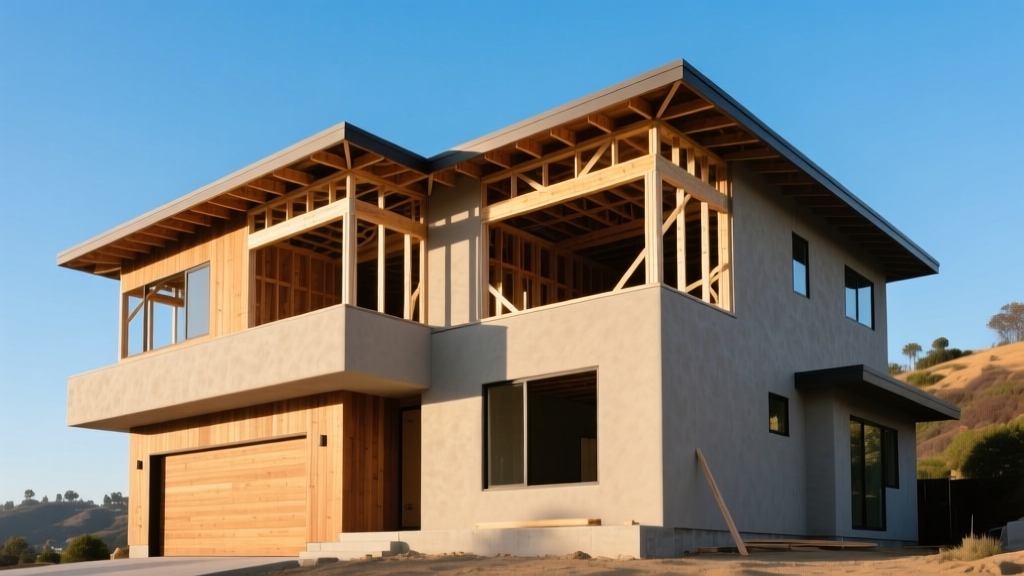
Hidden LA Budget Killers
If you are tearing down an older property to build new, the existing sewer lateral connecting to the city main is likely degraded. LA Sanitation requires a camera inspection and often mandates a full replacement of the lateral to the mainline, which can cost $8,000 to $15,000 and requires a separate encroachment permit.
Beyond standard construction expenses, Los Angeles presents unique geographical and regulatory hurdles that routinely destroy poorly planned budgets.
Hillside Ordinance Compliance: If your lot is located in a designated Hillside Area, you are subject to strict grading limits, view corridor protections, and mandatory fire-resistant landscaping. Retaining walls must be engineered for extreme lateral loads, often requiring deep caisson foundations that can add $75,000 to $150,000 to your site work budget.
Coastal Commission Overlay: Building in Venice, Pacific Palisades, or San Pedro triggers the California Coastal Commission's jurisdiction. The environmental review process can add 6 to 12 months to your pre-construction timeline, drastically increasing your architectural retainer and loan interest carry costs.
Title 24 Solar Mandates: California requires all new low-rise residential buildings to have photovoltaic (PV) solar systems sized to offset the home's electrical load. For a 2,500-square-foot home, expect to install a 6kW to 8kW system. Budget $18,000 to $25,000 for the solar array, inverters, and mandatory battery backup integration, which is increasingly required to meet zero-net-energy targets set by the California Building Industry Association and state regulators.
Financing Your LA Build
Securing capital for a custom build in Los Angeles typically requires a construction-to-permanent loan. Lenders will require a fully costed budget, architectural plans, and a licensed general contractor before underwriting the loan. Expect interest rates on construction draws to be 1.5% to 2.5% higher than standard 30-year fixed mortgages. To protect your budget, lock in your material pricing with suppliers early in the design phase and negotiate a guaranteed maximum price (GMP) contract with your builder to shift the risk of material inflation away from your ledger.
Written by
Sarah WhitfieldSarah Whitfield is a chartered quantity surveyor (MRICS) and construction cost analyst with 15 years of experience in material pricing, procurement strategy, and project budgeting. She earned her degree in Construction Management from the University of Reading (UK) and has worked on projects ranging from $2M custom homes to $180M mixed-use developments across North America and Europe. Sarah currently leads cost estimating for BuildMat Insight, maintaining a proprietary database of 4,000+ material price points updated quarterly. She is a frequent contributor to RSMeans cost data panels and has presented at the International Cost Engineering Council (ICEC) congress. Based in Denver, CO, Sarah is an avid trail runner and volunteer mentor for Women in Construction.
More from Sarah Whitfield
View all
Wood & Lumber
What Are the Different Types of Wood? A Builder's Guide
Compare structural softwoods, finish hardwoods, and engineered lumber. Analyze Janka ratings, MOE values, and 2026 pricing for construction.
Aug 4, 2026

Walls & Panels
Steel Framing vs Wood Framing: Corrosion and Moisture Defense
Compare steel framing vs wood framing for moisture resistance. Learn about galvanized coatings, condensation risks, and corrosion protection strategies.
Jul 21, 2026

Stone & Masonry
How to Cut Stone Veneer: Wet Saw vs Grinder Comparison
Compare the best tools for cutting stone veneer. We review wet saws, angle grinders, and chop saws to help you achieve clean, chip-free cuts.
Jul 21, 2026