Cost to Build a Pool in California: 2026 Detailed Breakdown
Discover the true cost to build a pool in California in 2026. Detailed breakdown of Title 24 mandates, soil engineering, and material pricing.
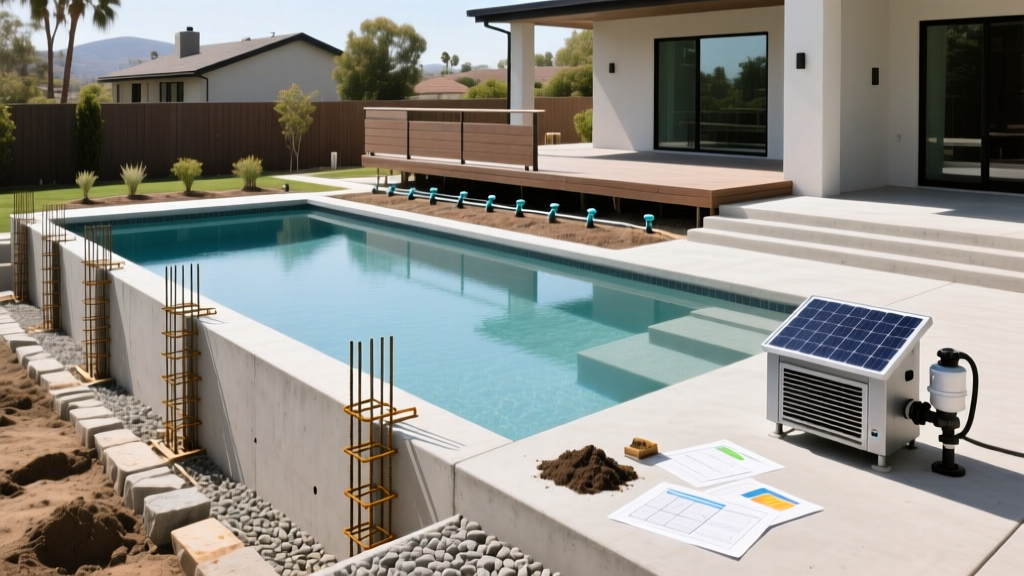
The California Premium: Why Pool Costs Differ Here
Estimating the cost to build a pool in California requires navigating a unique matrix of strict environmental regulations, seismic engineering requirements, and premium labor markets. In 2026, the baseline cost for a standard 14x28-foot inground gunite pool in California ranges from $85,000 to $115,000. However, luxury builds featuring infinity edges, integrated spas, and advanced automation frequently exceed $160,000. Unlike Sun Belt states with uniform building codes, California’s fragmented municipal requirements and extreme micro-climates mean your zip code directly dictates your excavation, permitting, and equipment costs.
2026 California Pool Cost Snapshot
- Base Inground Gunite (14x28): $85,000 - $115,000
- Luxury Custom Build (16x32+ with Spa): $140,000 - $220,000+
- Fiberglass Shell Installation: $70,000 - $95,000 (Crane access dependent)
- Average Timeline: 4 to 7 months (Permitting accounts for 30% of this time)
Line-Item Cost Breakdown: Where Your Budget Goes
To accurately forecast your budget, you must separate the physical construction phases from the regulatory compliance costs. The table below outlines the 2026 pricing matrix for a standard residential build, highlighting the specific California factors that inflate traditional national averages.
| Construction Phase | Standard Build Cost | Luxury Build Cost | California Regulatory Factor |
|---|---|---|---|
| Engineering & Permitting | $4,500 - $7,000 | $9,000 - $15,000 | Seismic soil reports, Title 24 energy plans |
| Excavation & Hauling | $8,000 - $14,000 | $18,000 - $35,000 | Dump fees, expansive clay/rock breaking |
| Steel, Plumbing & Shell | $28,000 - $38,000 | $45,000 - $65,000 | Schedule 40/80 PVC, #3/#4 rebar grids |
| Equipment & Electrical | $12,000 - $18,000 | $25,000 - $40,000 | Title 24 variable speed mandates, LED |
| Interior Finish & Decking | $18,000 - $25,000 | $40,000 - $75,000 | Water restriction curing methods, cool-deck |
Navigating California Title 24 & Drought Regulations
You cannot build a pool in California using national standard equipment. The California Energy Commission’s Title 24 Building Energy Efficiency Standards strictly dictate pool plumbing and electrical configurations. Furthermore, ongoing drought resilience mandates heavily influence accessory requirements.
The Title 24 Pump Mandate
Single-speed pool pumps are illegal for new construction in California. Title 24 requires the installation of variable-speed or multi-speed pumps that meet specific weighted energy factor (WEF) ratings. For a standard residential pool, expect to install a premium model like the Pentair IntelliFlo3 VSF or the Hayward TriStar VS. While these units cost between $1,800 and $2,800 upfront (compared to $800 for a banned single-speed model), they reduce pump energy consumption by up to 90%, ensuring your project passes municipal electrical inspections.
Evaporation and Water Conservation Laws
According to the California Department of Water Resources, outdoor water use accounts for a massive percentage of residential consumption. To combat this, municipalities like Los Angeles, San Diego, and Riverside mandate that all new pools be equipped with approved evaporation-reduction measures. This typically means budgeting $2,500 to $6,000 for an automatic safety cover (such as a Coverstar motorized track system) or a liquid solar cover injection system. Failing to include a compliant cover in your initial plans will result in an immediate permit rejection.
Soil & Seismic Engineering: The Hidden Variables
The most volatile line item in any California pool estimate is excavation. The state's diverse geology means your neighbor's pool cost might be entirely irrelevant to your own.
"In Southern California's inland empire, we frequently encounter Adobe clay. This expansive soil swells when wet and shrinks when dry, requiring over-excavation and engineered structural slabs to prevent the gunite shell from cracking during seasonal moisture shifts."
NorCal vs. SoCal Excavation Challenges
- Coastal & Valley Sand/Loam: Ideal for digging. Standard excavation costs apply ($4,000 - $7,000). Shoring may be required to prevent trench collapse.
- Inland Expansive Clay: Requires soil replacement or chemical stabilization. Adds $5,000 - $12,000 to the budget for engineered backfill and deeper grade beams.
- Foothills & Fractured Rock: Common in NorCal and SoCal canyons. Standard excavators cannot penetrate this; it requires hydraulic rock breakers or blasting. Rock clauses in contracts can add $15,000 to $40,000+ if solid bedrock is struck.
Before signing a contract, always review the geotechnical soil report. Ensure your contractor’s bid includes a clear "rock clause" that defines exactly what constitutes rock and the per-cubic-yard cost for removal, preventing catastrophic change orders mid-dig.
Material Selection: Interior Finishes & Decking
Standard white marcite plaster is rarely used in modern California builds due to its susceptibility to staining and short lifespan (5-7 years). The harsh UV exposure and mineral-heavy water in many CA districts demand more resilient finishes.
Pebble Aggregate (e.g., PebbleTec)
Cost: $12 - $18 per sq. ft.
Lifespan: 20+ years.
Verdict: The gold standard for CA. Highly resistant to UV fading and chemical imbalance. Provides excellent slip resistance for safety compliance.
Quartz Finish (e.g., Diamond Brite)
Cost: $8 - $12 per sq. ft.
Lifespan: 10-15 years.
Verdict: A smooth, durable middle-ground. Excellent for families wanting a smoother feel underfoot than pebble, but requires stricter water chemistry maintenance.
Decking: Beating the California Heat
Summer surface temperatures on standard concrete in the Central Valley or Inland Empire can exceed 140°F, making barefoot walking dangerous. Budgeting for thermal-resistant decking is non-negotiable.
- Stamped Concrete with Cool-Deck Coating: $14 - $22/sq. ft. (Requires reapplication of reflective coatings every 3-5 years).
- Travertine Pavers: $28 - $45/sq. ft. (Naturally stays 20-30 degrees cooler than concrete due to its porous structure; highly recommended for luxury builds).
- Artificial Turf Integration: $10 - $16/sq. ft. (Popular in drought-prone zones to eliminate irrigation needs around the pool perimeter).
Permitting, Fees, and the CSLB Requirement
California’s permitting process is notoriously slow. Expect to wait 4 to 12 weeks for plan checks, depending on whether you are in a strict coastal commission zone or a faster inland county. Permit fees alone range from $1,500 to $4,500, covering structural, electrical, plumbing, and grading reviews.
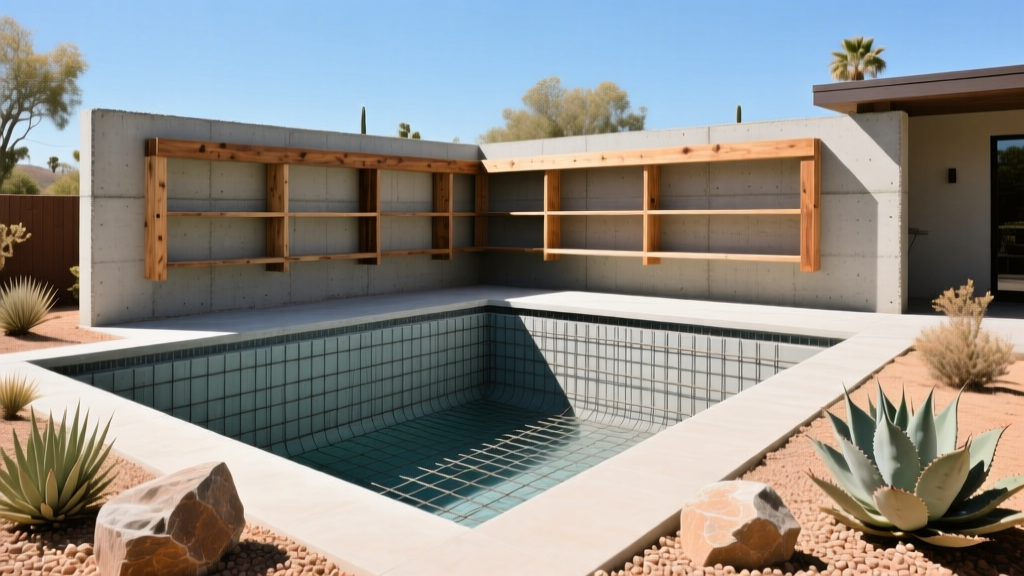
Strategic Cost-Saving Framework for CA Homeowners
If the 2026 estimates stretch your budget, utilize this decision framework to reduce costs without violating state codes or compromising structural integrity:
- Optimize the Plumbing Runs: Place the equipment pad as close to the pool and the main electrical panel as possible. Long trenching runs for PVC and copper wire add thousands in labor and material.
- Choose a Rectangular Geometry: Freeform pools require complex wooden forming and custom steel bending. A geometric rectangular design reduces shotcrete waste and forming labor by up to 15%.
- Phase the Landscaping: Municipalities often require basic erosion control and fencing for the final pool inspection, but you can usually phase in the expensive travertine decking and mature landscaping in year two, provided the base grading is approved.
- Leverage Solar Heating: While Title 24 mandates efficient pumps, heating the pool via a natural gas heater is incredibly expensive in California. Installing a dedicated solar thermal pool heating array on your south-facing roof can eliminate monthly heating costs and often qualifies for local utility rebates.
By understanding the intersection of California's environmental mandates and geological realities, you can accurately forecast your budget, avoid predatory contractor change-orders, and build a compliant, enduring backyard oasis.
Written by
Elena RodriguezElena Rodriguez is a civil engineer and technical writer specializing in concrete technology, masonry systems, and ASTM/ACI compliance. She earned her B.S. in Civil Engineering from Texas A&M University and spent a decade at a materials testing laboratory, performing over 2,000 concrete compressive strength tests and masonry prism evaluations. Elena is an ACI-certified Field Testing Technician (Grade I) and a member of ASTM Committee C12 on Natural Building Stone. She currently consults on forensic engineering cases involving concrete failures and moisture intrusion. Based in San Antonio, TX, Elena is a proud member of the Society of Women Engineers (SWE) and coaches her daughter's FIRST Robotics team.
More from Elena Rodriguez
View all
Walls & Panels
Cost Analysis: Light Gauge Steel Framing Advantages and Disadvantages
Evaluate light gauge steel framing advantages and disadvantages through a strict cost analysis lens, comparing material, labor, and lifecycle expenses.
Aug 4, 2026

Walls & Panels
Gypsum Board Types: Exact Specifications, Thickness & Dimensions
Compare standard, Type X, and moisture-resistant gypsum board types. Get exact specifications, thicknesses, dimensions, and ASTM standards for your project.
Aug 4, 2026

Fire Resistance
Best Fire-Resistant Outdoor Decking Materials: 2026 Buyer Guide
Discover the best fire-resistant outdoor decking materials for 2026. Compare Class A PVC, aluminum, and hardwood options for WUI compliance and safety.
Aug 4, 2026