True Cost to Build a House in GA: 2026 Regional Price Analysis
Analyze the 2026 cost to build a house in GA. Compare regional prices across Atlanta, Savannah, and rural areas with expert labor and material breakdowns.
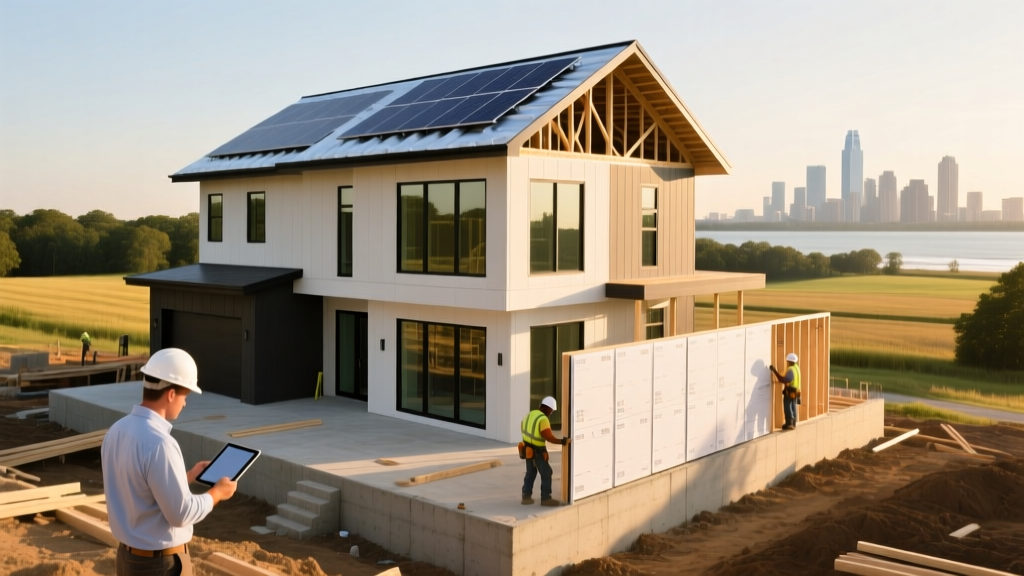
Decoding the Cost to Build a House in GA
Estimating the cost to build a house in GA requires more than a simple per-square-foot multiplier. Georgia's diverse topography—from the dense urban corridors of Metro Atlanta to the hurricane-prone coastal plains of Savannah and the mountainous terrain of Fannin County—creates massive pricing disparities. In 2026, the baseline average for custom residential construction in Georgia sits between $165 and $230 per square foot. However, this aggregate masks severe regional variances driven by local labor premiums, geotechnical challenges, and strict micro-climate building codes.
This regional price analysis breaks down the exact material, labor, and site-preparation costs across Georgia's four primary construction zones. By understanding these localized variables, you can accurately budget for your specific lot and avoid the hidden expenses that routinely derail Georgia building projects.
Regional Construction Cost Matrix
Labor rates and material logistics shift dramatically depending on your county. The following matrix outlines the 2026 estimated costs per square foot for a mid-to-high-end custom build (2,500–3,500 sq. ft.) across the state's primary regions.
| Region | Counties (Examples) | Cost per Sq. Ft. | Primary Cost Drivers |
|---|---|---|---|
| Metro Atlanta | Fulton, Cobb, Gwinnett | $190 - $260 | High union/subcontractor demand, strict tree ordinances, complex permitting, premium lot prep. |
| Coastal Georgia | Chatham, Glynn, Liberty | $200 - $275 | Hurricane wind mitigation, impact glazing, elevated foundations, flood zone engineering. |
| North GA Mountains | Fannin, Union, Rabun | $180 - $250 | Sloped lot excavation, retaining walls, well/septic systems, winter construction delays. |
| Rural / South GA | Valdosta, Albany, Tifton | $140 - $185 | Lower labor costs, slab-on-grade foundations, fewer zoning hurdles, easier site access. |
Hidden Geotechnical Costs: The Piedmont Red Clay Factor
If you are building in the Piedmont region (which includes Atlanta, Athens, and Augusta), you will encounter the state's notorious red clay. This is not merely a landscaping issue; it is a structural liability. Georgia's Piedmont soil is highly expansive, meaning it swells significantly when wet and shrinks during droughts. This cyclical movement can easily crack standard concrete strip footings.
Never skip the geotechnical survey in the Piedmont. A standard soil boring test costs between $1,500 and $3,000. If the engineer identifies shallow bedrock (saprolite) or highly expansive clay, your foundation costs will increase. You may be required to install drilled concrete piers or grade beams, which can add $15,000 to $35,000 to your site-work budget. Furthermore, blasting shallow bedrock in suburban Atlanta carries heavy vibration-monitoring fees and strict municipal blast permits.
Coastal Wind Codes and Flood Mitigation
Building on the coast in Chatham (Savannah) or Glynn (Brunswick) counties triggers stringent International Residential Code (IRC) wind-speed requirements. According to the Georgia Department of Community Affairs, coastal zones require structures to withstand ultimate design wind speeds of 140 to 150 mph.
Mandatory Coastal Upgrades
- Continuous Load Path Tie-Downs: Standard framing nails are insufficient. Coastal builds require engineered hurricane straps, Simpson Strong-Tie holdowns, and continuous threaded rods anchoring the roof trusses directly to the foundation.
- Structural Sheathing: Builders must upgrade from standard OSB to 5/8-inch CDX plywood or integrated structural panels (like the ZIP System) with specific 6-inch edge nail patterns to prevent roof deck uplift.
- Impact-Resistant Glazing: Windows and doors must feature laminated impact glass or be protected by engineered shutters. Budget an additional $18,000 to $30,000 for a 2,500 sq. ft. home solely for impact-rated fenestration.
- Elevated Foundations: FEMA flood maps dictate Base Flood Elevations (BFE). Raising a slab on engineered fill or building on structural piling adds $25,000 to $60,000 to the foundation phase.
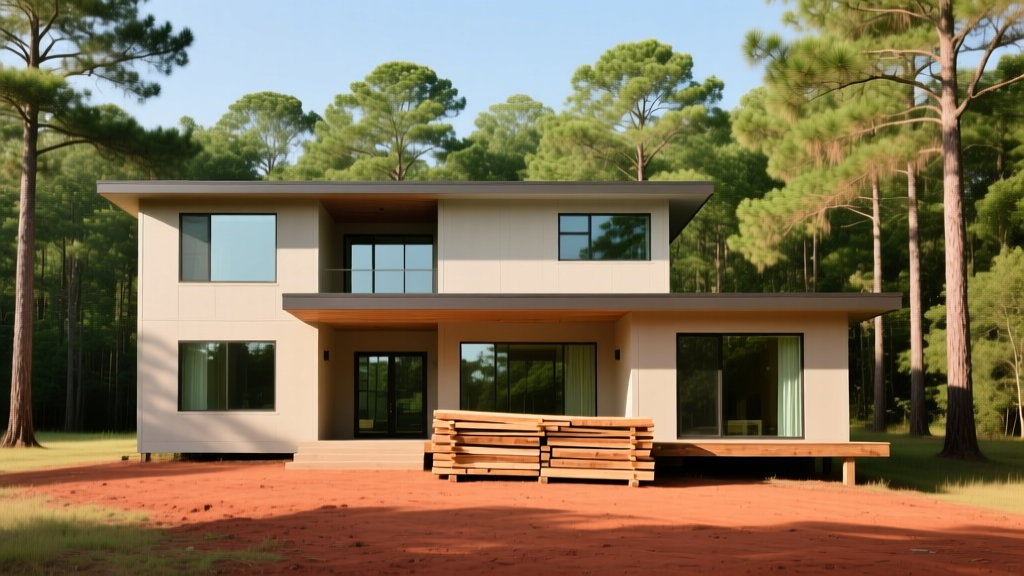
HVAC Sizing for Georgia's Latent Heat
A common failure mode in Georgia new builds is undersized or improperly specified HVAC equipment. Georgia summers are defined by extreme latent heat (humidity). A standard 14 SEER unit will cool the air but fail to remove adequate moisture, leading to mold growth inside wall cavities and warped hardwood floors.
For 2026 builds, insist on a minimum 16 SEER2 two-stage or variable-speed heat pump. These units run at lower capacities for longer cycles, which is critical for latent load removal. Additionally, mandate a Manual J load calculation from a certified third-party rater—do not allow your HVAC contractor to use the outdated "rule of thumb" (e.g., 1 ton per 500 sq. ft.). In a tightly sealed, well-insulated modern Georgia home, the actual requirement is often closer to 1 ton per 700 or 800 square feet. Pair this with an independent, ducted whole-house dehumidifier (such as an AprilAire or Ultra-Aire model) tied to the central return plenum.
Permitting, Impact Fees, and Tree Ordinances
Soft costs in Georgia can consume 10% to 15% of your total budget. In Metro Atlanta, the National Association of Home Builders notes that municipal impact fees and water/sewer tap fees are among the highest in the Southeast. Expect to pay $4,500 to $8,000 just for water and sewer capacity fees in counties like Cobb and Gwinnett.
The City of Atlanta enforces one of the strictest tree protection ordinances in the country. If your lot contains "specimen trees" (hardwoods over 24 inches in diameter or pines over 30 inches), you cannot simply clear them for your driveway or footprint. Removal requires a permit, an arborist report, and mandatory replanting or into a tree recompense fund. Fines for unauthorized removal can exceed $2,500 per inch of trunk diameter. Always commission a private arborist survey before purchasing a heavily wooded infill lot in the city limits.
Termite and Moisture Mitigation Strategies
The southern half of Georgia, particularly below the I-20 corridor, is a high-risk zone for Formosan subterranean termites. Standard soil treatments degrade over time. For maximum protection, specify a permanent termite baiting system (like Sentricon) combined with a pre-construction borate wood treatment (such as Bora-Care) applied to all structural framing lumber up to four feet above the slab before insulation and drywall are installed.
For homes with crawlspaces, encapsulation is no longer optional in Georgia's climate. A sealed crawlspace with a 12-mil to 20-mil polyethylene vapor barrier, sealed foundation vents, and a dedicated dehumidifier will prevent floor joist rot, lower your cooling bills by up to 15%, and deter termite colonization by eliminating the moisture they require to thrive.
Final Budgeting Framework
To accurately forecast your specific project, start with the regional baseline matrix above, then apply the following localized modifiers:
- Add 8-12% if your lot requires extensive tree mitigation, blasting, or retaining walls.
- Add 10-15% if you are building in a designated Coastal High Hazard Area (V-Zone) requiring structural pilings.
- Deduct 5-10% if you are building in rural South Georgia on a flat, easily accessible lot with municipal water/sewer already at the street.
By aligning your material specifications and site-work expectations with Georgia's unique environmental and regulatory landscape, you can lock in accurate contractor bids and prevent mid-construction budget overruns.
Written by
Marcus ChenMarcus Chen is a licensed structural engineer (PE) and building materials analyst with over 12 years of experience across residential, commercial, and industrial construction. He holds a Master of Science in Civil Engineering from UC Berkeley and spent six years at Thornton Tomasetti before transitioning to independent consulting and technical writing. Marcus specializes in material selection for seismic-prone regions, concrete reinforcement strategies, and lifecycle cost analysis. His work has been cited by the American Concrete Institute (ACI) and the Structural Engineers Association of California (SEAOC). When he is not on a job site or at his desk, you will find him hiking the Sierra Nevada or restoring a 1920s craftsman bungalow in Oakland, CA.
More from Marcus Chen
View all
Construction Cost
How Much Did the Eiffel Tower Cost to Build?
How much did the Eiffel Tower cost to build in 1889? We adjust for inflation and compare its budget to modern skyscraper construction.
Aug 4, 2026

Fire Resistance
What Is a Fire Resistant Material? Testing & Certification Guide
Discover what is a fire resistant material through ASTM and UL testing. Learn how fire ratings, certifications, and assemblies work in construction.
Aug 4, 2026

Construction Cost
How Much Did the Burj Khalifa Cost to Build?
How much did the Burj Khalifa cost to build? We break down the $1.5B project and extract 5 money-saving strategies for your next build.
Jul 30, 2026