How to Finance the Cost to Build a Handicap Ramp
Learn how to finance the cost to build a handicap ramp. Explore VA grants, Medicaid waivers, tax deductions, and low-interest loans for 2026.
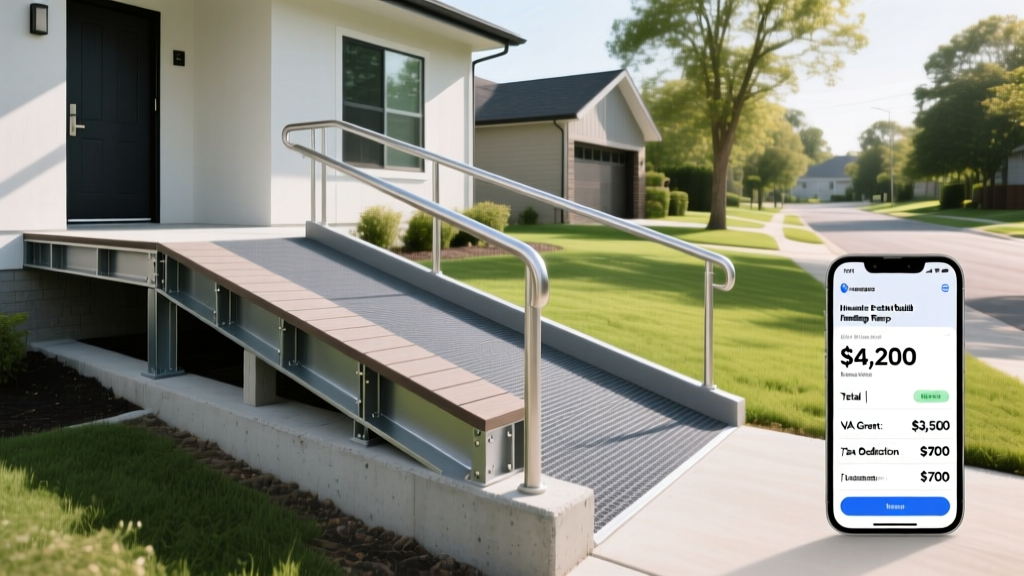
The True Cost to Build a Handicap Ramp in 2026
Before securing funding, you must establish an accurate baseline budget. The total cost to build a handicap ramp typically ranges from $1,600 to $4,500, heavily dependent on the material chosen, the required linear footage, and local permit fees. The Americans with Disabilities Act (ADA) recommends a 1:12 slope ratio, meaning every 1 inch of vertical rise requires 12 inches (1 foot) of ramp length. For a standard porch with a 24-inch rise, you will need a minimum 24-foot ramp, plus landing platforms.
| Material Type | Cost per Linear Foot | Expected Lifespan | Maintenance Level | Property Value Impact |
|---|---|---|---|---|
| Pressure-Treated Wood | $100 - $175 | 10 - 15 years | High (annual sealing) | Marginal Increase |
| Modular Aluminum | $150 - $250 | 20+ years | Low | None (Removable) |
| Galvanized Steel | $200 - $300 | 25+ years | Medium (rust checks) | Marginal Increase |
| Poured Concrete | $250 - $400 | 30+ years | Zero | Permanent Increase |
Government Grants and Assistance Programs
Free capital should always be your first financing avenue. Several federal and state programs are specifically designed to offset the cost to build a handicap ramp for qualifying individuals.
Veterans Affairs (VA) Housing Grants
For veterans, the Department of Veterans Affairs offers two primary grant structures. According to the VA Housing Grants program, the Home Improvements and Structural Alterations (HISA) grant provides up to $6,800 for veterans with a service-connected disability rating of 50% or higher. Veterans with non-service-connected disabilities or lower ratings can receive up to $2,000. For severe mobility impairments (such as loss of limbs or blindness), the Specially Adapted Housing (SHA) grant offers over $117,000, which easily covers comprehensive ramp and home modification systems.
USDA Section 504 Home Repair Program
Homeowners in designated rural areas can leverage the USDA Section 504 program. This initiative provides grants up to $10,000 specifically to remove health and safety hazards. To qualify for the grant portion (which does not require repayment), you must own and occupy the home, have an income below 50% of the area median, and be at least 62 years old. Younger applicants in rural zones may still qualify for the loan portion, which offers a fixed 1% interest rate over a 20-year term.
Medicaid HCBS Waivers
State-level Medicaid Home and Community-Based Services (HCBS) waivers often cover environmental accessibility adaptations. Unlike standard Medicaid, HCBS waivers are designed to keep individuals out of nursing facilities. Coverage limits vary wildly by state—ranging from $2,500 to $15,000 per year—and funds are often distributed on a first-come, first-served basis due to waitlists. Contact your local Area Agency on Aging (AAA) to check your state's specific waiver availability.
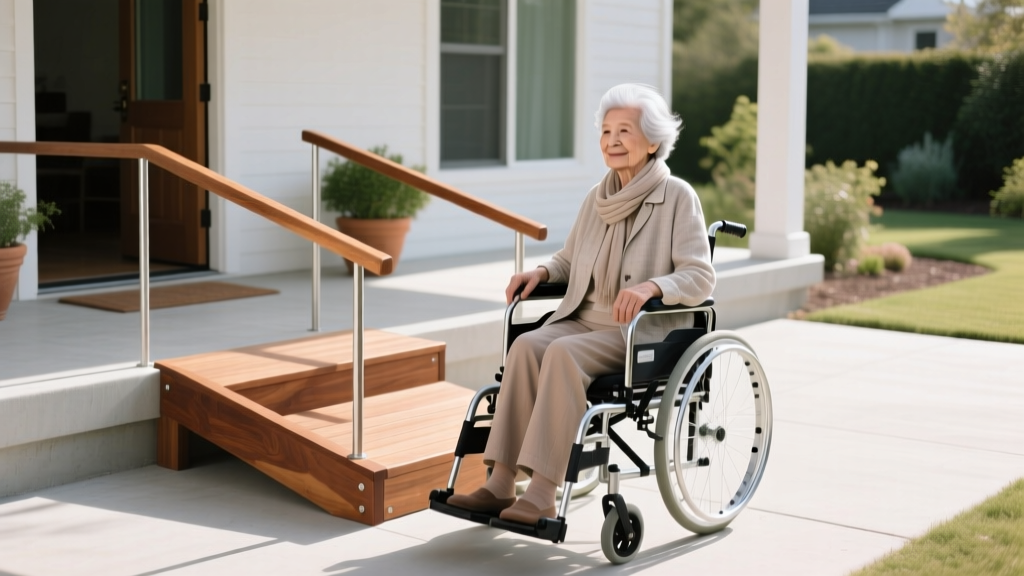
Private Financing: Loans and Credit Matrix
If you do not qualify for grants, or if grant funds fall short of your total project cost, private financing bridges the gap. The optimal choice depends on your equity position, credit score, and repayment timeline.
| Financing Method | Est. APR (2026) | Best For | Pros | Cons |
|---|---|---|---|---|
| Home Equity Line of Credit (HELOC) | 7.5% - 9.5% | Costs over $10,000 (bundled projects) | Interest may be tax-deductible; draw as needed | Uses home as collateral; variable rates |
| Unsecured Personal Loan | 9.0% - 16.0% | Fast funding ($2k - $10k) | No collateral required; fixed monthly payments | Higher interest rates; origination fees |
| Medical Credit Card (e.g., CareCredit) | 0% promo / 26%+ post-promo | Exact short-term payoff (< 24 mos) | 0% interest if paid in full during promo period | Severe penalty APR if balance remains after promo |
| FHA 203(k) Limited | Current Mortgage Rates | Bundling ramp with major home renovations | Low down payment; rolls into primary mortgage | Heavy paperwork; requires FHA-approved contractors |
The Tax Deduction Strategy: IRS Publication 502
Financing the cost to build a handicap ramp is only half the equation; recovering capital through tax deductions is the other. According to IRS Publication 502, you can deduct the cost of a handicap ramp as a medical expense on Schedule A, but only the amount that exceeds 7.5% of your Adjusted Gross Income (AGI). Furthermore, the IRS mandates that you must subtract any increase in your property's value from the total cost of the improvement.
This creates a critical decision framework regarding material selection:
- Poured Concrete Ramps: Because concrete is a permanent fixture, an appraiser will likely assign an increased market value to your home. If the ramp costs $4,000 and increases your home value by $2,500, you can only deduct $1,500 as a medical expense.
- Modular Aluminum Ramps: Because these systems are bolted together and can be completely removed without damaging the property, they are generally classified as removable medical equipment. They add $0 to your home's appraised value, allowing you to deduct 100% of the $4,000 cost, provided you clear the 7.5% AGI threshold.
Step-by-Step Execution Plan
Follow this exact sequence to minimize out-of-pocket expenses and ensure compliance with grant requirements.
- Obtain Three Itemized Bids: Most government programs (VA, USDA, Medicaid) require at least two to three itemized contractor bids before approving funds. Ensure bids explicitly separate material costs, labor, and permit fees.
- Verify ADA Compliance on Paper: Before signing a contract, verify the contractor's blueprint includes a 1:12 slope ratio, 36-inch minimum width, and edge protection. Non-compliant ramps will trigger automatic rejection from VA and Medicaid auditors.
- Apply for Grants First: Submit your HISA, SHA, or USDA Section 504 applications. These take 30 to 90 days to process. Do not begin construction until you receive a formal approval letter; retroactive reimbursement is rarely granted.
- Bridge the Gap: If the grant only covers $6,800 and your bid is $9,500, secure a personal loan or utilize a 0% medical credit card strictly for the $2,700 difference.
- Retain All Documentation: Keep the final building permit, the certificate of occupancy, the contractor's invoice, and proof of payment. You will need these to file your Schedule A medical deduction during the next tax season.
Written by
Sarah WhitfieldSarah Whitfield is a chartered quantity surveyor (MRICS) and construction cost analyst with 15 years of experience in material pricing, procurement strategy, and project budgeting. She earned her degree in Construction Management from the University of Reading (UK) and has worked on projects ranging from $2M custom homes to $180M mixed-use developments across North America and Europe. Sarah currently leads cost estimating for BuildMat Insight, maintaining a proprietary database of 4,000+ material price points updated quarterly. She is a frequent contributor to RSMeans cost data panels and has presented at the International Cost Engineering Council (ICEC) congress. Based in Denver, CO, Sarah is an avid trail runner and volunteer mentor for Women in Construction.
More from Sarah Whitfield
View all
Wood & Lumber
What Are the Different Types of Wood? A Builder's Guide
Compare structural softwoods, finish hardwoods, and engineered lumber. Analyze Janka ratings, MOE values, and 2026 pricing for construction.
Aug 4, 2026

Walls & Panels
Steel Framing vs Wood Framing: Corrosion and Moisture Defense
Compare steel framing vs wood framing for moisture resistance. Learn about galvanized coatings, condensation risks, and corrosion protection strategies.
Jul 21, 2026

Stone & Masonry
How to Cut Stone Veneer: Wet Saw vs Grinder Comparison
Compare the best tools for cutting stone veneer. We review wet saws, angle grinders, and chop saws to help you achieve clean, chip-free cuts.
Jul 21, 2026