How to Finance the Cost to Build a Storage Unit Complex
Discover how to finance the cost to build a storage unit complex. Compare construction loans, LTC ratios, and DSCR requirements for developers.
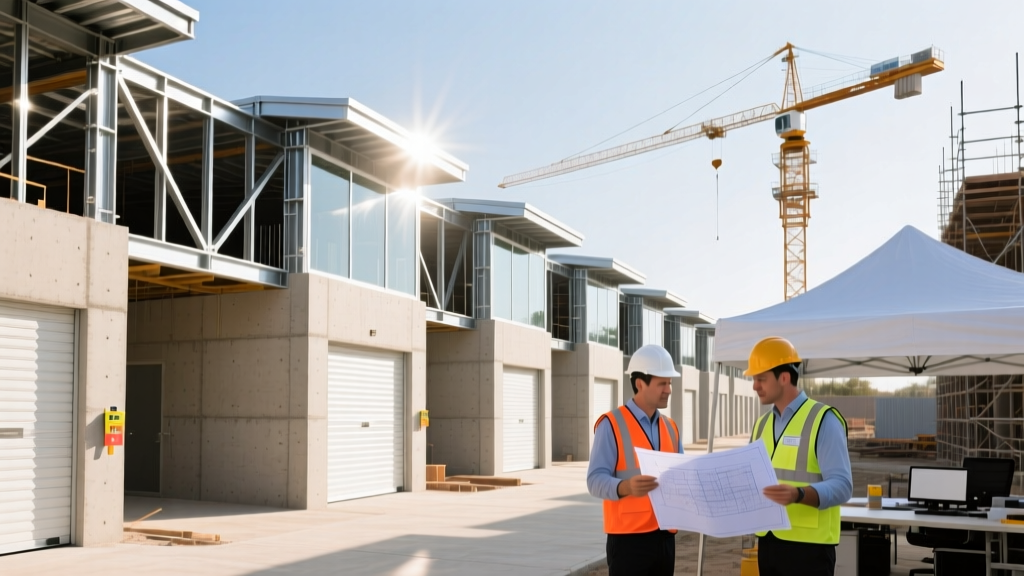
The 2026 Capital Stack: Breaking Down the Cost to Build a Storage Unit Complex
Securing capital for ground-up self-storage development requires a fundamentally different approach than financing multifamily or industrial assets. Lenders underwrite storage facilities based on highly granular, unit-by-unit lease-up projections rather than bulk tenant contracts. Understanding the true cost to build a storage unit complex is the prerequisite for structuring a viable capital stack that satisfies both senior lenders and equity partners in the current economic climate.
In 2026, the baseline hard costs for a standard single-story, non-climate-controlled storage facility range from $85 to $115 per rentable square foot. Multi-story, climate-controlled facilities with advanced security integrations and elevators push hard costs to $140 to $190 per square foot. When you factor in soft costs (architectural, engineering, permitting, and legal fees), which typically run 15% to 22% of hard costs, and land acquisition, the total project cost for a 100,000-square-foot facility frequently lands between $12 million and $18 million.
Capital Stack Snapshot: 100,000 Sq. Ft. Climate-Controlled Facility
- Total Project Cost: $16,500,000 ($165/sq. ft. all-in)
- Senior Construction Debt (65% LTC): $10,725,000
- Mezzanine Debt / Preferred Equity (15%): $2,475,000
- General Partner / Common Equity (20%): $3,300,000
Primary Financing Vehicles for Ground-Up Storage
Because self-storage is considered a specialized, operation-intensive commercial asset class, traditional retail banks often shy away from construction-to-permanent transitions. Developers must target lenders who specialize in the storage sector or utilize specific commercial real estate finance vehicles. According to the Mortgage Bankers Association, commercial construction lending has tightened, making the selection of the right debt vehicle critical.
| Loan Type | Typical LTC | Rate Environment (2026) | Best Application |
|---|---|---|---|
| Bank Construction-to-Perm | 60% - 70% | SOFR + 275-350 bps | Strong sponsors with 3+ stabilized exits |
| Private Credit / Debt Funds | 70% - 80% | 9.0% - 11.5% Fixed/Floating | Speed to close, complex lease-up markets |
| SBA 7(a) Loan | Up to 90% | Prime + 2.25% - 2.75% | Owner-operators running the facility daily |
| CMBS (Takeout Only) | 65% - 75% LTV | Treasury + 250-300 bps | Stabilized assets (85%+ occupied) |
A common misconception among new developers is that SBA 504 loans are a viable route for passive storage investments. However, the SBA requires 51% owner-occupancy for 504 loans, which rarely applies to self-storage. The SBA 7(a) Loan Program is a better fit, but it still requires the borrower to be an active owner-operator managing the business, effectively ruling out passive syndication models.
Navigating the Construction-to-Permanent Transition
The most perilous phase of financing the cost to build a storage unit complex is the transition from the construction loan to the permanent takeout loan. Unlike multifamily properties, which can secure pre-leasing commitments, storage facilities open with zero occupancy. Lenders mitigate this risk through stringent interest reserves and mini-perm bridge structures.
The Interest Reserve and Draw Schedules
Construction lenders will require an interest reserve funded upfront from the loan proceeds or sponsor equity. For a 14-month build timeline, expect the lender to underwrite an 18-month interest reserve to account for weather delays, supply chain disruptions, and the initial lease-up phase. Draws are disbursed monthly based on the percentage of completion, verified by a third-party engineering inspector. If the facility fails to hit a 60% occupancy milestone by month 12 of operations, the lender will not execute the permanent modification.
If your facility stalls at 65% occupancy when the 24-month construction loan matures, the lender will convert the debt to a 'mini-perm' bridge loan. This triggers a 100 to 200 basis point penalty spread, drastically increasing your debt service and potentially causing a cash-flow default. Always negotiate a minimum of two 6-month extension options in your initial term sheet, contingent on hitting specific Net Operating Income (NOI) hurdles rather than pure physical occupancy.
Underwriting the DSCR Hurdle and Lease-Up Risk
Permanent lenders underwriting a construction-to-permanent loan will stress-test your stabilized Debt Service Coverage Ratio (DSCR). In 2026, senior lenders require a minimum stabilized DSCR of 1.25x to 1.35x for self-storage assets. They do not use your pro forma Year 3 revenue; they use a stress-tested model that assumes a 10% drop in market rental rates and a 15% increase in operating expenses.
To secure your takeout financing, your initial underwriting must prove that the facility can achieve a 1.30x DSCR at 85% occupancy, using conservative street-rate assumptions. If your market is saturated with new supply, lenders will apply a 'concession haircut,' assuming you will have to offer two months of free rent to drive traffic, which lowers your effective gross income and compresses your DSCR.
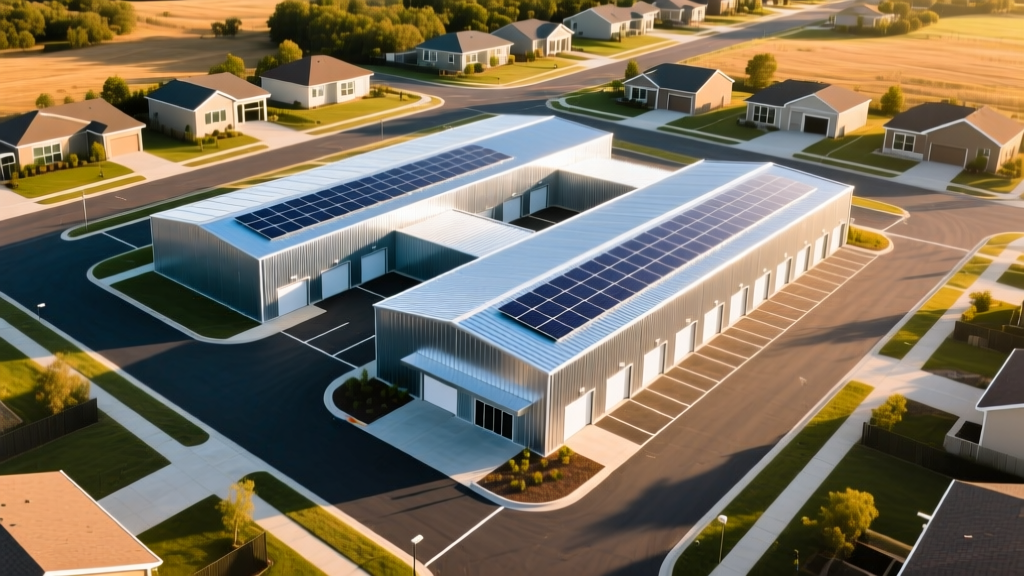
Structuring the Equity: Syndication and Waterfalls
Because senior debt only covers 60% to 70% of the cost to build a storage unit complex, the remaining capital must be sourced through equity. For projects exceeding $10 million, General Partners (GPs) typically syndicate the equity to Limited Partners (LPs). Structuring the waterfall correctly is vital to attracting institutional or high-net-worth capital.
- Preferred Return: LPs receive an 8% to 10% annualized preferred return on their invested capital before the GP sees any profit.
- Return of Capital: 100% of LP capital is returned.
- The Promote (Catch-Up): Once LPs achieve an Internal Rate of Return (IRR) of 14%, the GP begins to receive a disproportionate share of the remaining cash flow (the promote).
- Final Split: Cash flows above a 16% IRR are typically split 70/30 or 60/40 in favor of the LPs, ensuring the sponsor is heavily incentivized to drive operational excellence and force appreciation.
Actionable Checklist for Securing Your Term Sheet
Before approaching a commercial lender or private debt fund, ensure your loan narrative package includes the following technical deliverables:
- Phase I & II Environmental Reports: Storage facilities require extensive paved surface areas for RV and boat parking. Lenders will heavily scrutinize soil reports for hydrocarbon contamination from previous land uses.
- Geotechnical Soil Borings: Multi-story climate-controlled facilities require deep foundations. Provide soil bearing capacity reports to prove your hard cost estimates account for necessary pilings or grade beams.
- Demographic & Traffic Heat Maps: Provide drive-time analytics (typically 3 to 5 miles) showing household growth, average income, and renter-occupancy ratios. Lenders want to see a minimum of 40,000 households within a 10-minute drive.
- Competitor Rent Rolls: Do not just list competitor prices. Provide physical occupancy vs. economic occupancy data for the three closest facilities to prove market absorption rates.
- Third-Party Management Agreement: If you are not an experienced operator, include a signed Letter of Intent from a recognized third-party storage management company. Lenders will price the loan 50 bps higher if you self-manage without a track record.
Written by
David NakamuraDavid Nakamura is a licensed architect (AIA) and construction technology writer focused on sustainable building methods, mass timber engineering, and high-performance building envelopes. He holds a Master of Architecture from the University of Washington and is a certified Passive House Consultant (CPHC). David spent eight years at the Seattle firm Mithun, where he led the design of three LEED Platinum projects, before founding his own practice specializing in net-zero residential design. He serves on the editorial advisory board of GreenBuilder Magazine and has authored peer-reviewed papers on cross-laminated timber (CLT) connections for the Journal of Structural Engineering. In his spare time, David teaches woodworking at Pratt Fine Arts Center and kayaks the Puget Sound.
More from David Nakamura
View all
Construction Cost
Labor Cost to Build a Deck Per Sq Ft: 2026 Installation Guide
Discover the exact labor cost to build a deck per sq ft in 2026. This installation guide breaks down contractor rates, complexity factors, and hidden fees.
Aug 4, 2026

Construction Cost
How Much Does It Cost to Build a 3 Bedroom House? Financing Guide
Learn exactly how much it costs to build a 3 bedroom house and explore 2026 financing options, construction loan types, and budget frameworks for your build.
Aug 4, 2026

Construction Cost
Cost to Build a Tennis Court: 2026 Guide
How much does it cost to build a tennis court in 2026? Breakdowns for asphalt, concrete, and synthetic surfaces plus fencing and lighting.
Jul 30, 2026