How Much Did the Palace of Versailles Cost to Build? A Financing Guide
Discover how much the Palace of Versailles cost to build, analyzing 17th-century mega-project financing, scope creep, and modern estimation lessons.

The True Price of Grandeur: Calculating the Versailles Budget
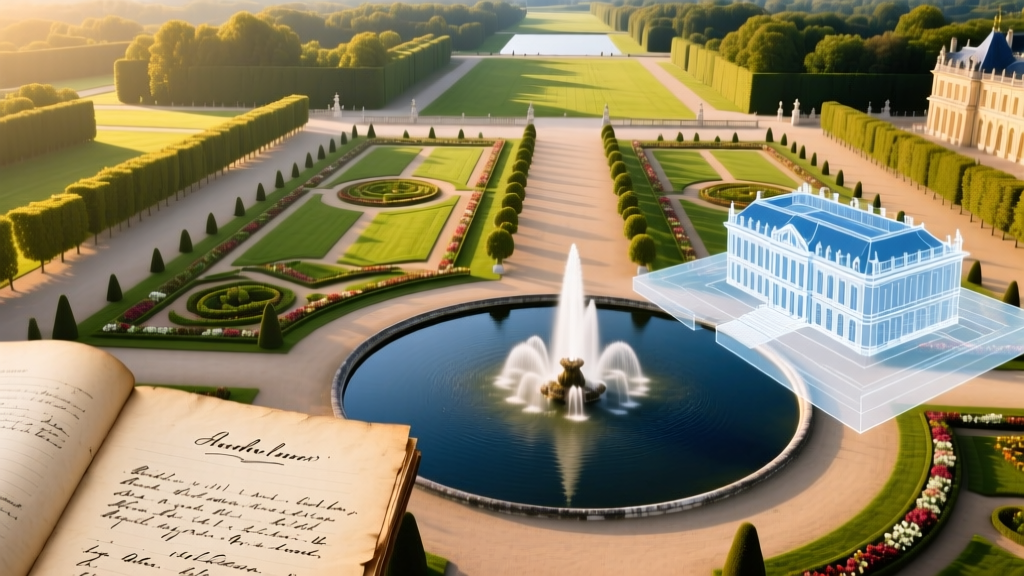
When commercial developers, historians, and construction estimators ask how much did the palace of versailles cost to build, they are rarely looking for a simple historical trivia answer. They are looking for a masterclass in mega-project scope creep, sovereign debt structuring, and the perils of opaque accounting. Constructed primarily between 1661 and 1715 under King Louis XIV, Versailles remains the ultimate historical case study in unconstrained capital expenditure.
According to historical ledgers analyzed by the official Château de Versailles archives, the French crown spent approximately 80 million to 110 million livres tournois on the palace and its immediate grounds over a 50-year period. However, converting 17th-century French currency into modern purchasing power requires a sophisticated approach to historical cost estimation. Economists utilize three primary metrics to translate this figure into modern US Dollars:
Data Highlight: The Modern Equivalent Cost
- Consumer Price Index (CPI) Adjustment: ~$2.0 Billion USD (Measures basic inflation of consumer goods).
- Gold Standard Equivalent: ~$4.5 Billion USD (Based on the fixed gold weight of the 17th-century Louis d'or).
- Economic Power / Unskilled Labor Index: ~$11.6 Billion USD (Measures the cost relative to the GDP and the wages of the labor force required to build it).
For construction estimators, the $11.6 billion figure (Economic Power) is the most accurate metric, as it reflects the true opportunity cost and labor mobilization required for a project of this magnitude.
Dissecting the Ledger: Where Did the Money Go?
To understand the financing, we must first understand the cost allocation. Unlike modern commercial builds where structural framing and MEP (Mechanical, Electrical, Plumbing) systems dominate the budget, Versailles was an exercise in extreme earthmoving, hydraulic engineering, and ornamental masonry. The Encyclopædia Britannica notes that the sheer logistics of moving water to an elevated, swampy plateau nearly bankrupted the project's engineering budget.
| Project Phase / Element | Est. Historical Cost (Livres) | Modern Equivalent (Labor Index) | Primary Cost Driver |
|---|---|---|---|
| The "Enveloppe" (Facade Expansion) | 15,000,000 | $1.58 Billion | Imported marble, continuous redesigns |
| Hydraulics & Fountains | 25,000,000 | $2.64 Billion | Lead piping, cast-iron pumps |
| The Machine de Marly | 5,500,000 | $580 Million | Complex water-wheel engineering |
| Earthmoving & Gardens | 20,000,000 | $2.11 Billion | Manual labor (Corvée system) |
| Interiors & Gilding | 12,000,000 | $1.26 Billion | Gold leaf, tapestries, rare woods |
Sovereign Financing Strategies: Funding the Unfundable
Modern mega-projects rely on municipal bonds, public-private partnerships (P3), and federal grants. Louis XIV had no such mechanisms. Instead, the financing of Versailles relied on aggressive, often ruthless, capital extraction methods that parallel modern off-balance-sheet corporate financing and eminent domain practices.
1. The Sale of Offices (Parties Casuelles)
To generate immediate liquidity without raising direct taxes on the peasantry (which risked revolt), the Crown created thousands of fictitious government offices and sold them to the wealthy bourgeoisie. This functioned similarly to modern capitalized lease agreements or selling naming rights to fund stadium construction. It provided immediate upfront capital but created long-term structural liabilities, as the Crown had to pay annual interest (gages) to these officeholders.
2. The Corvée and Forced Labor
Labor costs were artificially suppressed through the corvée, a system of forced conscription where peasants and military regiments were drafted to move earth and lay foundations. In modern estimating terms, this is the equivalent of a government utilizing eminent domain and unpaid penal labor to grade land for a new highway. While it reduced direct payroll expenses, the mortality rate from malaria in the swamps led to massive hidden costs in troop replacement and lost agricultural output.
3. Royal Monopolies and Mercantilism
Jean-Baptiste Colbert, the King's Minister of Finances, established state-owned manufactories (like the Gobelins Manufactory) to produce tapestries, mirrors, and furniture. By monopolizing production and banning the import of Venetian glass and Flemish tapestries, Colbert kept capital within the French economy. This is a historical precursor to modern Buy America / domestic sourcing mandates in federal infrastructure projects, which often inflate material costs by 15-30% but protect local industries.
"Versailles was not merely a palace; it was an economic engine designed to centralize French wealth, much like how modern tech campuses are built to centralize intellectual property and regional economic gravity." — Historical Economic Synthesis
The "Versailles Effect": Scope Creep in Mega-Projects
The most critical lesson for modern construction estimators is the danger of the "Enveloppe" project. Originally, Louis XIV intended to keep his father's modest hunting lodge and simply build a new palace around it. This architectural compromise, driven by sentimental scope creep rather than structural logic, resulted in massive inefficiencies. Retaining the old core forced the architects (Le Vau and later Hardouin-Mansart) to build complex, asymmetrical load-bearing walls and hidden courtyards that drained the masonry budget.
Today, we see the exact same "Versailles Effect" in adaptive reuse projects and mega-infrastructure builds where stakeholders refuse to demolish legacy structures or alter initial, flawed alignments.
Modern Comparison Matrix: Historical vs. Contemporary Scope Creep
| Project | Original Estimate | Final Cost | Primary Cause of Overrun |
|---|---|---|---|
| Palace of Versailles (1661-1715) | ~20M Livres | ~110M Livres | Continuous redesigns; hydraulic failures |
| Sydney Opera House (1959-1973) | $7 Million AUD | $102 Million AUD | Unbuildable roof geometry; structural pivots |
| California High-Speed Rail (2008-Present) | $33 Billion USD | $100+ Billion USD (Projected) | Land acquisition; environmental litigation |
Actionable Frameworks for Modern Estimators
While you are unlikely to be commissioned to build a 2,300-room palace for an absolute monarch, the financial mechanics of Versailles provide a strict framework for managing large-scale commercial, institutional, and luxury residential projects today.
The Anti-Versailles Estimating Checklist
- Isolate the "Enveloppe" Risk: If a client insists on integrating a new build with a legacy structure (adaptive reuse), apply a minimum 35% contingency specifically for structural shoring and unforeseen MEP routing. Do not use standard new-build multipliers.
- Audit the Hydraulics Early: The Machine de Marly failed to deliver adequate water pressure for all fountains simultaneously, requiring a secondary, equally expensive pumping network. In modern terms: verify municipal water and sewer capacity commitments in writing before finalizing site plans. Do not rely on theoretical municipal capacity.
- Cap the Ornamental Scope: Louis XIV constantly upgraded materials from brick to marble mid-construction. Implement strict "Allowance Lock" clauses in your contracts. Once the schematic design is approved, any material upgrade must be paired with a corresponding value-engineering deduction elsewhere in the ledger.
- Track Soft Costs as Hard Costs: The financing costs (interest on the sale of offices) eventually consumed more of the French budget than the actual masonry. Ensure your pro-forma includes detailed debt-servicing costs for the entire duration of the build, not just the construction loan origination fees.
Frequently Asked Questions
Did the cost of Versailles cause the French Revolution?
While Versailles was completed in 1715, the sovereign debt accumulated to finance it, combined with subsequent wars, created a structural deficit. The rigid tax system established to pay for the palace's upkeep ultimately starved the state of liquidity, directly contributing to the financial crisis of 1789.
How many workers died building Versailles?
Historical records are incomplete, but modern historians estimate that between 10,000 and 30,000 laborers died, primarily from malaria and pneumonia contracted while draining the swamps and building the aqueducts. This represents a catastrophic failure in historical site-safety and labor risk management.
What is the modern equivalent of the French "Gabelle" tax used to fund construction?
Written by
Elena RodriguezElena Rodriguez is a civil engineer and technical writer specializing in concrete technology, masonry systems, and ASTM/ACI compliance. She earned her B.S. in Civil Engineering from Texas A&M University and spent a decade at a materials testing laboratory, performing over 2,000 concrete compressive strength tests and masonry prism evaluations. Elena is an ACI-certified Field Testing Technician (Grade I) and a member of ASTM Committee C12 on Natural Building Stone. She currently consults on forensic engineering cases involving concrete failures and moisture intrusion. Based in San Antonio, TX, Elena is a proud member of the Society of Women Engineers (SWE) and coaches her daughter's FIRST Robotics team.
More from Elena Rodriguez
View all
Walls & Panels
Cost Analysis: Light Gauge Steel Framing Advantages and Disadvantages
Evaluate light gauge steel framing advantages and disadvantages through a strict cost analysis lens, comparing material, labor, and lifecycle expenses.
Aug 4, 2026

Walls & Panels
Gypsum Board Types: Exact Specifications, Thickness & Dimensions
Compare standard, Type X, and moisture-resistant gypsum board types. Get exact specifications, thicknesses, dimensions, and ASTM standards for your project.
Aug 4, 2026

Fire Resistance
Best Fire-Resistant Outdoor Decking Materials: 2026 Buyer Guide
Discover the best fire-resistant outdoor decking materials for 2026. Compare Class A PVC, aluminum, and hardwood options for WUI compliance and safety.
Aug 4, 2026