Financing the Cost to Build a Prefab House: 2026 Guide
Learn how to finance the cost to build a prefab house. Compare construction loans, FHA options, and manufacturer funding with 2026 rates and draw rules.

The True Cost to Build a Prefab House: 2026 Baseline
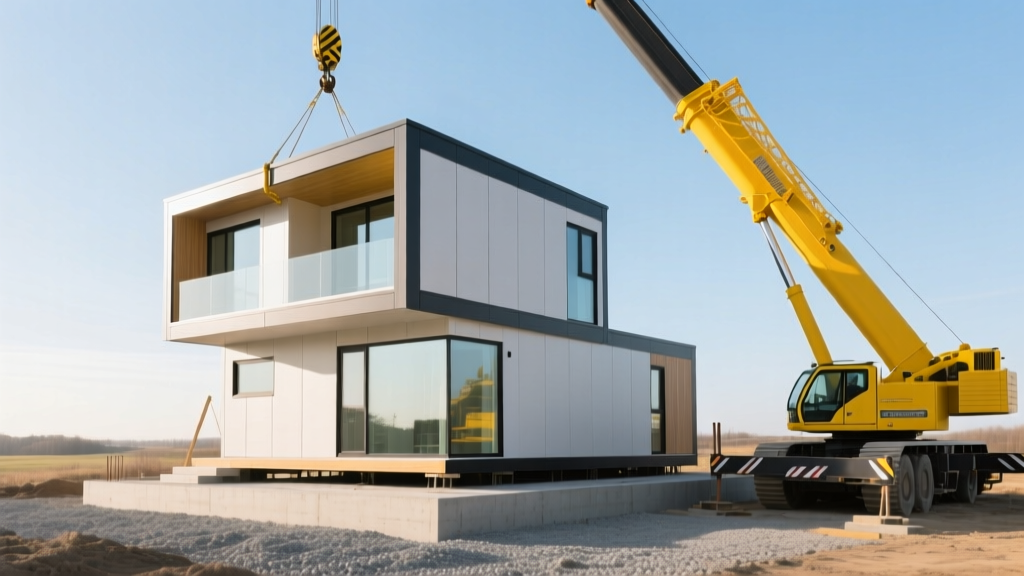
Securing financing requires an accurate understanding of the total capital required. In 2026, the cost to build a prefab house ranges from $250 to $450 per square foot for a fully turnkey project. However, this figure is deceptive if you do not separate the factory module cost from the site-work costs. The manufactured modules themselves typically cost between $120 and $200 per square foot. The remaining $130 to $250 per square foot covers land acquisition, site preparation, foundation pouring, utility trenching, crane rental, and the final 'set day' assembly.
Lenders evaluate your loan application based on the total turnkey cost, not just the factory invoice. If you attempt to finance a 2,000-square-foot modular home, you must demonstrate the ability to cover a $500,000 to $900,000 total project budget. Underestimating the site-work variance is the primary reason prefab construction loan applications are denied during the initial underwriting phase.
The Prefab Financing Paradox: Factory Deposits vs. Bank Draws
The most significant hurdle in financing a prefab build is the fundamental mismatch between factory payment schedules and traditional bank draw schedules. Standard construction loans disburse funds in arrears—meaning the bank only releases money after a phase of work is completed and inspected. Stick-built home builders operate on this model, billing the bank for 10% to 15% of the loan per completed milestone.
Prefab manufacturers require a 30% to 50% upfront deposit before they will purchase materials and begin cutting lumber. Traditional construction-to-permanent lenders will not release 50% of the loan funds on day one because no physical progress exists to collateralize. If your lender does not understand modular construction, your project will stall before the first wall is framed.
To bridge this gap, you must either secure a manufacturer-specific loan program, use a lender experienced in modular housing who allows 'off-site' draw releases based on factory inspections, or bring significant liquid cash to cover the factory deposit out-of-pocket. According to the National Association of Home Builders (NAHB), working with lenders who have dedicated modular construction desks reduces project delays by an average of 45 days compared to using standard retail mortgage officers.
Loan Product Comparison Matrix
Choosing the right debt instrument depends on your liquidity, credit profile, and whether you already own the land. Below is a comparison of the primary financing vehicles used for prefab construction in 2026.
| Loan Type | Down Payment | Min. Credit Score | Factory Deposit Compatibility | Best Use Case |
|---|---|---|---|---|
| Construction-to-Permanent (Single-Close) | 10% - 20% | 680+ | Low (Requires cash to bridge) | Buyers with high liquidity and strong credit |
| FHA One-Time Close (OTC) | 3.5% | 620 - 640 | Moderate (FHA allows some off-site draws) | First-time buyers with limited cash reserves |
| USDA Rural Development Guaranteed | 0% | 640 | High (Flexible draw schedules for rural builds) | Rural landowners meeting income limits |
| Manufacturer Direct Financing | 5% - 10% | 660+ | Excellent (Built for factory milestones) | Buyers using specific brands (e.g., Connect, Dvele) |
Government-Backed Financing for Prefab Builds
FHA One-Time Close (OTC) Construction Loans
The FHA OTC loan is highly effective for modular housing because it locks in your permanent mortgage rate before construction begins, shielding you from rate volatility during the 4-to-6-month factory build time. The FHA allows lenders to disburse funds for off-site factory work, provided the modules are insured, stored in a bonded warehouse, or inspected by a third-party agency like the Modular Building Institute. You must put down a minimum of 3.5%, and the home must be built on a permanent foundation that meets HUD guidelines.
USDA Rural Development Loans
If your land is located in a designated rural area, the USDA Rural Development Guaranteed Loan Program offers a zero-down-payment construction loan. This is exceptionally advantageous for prefab builds, as it frees up the 10% to 20% cash you would normally need for a conventional down payment, allowing you to redirect those funds toward the factory deposit and site preparation. The primary restriction is that the household income cannot exceed 115% of the median income for the specific county.
If you already own your land free and clear, most construction lenders will allow you to use the appraised value of the land as your entire down payment. For a $150,000 lot, this satisfies the 20% down payment requirement on a $750,000 total project cost, meaning you only need to finance the construction and bring cash for the factory deposit.
Hidden Set-Day and Site Prep Costs That Derail Appraisals
Appraisers evaluate prefab homes using comparable stick-built sales. If your site-prep costs are excessively high due to difficult terrain, your total project cost may exceed the appraised value, causing the lender to reduce the loan amount. You must budget specifically for these non-module expenses:
- Crane Rental and Operation: A 100-ton mobile crane costs between $3,000 and $8,000 per day. If your site requires a larger crawler crane or multiple lifts due to complex rooflines, costs can exceed $15,000.
- Traffic Control and Police Escorts: Transporting 16-foot-wide modular sections on public highways requires routing permits, pilot cars, and sometimes local police escorts, adding $1,500 to $4,000 to the logistics budget.
- Temporary Utilities: The factory requires power to finish interior work if modules are staged, and your site needs temporary poles and water meters for the foundation crew before the permanent grid is connected. Budget $2,500 to $5,000 for temporary utility setups.
- Marriage Wall Finishing: Where the two halves of a modular home meet, drywall, flooring, and siding must be blended on-site. Budget $8,000 to $15,000 for specialized finishing crews who understand modular tolerances.
Step-by-Step Financing Approval Framework
Follow this exact sequence to secure funding without triggering underwriting red flags:
- Verify Land Zoning and Modular Covenants: Before applying for a loan, ensure your land deed or HOA does not have restrictive covenants banning 'factory-built' or 'modular' homes. Lenders will pull title reports and deny loans if modular restrictions exist.
- Secure a Turnkey Builder Contract: Lenders require a fixed-price, guaranteed-delivery contract. Ensure the contract explicitly separates the factory invoice from the site-work invoice, as this dictates the draw schedule.
- Order the Modular Appraisal: Request an appraisal specifically formatted for modular construction (Fannie Mae Form 1004 with the modular addendum). Ensure the appraiser has access to the factory specifications and engineering stamps.
- Negotiate the Draw Schedule: Sit down with your lender and the factory representative to align the bank's draw schedule with the factory's payment milestones. If the bank refuses to release the 40% factory deposit, secure a short-term bridge loan or liquidate assets to cover the gap.
- Lock the Rate Early: With single-close construction loans, lock your interest rate 60 to 90 days before the anticipated factory completion date to avoid paying extension fees if shipping is delayed by weather or supply chain issues.
Written by
Elena RodriguezElena Rodriguez is a civil engineer and technical writer specializing in concrete technology, masonry systems, and ASTM/ACI compliance. She earned her B.S. in Civil Engineering from Texas A&M University and spent a decade at a materials testing laboratory, performing over 2,000 concrete compressive strength tests and masonry prism evaluations. Elena is an ACI-certified Field Testing Technician (Grade I) and a member of ASTM Committee C12 on Natural Building Stone. She currently consults on forensic engineering cases involving concrete failures and moisture intrusion. Based in San Antonio, TX, Elena is a proud member of the Society of Women Engineers (SWE) and coaches her daughter's FIRST Robotics team.
More from Elena Rodriguez
View all
Walls & Panels
Cost Analysis: Light Gauge Steel Framing Advantages and Disadvantages
Evaluate light gauge steel framing advantages and disadvantages through a strict cost analysis lens, comparing material, labor, and lifecycle expenses.
Aug 4, 2026

Walls & Panels
Gypsum Board Types: Exact Specifications, Thickness & Dimensions
Compare standard, Type X, and moisture-resistant gypsum board types. Get exact specifications, thicknesses, dimensions, and ASTM standards for your project.
Aug 4, 2026

Fire Resistance
Best Fire-Resistant Outdoor Decking Materials: 2026 Buyer Guide
Discover the best fire-resistant outdoor decking materials for 2026. Compare Class A PVC, aluminum, and hardwood options for WUI compliance and safety.
Aug 4, 2026