Self Storage Units Cost to Build: 2026 Financing Guide
Discover how to finance the self storage units cost to build in 2026. Compare SBA loans, conventional CRE rates, and construction-to-permanent options.
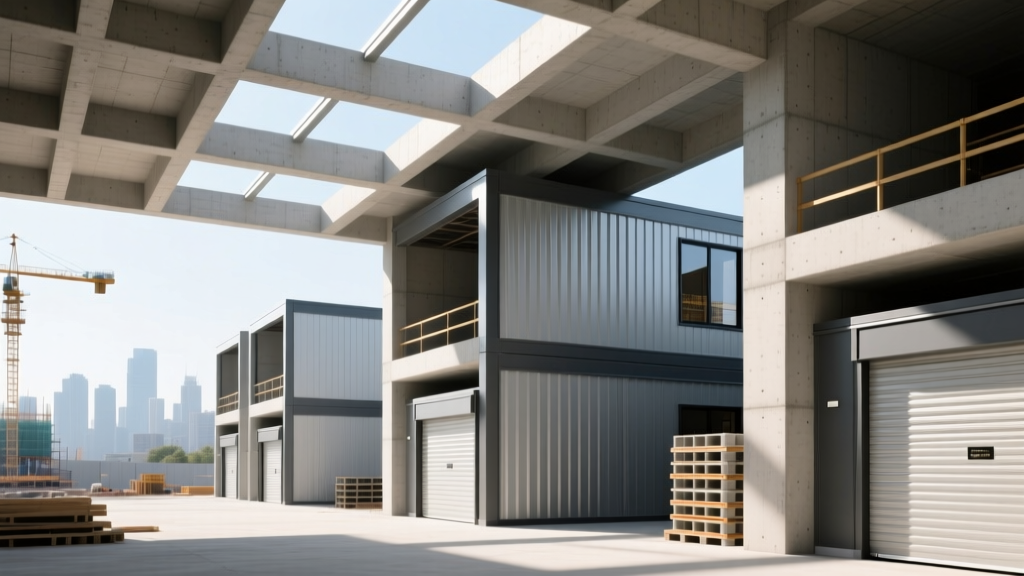
The True Self Storage Units Cost to Build: 2026 Baseline
Securing capital for a self-storage development requires a precise understanding of the capital expenditure (CapEx) required to deliver a stabilized asset. In 2026, the self storage units cost to build has stabilized following the supply-chain volatility of the early 2020s, but material and labor baselines remain elevated. According to industry benchmarks tracked by Dodge Construction Network, commercial steel erection and concrete flatwork continue to dictate the bulk of hard costs.
Before approaching lenders, developers must segment their proforma into hard costs, soft costs, and land acquisition. Lenders will scrutinize your cost-per-square-foot metrics against regional averages to validate your loan-to-cost (LTC) request.
- Single-Story Drive-Up: $48 - $65 per rentable square foot (RSF).
- Multi-Story Climate-Controlled: $95 - $135 per RSF.
- Land Acquisition: Typically 15% to 25% of total project costs, heavily dependent on zoning entitlements and traffic counts (minimum 20,000 VPD recommended).
- Security & Tech Fit-Out: $3.50 - $5.00 per RSF for PTI gate systems, Nokē Bluetooth smart locks, and high-definition IP camera arrays.
Matching Capital to Construction Phases
Financing a storage facility is rarely a single-transaction event. Capital must be deployed in tranches that align with the physical development and risk profile of the project.
Phase 1: Land Acquisition & Entitlements
Traditional commercial banks rarely lend on raw, unentitled land for speculative storage builds. Developers typically use cash equity, private bridge debt, or seller financing to acquire the parcel and fund civil engineering, environmental Phase I/II reports, and municipal impact fees. Expect to carry this land at a high cost of capital (8% - 12% for private bridge loans) until zoning approvals and building permits are secured.
Phase 2: Vertical Construction & Fit-Out
Once permits are in hand, the project transitions to a construction loan. Funds are disbursed via monthly draw requests based on the percentage of completion, verified by a third-party inspector. This phase covers site work (grading, utilities, retention ponds), steel building erection (often utilizing pre-engineered metal buildings from suppliers like Janus International or Star Building Systems), and the installation of interior partition walls and roll-up doors.
Primary Financing Vehicles for Storage Developers
Selecting the right debt structure depends on your experience level, the facility size, and whether you intend to hold the asset long-term or sell upon stabilization. Below is a comparative matrix of the primary financing options available in the current credit environment.
| Loan Type | Max LTV / LTC | Typical Rate (2026) | Term / Amortization | Best Use Case |
|---|---|---|---|---|
| Construction-to-Permanent (C2P) | 70% - 75% LTC | SOFR + 2.5% - 3.5% | 12-24 mo. construction / 25-yr perm | Ground-up builds by experienced sponsors planning to hold. |
| Conventional CRE Construction | 65% - 70% LTC | 6.5% - 7.8% Fixed/Floating | 12-18 mo. Interest Only | Mid-sized builds where sponsor will refinance into a separate perm loan later. |
| SBA 7(a) Loan | Up to 90% LTC | Prime + 2.25% - 2.75% | 25-year fully amortizing | Owner-operators building smaller, rural facilities (under $5M total project cost). |
| Preferred Equity / JV | Fills gap to 85% LTC | 10% - 14% Preferred Return | 3-5 year term, equity upside | Sponsors lacking the 25-30% cash equity required by senior lenders. |
For developers exploring government-backed options, the U.S. Small Business Administration (SBA) 7(a) program remains a powerful tool. However, SBA guidelines strictly prohibit passive investment. To qualify for an SBA loan to cover the self storage units cost to build, the borrower must be an active owner-operator, managing the day-to-day operations of the facility rather than simply hiring a third-party management company to run it passively.
Underwriting Hurdles: DSCR, Debt Yield, and the Interest Reserve
Lenders evaluating a self-storage proforma do not underwrite to current revenues; they underwrite to a stabilized Net Operating Income (NOI) projected 18 to 24 months post-construction. According to data aggregated by the Self Storage Association (SSA), institutional lenders typically require a minimum Debt Service Coverage Ratio (DSCR) of 1.25x to 1.35x on the stabilized proforma.
Because a newly built storage facility generates zero revenue during the 9-to-12-month construction phase, lenders require an Interest Reserve funded within the loan amount itself. If your construction loan is $4,000,000 at a 7% annual interest rate, you must budget approximately $280,000 just to service the debt during construction. Failing to adequately size the interest reserve and marketing lease-up budget is the primary reason storage development loans fail underwriting.
The Debt Yield Test
Many regional banks and life insurance companies have shifted from relying solely on LTV to utilizing Debt Yield (Stabilized NOI / Loan Amount). In 2026, most lenders require a minimum Debt Yield of 10% to 12%. If your projected stabilized NOI is $400,000, and the lender requires a 10% Debt Yield, your maximum loan amount is capped at $4,000,000, regardless of the appraised value of the completed facility.
Step-by-Step Capital Stack Assembly
Successfully financing the self storage units cost to build requires sequencing your capital sources to minimize dilution and satisfy senior lender requirements. Follow this sequential framework:
- Secure Land Control: Execute a purchase agreement with an extended due diligence period (90-120 days) contingent upon municipal zoning approval and environmental clearance. Use a small amount of risk capital for earnest money.
- Pre-Development Capital: Fund civil engineering, architectural plans, and feasibility studies. This capital is almost always 100% sponsor equity or high-cost private mezzanine debt.
- Senior Construction Debt Commitment: Approach regional banks or specialized storage lenders (e.g., Live Oak Bank, Busey Bank) with your completed plans, general contractor bids, and a third-party market feasibility study. Secure a term sheet for a Construction-to-Permanent loan.
- Equity Syndication / JV Close: Once the senior debt term sheet is in hand, raise the remaining 25%-30% equity requirement from private investors or institutional joint-venture partners, using the senior term sheet to validate the project's viability.
- Construction Draw & Lease-Up: Close the loan, begin site work, and deploy capital via monthly draws. Simultaneously, launch digital marketing and pre-leasing campaigns 60 days prior to the issuance of the Certificate of Occupancy (CO).
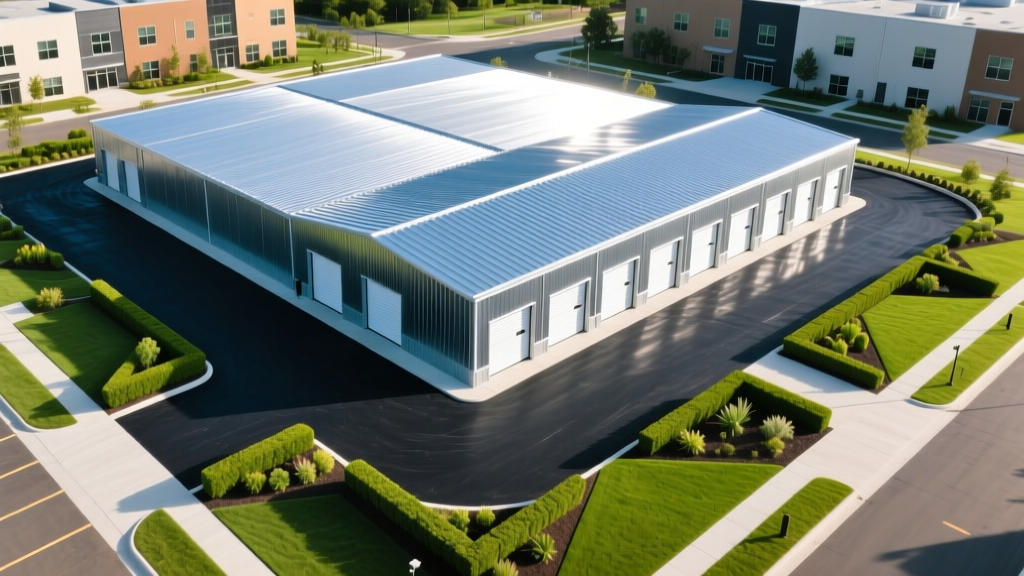
Frequently Asked Questions
Can I use a traditional commercial mortgage to build a storage facility?
No. Traditional commercial mortgages are designed for stabilized, income-producing assets with a historical rent roll. Ground-up construction requires a specialized construction loan or a Construction-to-Permanent (C2P) facility that converts to a standard mortgage only after the property reaches a predefined occupancy threshold (usually 80% physical or 90% economic occupancy).
How does adding climate control impact my financing?
While climate-controlled, multi-story facilities increase the hard cost per square foot by 60% to 100% compared to single-story drive-up units, they significantly boost the projected NOI. Lenders view climate-controlled assets in dense urban or suburban infill locations as lower-risk due to higher barriers to entry and premium rental rates, often resulting in more favorable LTV terms and higher appraised values upon stabilization.
What happens if the facility doesn't lease up fast enough?
If the facility fails to hit the stabilization metrics required to convert the construction loan to a permanent mortgage, the loan will mature, and the developer will face a default or be forced to refinance into a high-cost bridge loan. To mitigate this, developers should negotiate a 6-to-12-month extension option on the construction loan maturity date and ensure their interest reserve covers a prolonged 18-to-24-month lease-up period.
Written by
David NakamuraDavid Nakamura is a licensed architect (AIA) and construction technology writer focused on sustainable building methods, mass timber engineering, and high-performance building envelopes. He holds a Master of Architecture from the University of Washington and is a certified Passive House Consultant (CPHC). David spent eight years at the Seattle firm Mithun, where he led the design of three LEED Platinum projects, before founding his own practice specializing in net-zero residential design. He serves on the editorial advisory board of GreenBuilder Magazine and has authored peer-reviewed papers on cross-laminated timber (CLT) connections for the Journal of Structural Engineering. In his spare time, David teaches woodworking at Pratt Fine Arts Center and kayaks the Puget Sound.
More from David Nakamura
View all
Construction Cost
Labor Cost to Build a Deck Per Sq Ft: 2026 Installation Guide
Discover the exact labor cost to build a deck per sq ft in 2026. This installation guide breaks down contractor rates, complexity factors, and hidden fees.
Aug 4, 2026

Construction Cost
How Much Does It Cost to Build a 3 Bedroom House? Financing Guide
Learn exactly how much it costs to build a 3 bedroom house and explore 2026 financing options, construction loan types, and budget frameworks for your build.
Aug 4, 2026

Construction Cost
Cost to Build a Tennis Court: 2026 Guide
How much does it cost to build a tennis court in 2026? Breakdowns for asphalt, concrete, and synthetic surfaces plus fencing and lighting.
Jul 30, 2026