How Much Did It Cost to Build the Freedom Tower? Lessons to Save Money
Learn how much it cost to build the Freedom Tower and extract actionable money-saving strategies to prevent budget overruns on your 2026 commercial builds.

The $3.9 Billion Question: Breaking Down the Final Price Tag
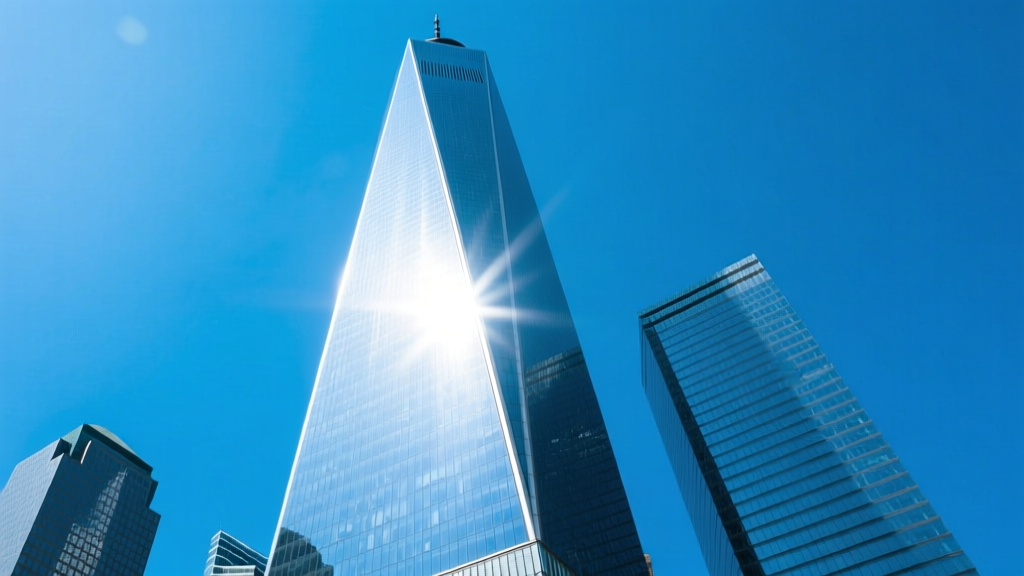
When developers, architects, and students of construction economics ask, how much did it cost to build the freedom tower, the answer is a staggering $3.9 billion. Originally estimated at roughly $3 billion, One World Trade Center (often referred to as the Freedom Tower) experienced nearly a billion dollars in budget overruns during its complex construction timeline. While most commercial and large-scale residential developers are not building 1,776-foot supertall skyscrapers in highly secure, densely populated urban infill zones, the forensic breakdown of this mega-project offers critical money-saving strategies for mid-tier construction in 2026.
Megaproject cost overruns are rarely the result of a single miscalculation. According to the Council on Tall Buildings and Urban Habitat (CTBUH), the structural and architectural complexities of supertall buildings inherently carry compounded risks. However, by analyzing where the Freedom Tower's budget bled, modern estimators can build robust financial firewalls into their own Guaranteed Maximum Price (GMP) contracts.
| Cost Category | Estimated Allocation | Primary Cost Drivers |
|---|---|---|
| Substructure & Security Base | $1.1 Billion | Blast-resistant concrete core, deep bedrock anchoring, security setbacks |
| Superstructure (Steel/Concrete) | $850 Million | 100,000+ tons of structural steel, high-strength concrete pumping logistics |
| Facade & Glazing | $600 Million | Custom blast-resistant glass panels, stainless steel spandrels |
| MEP & Interiors | $750 Million | Redundant HVAC systems, high-speed elevator cabs, premium tenant fit-outs |
| Soft Costs, Delays & Financing | $600 Million | Design changes, schedule extensions, insurance premiums, legal fees |
The "Security Premium": When Value Engineering Meets Blast Resistance
The most significant budget inflator for the Freedom Tower was the unprecedented security mandate following the 2001 attacks. The building features a 185-foot windowless concrete base designed to withstand massive vehicular blasts. While your 2026 commercial project likely does not require a fortified bunker base, the underlying lesson is the danger of over-specifying beyond regulatory requirements.
In modern commercial construction, developers frequently over-engineer facades and structural cores due to a misunderstanding of risk thresholds. For instance, specifying ASTM F2248 blast-resistant glazing for a standard suburban office park simply because it is "premium" can inflate facade costs by 18% to 24% without providing a proportional ROI or meeting any actual threat matrix.
Material Escalation: The Hidden Budget Killer
During the Freedom Tower's construction, global commodity markets experienced massive volatility. The price of structural steel and Portland cement fluctuated wildly, blowing past initial estimates. In 2026, with ongoing shifts in global supply chains, carbon taxes on cement production, and fluctuating steel tariffs, material escalation remains the primary threat to fixed-budget commercial builds.
To prevent your project from suffering the same fate, you must move away from rigid lump-sum contracts for long-lead materials and adopt dynamic escalation clauses.
How to Structure Escalation Clauses in 2026
- Index-Tied Adjustments: Tie material costs to recognized indices like the ENR Building Cost Index or the Producer Price Index (PPI) for steel mill products. This removes emotional negotiations and bases price adjustments on verifiable macroeconomic data.
- The 5% Deadband Rule: Implement a "deadband" in your GMP contract. For example, the contractor absorbs the first 5% of any material price increase. The owner only pays for escalation that exceeds this 5% threshold, incentivizing the contractor to lock in early procurement.
- Early Procurement Allowances: Allocate a specific budget line item to buy and store long-lead items (like switchgear, elevators, and structural steel) before the GMP is fully executed. Paying for 10,000 square feet of secure warehouse space for six months is exponentially cheaper than paying a 22% premium on delayed steel orders.
Soft Cost Bleed: The Price of Schedule Delays
Time is the most expensive line item on any mega-project. The Freedom Tower's construction timeline stretched over eight years. Every month of delay on a billion-dollar project incurs tens of millions in soft costs—ranging from construction loan interest and extended general conditions to prolonged architect and engineering retainer fees.
"Megaprojects are systematically subject to the same biases: they are over budget, over time, over and over again. The root cause is rarely technical; it is almost always strategic misrepresentation and optimism bias." — McKinsey & Company, Capital Projects Insights
For mid-scale developers building mixed-use complexes or large distribution centers in 2026, mitigating soft cost bleed requires aggressive schedule compression tactics. Utilizing Building Information Modeling (BIM) Level 3 for clash detection before ground is broken can reduce field rework by up to 30%. Furthermore, transitioning to off-site modular construction for repetitive elements (like bathroom pods in hospitality builds or precast concrete stair cores) can shave months off the critical path, directly saving hundreds of thousands in extended financing costs.
The 2026 Risk-Adjusted Cost Estimating Framework
To ensure your commercial or large residential project does not mirror the Freedom Tower's budget trajectory, abandon traditional deterministic estimating (where you guess a single number and add a flat 10% contingency). Instead, adopt a Risk-Adjusted Cost Estimating framework.
| Project Phase | Traditional Approach (High Risk) | Risk-Adjusted Approach (Money-Saving) | Target Contingency % |
|---|---|---|---|
| Schematic Design | Flat 15% contingency applied to total | Monte Carlo simulations on 50 key variables | 15% - 20% |
| Design Development | Reduce contingency to 10% arbitrarily | Draw down contingency only as specific risks are mitigated | 10% - 12% |
| Construction Docs | Lock in GMP with no shared savings | GMP with 50/50 shared savings clause below target cost | 5% - 7% |
| Construction Phase | Owner pays all change orders | Strict VE (Value Engineering) change-order protocols | 3% - 5% (Drawdown) |
Implementing the Shared Savings Clause
The most powerful money-saving tool in a 2026 developer's arsenal is the shared savings clause within a GMP contract. If the contractor completes the project below the Guaranteed Maximum Price, the savings are split (typically 50/50 or 60/40 in the owner's favor). This aligns the contractor's financial incentives with the owner's budget goals. Instead of hiding contingencies or padding change orders, the general contractor is financially motivated to find legitimate value engineering opportunities, optimize labor sequencing, and reduce material waste.
Final Takeaways for Mid-Scale Developers
Understanding how much it cost to build the Freedom Tower is more than an exercise in historical trivia; it is a masterclass in what happens when security mandates, material volatility, and schedule delays collide without adequate contractual firewalls. By implementing index-tied material escalation clauses, strictly aligning facade specifications with actual threat matrices, and utilizing shared-savings GMP contracts, developers can insulate their 2026 projects from the same catastrophic budget overruns that plagued Lower Manhattan's most famous skyscraper. True cost savings do not come from buying cheaper materials; they come from engineering the risk out of the contract before the first shovel hits the dirt.
Written by
Elena RodriguezElena Rodriguez is a civil engineer and technical writer specializing in concrete technology, masonry systems, and ASTM/ACI compliance. She earned her B.S. in Civil Engineering from Texas A&M University and spent a decade at a materials testing laboratory, performing over 2,000 concrete compressive strength tests and masonry prism evaluations. Elena is an ACI-certified Field Testing Technician (Grade I) and a member of ASTM Committee C12 on Natural Building Stone. She currently consults on forensic engineering cases involving concrete failures and moisture intrusion. Based in San Antonio, TX, Elena is a proud member of the Society of Women Engineers (SWE) and coaches her daughter's FIRST Robotics team.
More from Elena Rodriguez
View all
Walls & Panels
Cost Analysis: Light Gauge Steel Framing Advantages and Disadvantages
Evaluate light gauge steel framing advantages and disadvantages through a strict cost analysis lens, comparing material, labor, and lifecycle expenses.
Aug 4, 2026

Walls & Panels
Gypsum Board Types: Exact Specifications, Thickness & Dimensions
Compare standard, Type X, and moisture-resistant gypsum board types. Get exact specifications, thicknesses, dimensions, and ASTM standards for your project.
Aug 4, 2026

Fire Resistance
Best Fire-Resistant Outdoor Decking Materials: 2026 Buyer Guide
Discover the best fire-resistant outdoor decking materials for 2026. Compare Class A PVC, aluminum, and hardwood options for WUI compliance and safety.
Aug 4, 2026