Cost to Build Indoor Pool: 2026 Complete Guide
Discover the true cost to build indoor pool enclosures in 2026. Detailed breakdowns of shell materials, HVAC dehumidification, and vapor barriers.

The True Cost to Build Indoor Pool Environments
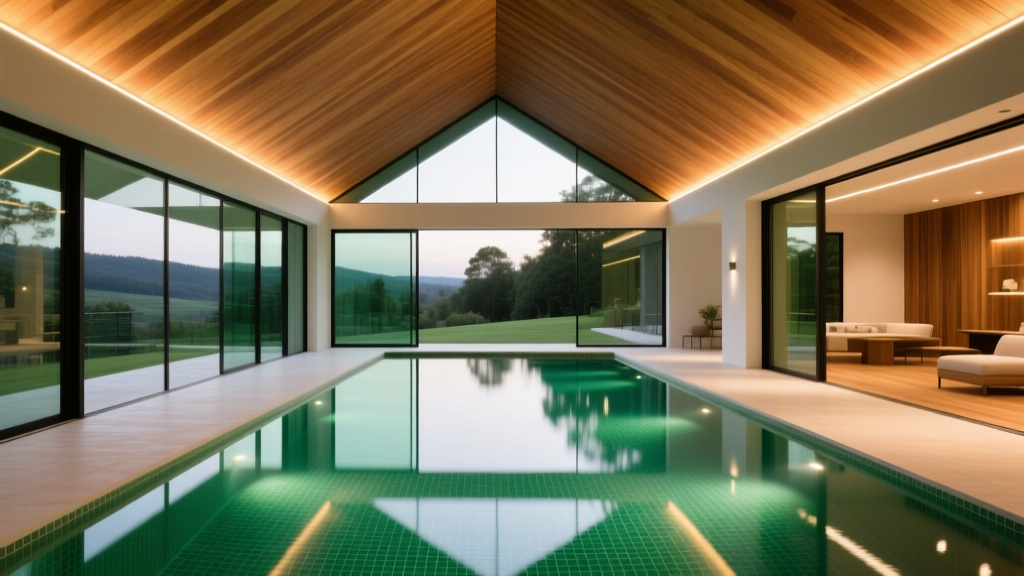
Constructing an indoor pool is fundamentally different from installing an outdoor pool. You are not merely excavating a basin and filling it with water; you are engineering a high-humidity containment vessel within your home's building envelope. The cost to build indoor pool facilities typically ranges from $185,000 to over $500,000, driven heavily by structural enclosure, commercial-grade dehumidification, and specialized vapor barriers.
Standard residential HVAC systems are entirely incapable of handling the latent moisture load of an open body of heated water. Without precise climate engineering, an indoor pool will rapidly destroy drywall, rot roof trusses, and breed toxic mold. This guide breaks down the exact capital requirements, material specifications, and mechanical systems necessary for a successful indoor pool build in 2026.
Itemized Cost Breakdown: Where the Budget Goes
The following table outlines the expected capital expenditure for a standard 16x32 foot indoor pool enclosure attached to an existing residential structure. Costs reflect 2026 material and labor rates.
| Project Phase | Low-End Estimate | High-End Estimate | Key Cost Drivers |
|---|---|---|---|
| Site Prep & Excavation | $12,000 | $28,000 | Interior demolition, soil removal, underpinning |
| Pool Shell Construction | $55,000 | $135,000 | Gunite vs. fiberglass, depth, custom spas |
| Enclosure & Foundation | $65,000 | $160,000 | Foundation pouring, roof trusses, exterior walls |
| HVAC & Dehumidification | $35,000 | $85,000 | Dedicated pool dehumidifier, ductwork, makeup air |
| Vapor Barriers & Insulation | $18,000 | $40,000 | Closed-cell spray foam, Class I vapor retarders |
| Interior Finishes & Decking | $25,000 | $75,000 | Cement board, tile, stone coping, floor drains |
| Total Estimated Cost | $210,000 | $523,000 |
Pool Shell Materials: Fiberglass vs. Gunite vs. Vinyl
The choice of pool shell dictates not only the upfront cost but also the long-term humidity profile of the room.
1. Gunite (Shotcrete)
- Cost: $85,000 - $135,000
- Pros: Infinite customization, structural rigidity, integrates seamlessly with concrete decking.
- Cons: Longest installation time (3-5 months), rough surface requires high-quality plaster or pebble finishes, highly porous before sealing.
2. Fiberglass
- Cost: $55,000 - $90,000
- Pros: Non-porous surface inhibits algae, rapid installation (shell dropped in one day), lower chemical usage.
- Cons: Size limitations (rarely exceeds 16x40 feet due to highway transport limits), requires precise crane access to the build site.
3. Vinyl Liner
- Cost: $45,000 - $70,000
- Pros: Lowest upfront cost, smooth surface.
- Cons: Not recommended for indoor pools. High indoor humidity accelerates the degradation of the liner track and causes the vinyl to stretch or pull. Liner replacements every 7-10 years require draining the pool, which disrupts the room's carefully balanced humidity equilibrium.
The Hidden Budget Killers: Dehumidification and Vapor Barriers
According to engineering guidelines published by Desert Aire, a leading manufacturer of commercial pool climate systems, an uncovered indoor pool evaporates up to 15 gallons of water per day into the surrounding air. Managing this moisture is the single most critical engineering challenge of the build.
Sizing Your Dehumidifier
You must install a dedicated, commercial-grade pool dehumidifier (such as the Desert Aire PoolCoast or Series 1100 lines). These units do not just cool the air; they actively condense and remove moisture while recovering heat to warm the pool water.
Vapor Retarder Specifications
The Pool & Hot Tub Alliance (PHTA) mandates strict vapor retarder protocols for indoor aquatic facilities. Standard building paper is insufficient. You must install a Class I vapor retarder (perm rating of 0.1 or less) on the warm side of the wall assembly.
- Walls: Use 6-mil polyethylene sheeting or foil-faced rigid foam insulation behind cement board.
- Ceilings: Vapor barriers must be continuous across the ceiling plane, sealed at every seam with specialized acoustic sealant.
- Insulation: Closed-cell spray foam (yielding R-6 per inch) is the industry standard. It acts as both an insulator and a secondary vapor barrier, preventing thermal bridging where condensation could form inside the wall cavity.
Architectural and Structural Requirements
Indoor pool architecture requires abandoning standard residential design principles in favor of aquatic-grade durability.
- Sloped Ceilings: Flat ceilings are strictly prohibited. Condensation will inevitably form on the ceiling surface. Ceilings must be sloped at a minimum ratio of 1/4 inch per foot toward the exterior walls to ensure condensation runs down the walls rather than dripping onto swimmers.
- Corrosion-Resistant Fasteners: Standard galvanized screws will rust within months. All structural fasteners, HVAC hangers, and drywall screws must be 316-grade stainless steel.
- Wall Cladding: Standard gypsum drywall will dissolve in high humidity. Use fiber-cement board (e.g., HardieBacker) or fiberglass-reinforced plastic (FRP) panels, finished with moisture-resistant epoxy paints or large-format porcelain tile.
- Floor Drainage: The pool deck must slope at 1/8 inch per foot toward perimeter trench drains. This manages both splash-out and condensation runoff from the walls.
Ongoing Operational and Maintenance Costs
The financial commitment extends well beyond the initial construction. Operating an indoor pool requires continuous energy expenditure to maintain the micro-climate.
| Operational Expense | Monthly Estimate | Mitigation Strategy |
|---|---|---|
| Dehumidifier Electricity | $250 - $450 | Install an automatic safety pool cover to reduce evaporation by 70% when not in use. |
| Pool Water Heating | $150 - $300 | Use a variable-speed electric heat pump or geothermal heat exchanger. |
| Chemicals & Filtration | $100 - $200 | Install a UV-C or Ozone sanitation system to reduce chlorine off-gassing (chloramines). |
'The integration of an automatic safety cover is not an optional upgrade for indoor pools; it is a mandatory mechanical strategy. By covering the water when the pool is idle, you effectively shut off the primary source of the room's latent heat load, allowing the dehumidifier to operate in low-power standby mode.' — Building Science Corp. Guidelines on Moisture Management.
Expert Decision Framework: Is an Indoor Pool Right for You?
Before committing to the $200,000+ cost to build indoor pool facilities, evaluate your project against these structural realities:
- Do you have the spatial volume? The enclosure requires a minimum ceiling height of 10 feet to allow for proper air circulation and ductwork routing.
- Is your electrical panel sufficient? Commercial dehumidifiers, pool heaters, and variable-speed pumps often require upgrading your home's electrical service to 400 amps.
- Are you prepared for commercial-grade maintenance? Indoor pool equipment requires quarterly servicing by specialized HVAC technicians, not standard pool cleaners.
For comprehensive building envelope standards and structural load considerations, consult the resources provided by the National Association of Home Builders (NAHB) before finalizing your architectural plans. An indoor pool is a triumph of modern engineering, offering year-round swimming regardless of exterior weather, provided the initial capital is allocated correctly toward moisture management and structural integrity.
Written by
James ThorntonJames Thornton is a construction industry veteran with 25 years of hands-on experience in wood framing, lumber grading, and residential building codes. He started as a framing carpenter in rural Oregon, earned his ICC Residential Building Inspector certification, and eventually became a senior plan reviewer for the City of Portland Bureau of Development Services. James holds a B.S. in Wood Science & Technology from Oregon State University and is a certified lumber grader through the West Coast Lumber Inspection Bureau (WCLIB). He has inspected over 3,000 residential construction sites and authored the city's internal guide on advanced framing techniques (2x6 at 24" O.C.). James lives in Bend, OR, where he builds custom timber-frame cabins and competes in lumberjack sports.
More from James Thornton
View all
Insulation
Best Home Insulation Materials: Complete 2026 Guide
Compare top home insulation materials for 2026. Find R-values, installed costs per square foot, and best uses for fiberglass, spray foam, and mineral wool.
Aug 4, 2026

Sustainable Building
Certify Your Green Building Material for LEED and WELL
Step-by-step guide to certifying a green building material for LEED v5 and WELL v2. Master EPDs, HPDs, and VOC limits for 2026 project specifications.
Aug 4, 2026

Stone & Masonry
Veneer Stacked Stone Panels: Interior Design & Style Showcase
Discover how veneer stacked stone panels transform interiors. Explore modern design profiles, material pairings, and technical installation specs.
Aug 4, 2026