Indoor Shooting Range Cost to Build: Size & Scope Calculator Guide
Calculate the indoor shooting range cost to build based on size, lanes, and scope. Get 2026 pricing for HVAC, bullet traps, and acoustic treatments.

The True Scope of Indoor Shooting Range Construction
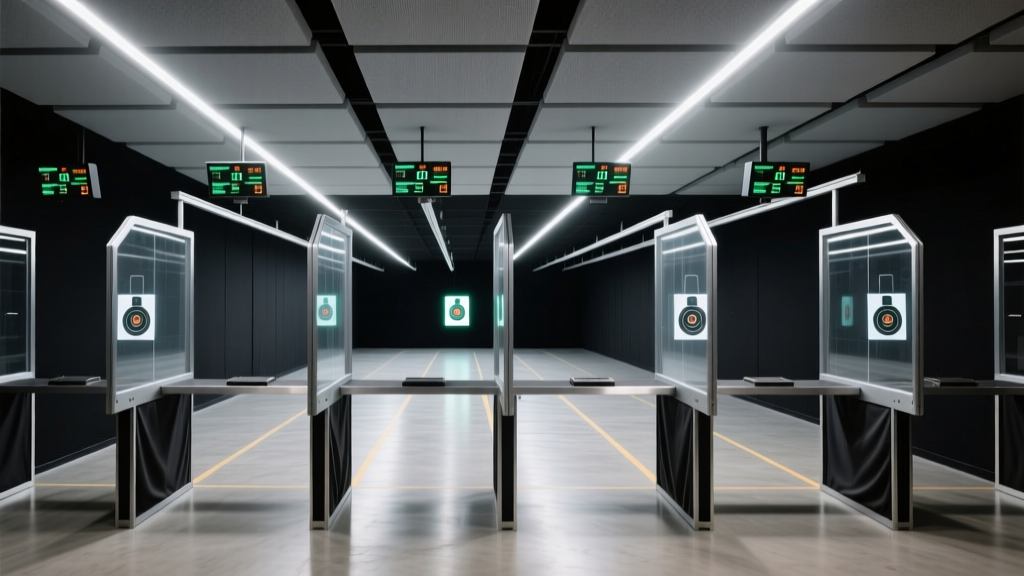
Estimating the indoor shooting range cost to build requires moving beyond standard commercial construction metrics. A shooting range is a highly specialized environment where life-safety systems, lead mitigation, and acoustic engineering dictate the budget. In 2026, the baseline cost to construct a fully compliant, turnkey indoor range falls between $95,000 and $145,000 per lane, excluding land acquisition and initial inventory.
The 40/60 Rule of Range Construction
Industry veterans operate by the 40/60 rule: 40% of your budget will cover the physical building shell, standard MEP (mechanical, electrical, plumbing), and front-of-house retail spaces. The remaining 60% is consumed by range-specific equipment—namely, HEPA-grade HVAC systems, bullet traps, acoustic baffling, and target retrieval systems. Underestimating this ratio is the primary reason range development projects face severe capital shortfalls during phase two.
Size & Scope Cost Calculator: By the Numbers
The following matrix breaks down estimated capital expenditures based on facility scale. These figures assume a ground-up build or a complete gut-renovation of an existing industrial warehouse with 25-foot clear heights.
| Facility Scope | Approx. Sq. Ft. | Shell & Build-Out | Range Equipment & HVAC | Total Estimated Cost |
|---|---|---|---|---|
| Boutique (5 Lanes) Basic retail, standard trap |
3,000 - 4,000 | $350,000 - $450,000 | $450,000 - $600,000 | $800k - $1.05M |
| Mid-Market (10 Lanes) Classroom, pro-shop, turning targets |
6,500 - 8,000 | $700,000 - $950,000 | $1.1M - $1.4M | $1.8M - $2.35M |
| Premium Tactical (15-20 Lanes) Multi-gun, tactical bays, simulators |
12,000 - 18,000 | $1.5M - $2.2M | $2.5M - $3.8M | $4.0M - $6.0M+ |
Deep Dive: Where the Budget Actually Goes
To accurately calculate your specific scope, you must itemize the specialized systems that separate a shooting range from a standard retail build-out.
1. HVAC and Lead Mitigation (The Hidden Budget Killer)
Standard commercial HVAC will fail to meet OSHA lead exposure standards and will quickly contaminate your facility with airborne lead styphnate and barium antimony. According to NIOSH guidelines for indoor firing ranges, the HVAC system must maintain a negative pressure environment with laminar airflow moving from the shooter's back toward the bullet trap at a velocity of 75 feet per minute (fpm).
- HEPA Filtration Units: Expect to spend $150 to $250 per CFM (Cubic Feet per Minute) for specialized range HVAC units. A 10-lane range typically requires 15,000 to 20,000 CFM, pushing HVAC costs alone to $250,000 - $400,000.
- Make-Up Air (MUA): Because the range exhausts massive volumes of air, you must condition and replace it. MUA systems add 20% to 30% to the total HVAC budget.
- Ductwork Design: All exhaust ducting must be constructed of welded steel (no flexible ducting) to prevent lead dust accumulation and allow for high-pressure wash-downs.
2. Bullet Trap Technologies Compared
The bullet trap is the terminal point of your range. Choosing the wrong type for your volume will result in crippling maintenance costs or severe fire hazards.
| Feature | Granular Rubber Trap | Steel Deceleration Trap (e.g., Action Target) |
|---|---|---|
| Upfront Cost (Per Lane) | $12,000 - $18,000 | $22,000 - $35,000 |
| Maintenance Profile | High. Rubber degrades, requires frequent sifting and replacement. | Low. Periodic oiling and inspection of AR500 steel plates. |
| Lead Dust Generation | Moderate to High. Bullet fragmentation occurs in the rubber. | Very Low. Bullets are decelerated intact via angled steel chutes. |
| Best Use Case | Low-volume boutique ranges, strict initial budget constraints. | High-volume commercial ranges, law enforcement training, rifle calibers. |
3. Acoustic Baffling and Soundproofing
Gunfire generates peak sound pressure levels (SPL) exceeding 160 dB. Without proper treatment, this causes structural vibration, shooter fatigue, and noise ordinance violations.
- Ceiling Baffles: Heavy-duty, fiberglass-filled acoustic baffles wrapped in ballistic nylon must be suspended horizontally. Target an NRC (Noise Reduction Coefficient) of 0.85 or higher. Budget $12 to $18 per square foot of range ceiling space.
- Booth Isolation: Shooting stalls require perforated AR500 steel or specialized acoustic wall panels to prevent cross-lane noise and ricochets.
- Flooring: Sealed, epoxy-coated concrete with a slight slope toward a central drainage trench is mandatory for lead wash-down protocols. Standard carpet or VCT tile will trap lead dust and fail environmental compliance audits.
Step-by-Step Scope Expansion Framework
If capital is constrained, utilize this phased scope framework to open sooner and expand later without tearing out foundational infrastructure.
Phase 1: The Core Shell (Day 1)
Build the full structural footprint and install the primary HVAC make-up air and exhaust shafts for the maximum planned lane count, even if you only outfit 5 lanes initially. Retrofitting range-specific HVAC ducting through an existing roof and concrete tilt-up walls post-construction will cost 3x more than doing it during the initial shell phase.
Phase 2: Equipment Scaling (Year 2-3)
Install target retrieval systems (like wireless turning targets) and additional shooting booths as revenue scales. Wireless target systems cost $15,000 to $22,000 per lane but eliminate the need for complex cable trenching in the concrete floor, making phased additions significantly cheaper.
Regulatory and Compliance Cost Factors
Ignoring compliance is not an option; the financial penalties and liability exposures are existential. Consult the National Shooting Sports Foundation (NSSF) range development guidelines early in the architectural phase.
- Environmental Impact Studies: Depending on your municipality, you may need a specialized environmental engineer to model lead particulate exhaust dispersion. Budget $10,000 - $25,000 for these reports.
- Hazmat Waste Disposal: Spent lead and lead-contaminated rubber/steel must be disposed of as hazardous waste. Establish contracts with certified recyclers. While this is an operational cost, you must budget for specialized lead-containment storage rooms in your initial floor plan.
- Fire Suppression: Standard wet sprinkler systems are insufficient for range areas due to the risk of water reacting with hot brass or unburnt powder. Dry-pipe or specialized foam suppression systems are often required by local fire marshals, adding $4 to $7 per square foot to fire-proofing costs.
Frequently Asked Questions
Can I build an indoor range in a standard commercial retail strip center?
Rarely. Standard retail spaces lack the 25-foot clear ceiling heights required for proper laminar airflow and acoustic baffle suspension. Furthermore, the floor loading requirements for bullet traps (which can weigh several tons) and the structural reinforcement needed to prevent bullet penetration through shared party walls usually disqualify standard strip centers. Light industrial or flex-space warehouses are the ideal real estate targets.
How much does a wireless target retrieval system cost compared to cable-driven?
Cable-driven systems (like traditional track systems) cost roughly $8,000 to $12,000 per lane but require extensive floor trenching and maintenance of physical cables that snap under tension. Wireless, motorized target carriers cost $15,000 to $22,000 per lane upfront but reduce long-term maintenance by 60% and allow for dynamic, programmable shooting scenarios that command higher hourly lane rental rates.
What is the ROI timeline for a 10-lane commercial range?
With a total capital expenditure of roughly $2 million, a well-managed 10-lane facility generating revenue through lane fees, firearm sales, ammunition, and training classes typically sees a break-even point between 36 and 48 months. High-margin ancillary services, such as concealed carry classes and private instruction, are critical to accelerating this timeline.
Written by
David NakamuraDavid Nakamura is a licensed architect (AIA) and construction technology writer focused on sustainable building methods, mass timber engineering, and high-performance building envelopes. He holds a Master of Architecture from the University of Washington and is a certified Passive House Consultant (CPHC). David spent eight years at the Seattle firm Mithun, where he led the design of three LEED Platinum projects, before founding his own practice specializing in net-zero residential design. He serves on the editorial advisory board of GreenBuilder Magazine and has authored peer-reviewed papers on cross-laminated timber (CLT) connections for the Journal of Structural Engineering. In his spare time, David teaches woodworking at Pratt Fine Arts Center and kayaks the Puget Sound.
More from David Nakamura
View all
Construction Cost
Labor Cost to Build a Deck Per Sq Ft: 2026 Installation Guide
Discover the exact labor cost to build a deck per sq ft in 2026. This installation guide breaks down contractor rates, complexity factors, and hidden fees.
Aug 4, 2026

Construction Cost
How Much Does It Cost to Build a 3 Bedroom House? Financing Guide
Learn exactly how much it costs to build a 3 bedroom house and explore 2026 financing options, construction loan types, and budget frameworks for your build.
Aug 4, 2026

Construction Cost
Cost to Build a Tennis Court: 2026 Guide
How much does it cost to build a tennis court in 2026? Breakdowns for asphalt, concrete, and synthetic surfaces plus fencing and lighting.
Jul 30, 2026