How Much Did Star of the Seas Cost to Build? A 2026 Comparison
Discover how much Star of the Seas cost to build. We compare its $2.2B price tag to other mega-ships and land-based resorts in this 2026 cost analysis.

The Billion-Dollar Question: Star of the Seas Construction Costs
When evaluating the upper echelon of modern construction mega-projects, few structures rival the complexity and capital intensity of an Icon-class cruise vessel. For developers, maritime engineers, and construction analysts asking how much did Star of the Seas cost to build, the final tally reflects a massive premium for next-generation marine engineering. Delivered by the Meyer Turku shipyard in Finland, Royal Caribbean’s Star of the Seas carries an estimated final build cost between $2.15 billion and $2.2 billion.
This figure represents a noticeable inflation from its sister ship, Icon of the Seas, which was contracted and built during a slightly less volatile macroeconomic window. The $2.2 billion price tag encompasses everything from raw steel procurement and dual-fuel LNG propulsion systems to the intricate interior outfitting of 2,805 staterooms. To understand this valuation, we must deconstruct the maritime supply chain, compare it against legacy vessel classes, and benchmark it against land-based mega-resorts.
Cost Breakdown: Where Did the $2.2 Billion Go?
Building a 250,800-gross-ton (GT) floating city requires a highly specialized supply chain. Unlike terrestrial commercial real estate, marine construction must adhere to strict SOLAS (Safety of Life at Sea) regulations, requiring redundant systems, marine-grade fire suppression, and specialized weight-distribution engineering.
Key Cost Drivers for Star of the Seas
- Hull & Steel Fabrication: ~$550 Million (Utilizing over 60,000 metric tons of specialized marine-grade steel)
- Propulsion & Machinery (LNG): ~$480 Million (Dual-fuel engines, cryogenic storage, and Azipod thrusters)
- Interior Outfitting & Amenities: ~$750 Million (Custom cabinetry, theaters, aqua-parks, and HVAC)
- Engineering, Design & Contingency: ~$420 Million (Naval architecture, software integration, and inflation buffers)
The LNG Propulsion Premium
A significant portion of the cost escalation between the Oasis-class and the Icon-class stems from environmental compliance. Star of the Seas is powered by Liquefied Natural Gas (LNG). Integrating LNG requires heavily insulated cryogenic tanks, specialized fuel-gas supply systems (FGSS), and dual-fuel Wärtsilä engines. According to maritime procurement data, an LNG-ready propulsion setup adds a 15% to 22% capital premium over traditional Heavy Fuel Oil (HFO) or Marine Gas Oil (MGO) configurations. However, this upfront CAPEX mitigates long-term OPEX by avoiding carbon taxation and ensuring compliance with the IMO’s 2030 and 2050 greenhouse gas reduction targets.
Interior Outfitting and Weight Constraints
Terrestrial contractors can use standard drywall and concrete. Marine contractors must use lightweight, non-combustible, and vibration-dampening materials. The interior outfitting of Star of the Seas—which includes a massive AquaTheater, an ice-skating rink, and a suspended infinity pool—requires structural reinforcement that drives up both material and labor costs. Every kilogram added to the superstructure requires recalculation of the vessel's center of gravity, making marine-grade aluminum and composite materials mandatory despite their higher cost per square foot.
Comparative Matrix: Icon-Class vs. Oasis-Class
To contextualize the Star of the Seas budget, we must compare it to its direct predecessors. The transition from the Oasis-class to the Icon-class represents a leap in both Gross Tonnage and cost-per-GT metrics, driven by post-2022 supply chain inflation and the integration of green technology.
| Vessel Name | Class | Gross Tonnage | Est. Build Cost | Cost per GT |
|---|---|---|---|---|
| Symphony of the Seas | Oasis | 228,081 GT | $1.35 Billion | $5,918 |
| Wonder of the Seas | Oasis | 235,600 GT | $1.50 Billion | $6,366 |
| Icon of the Seas | Icon | 248,663 GT | $2.00 Billion | $8,043 |
| Star of the Seas | Icon | 250,800 GT | $2.15 - $2.20 B | $8,771 |
Sources: Financial disclosures via Royal Caribbean Group Investor Relations and maritime vessel tracking via The Maritime Executive.
Maritime Mega-Projects vs. Land-Based Construction
How does a $2.2 billion floating resort compare to terrestrial mega-developments? When construction analysts evaluate hospitality projects, the standard metric is Cost Per Key (the cost to build a single guest room or cabin).
Star of the Seas (Maritime)
Total Cost: ~$2.2 Billion
Total Cabins: 2,805
Cost Per Key: ~$784,313
Includes self-contained power, water desalination, waste management, and transit infrastructure.
Fontainebleau Las Vegas (Land)
Total Cost: ~$3.7 Billion
Total Rooms: 3,730
Cost Per Key: ~$991,957
Relies on municipal grid, external roads, and local utility infrastructure.
The Sphere (Entertainment)
Total Cost: ~$2.3 Billion
Total Capacity: 20,000 (No Keys)
Cost Per Seat: ~$115,000
Specialized audiovisual exosphere; not a hospitality lodging product.
While the gross capital expenditure of Star of the Seas rivals the most expensive land-based resorts on Earth, the Cost Per Key reveals a surprising efficiency. At roughly $784,000 per cabin, the Icon-class vessel is actually more capital-efficient than recent luxury land-based resorts like the Fontainebleau Las Vegas or the Wynn Al Marjan Island (estimated at over $1M per key). This efficiency occurs because a shipyard like Meyer Turku benefits from highly controlled, modular assembly-line construction, avoiding the weather delays, fragmented subcontractor disputes, and municipal permitting bottlenecks that routinely inflate terrestrial commercial real estate budgets.
Shipyard Economics: The Meyer Turku Factor
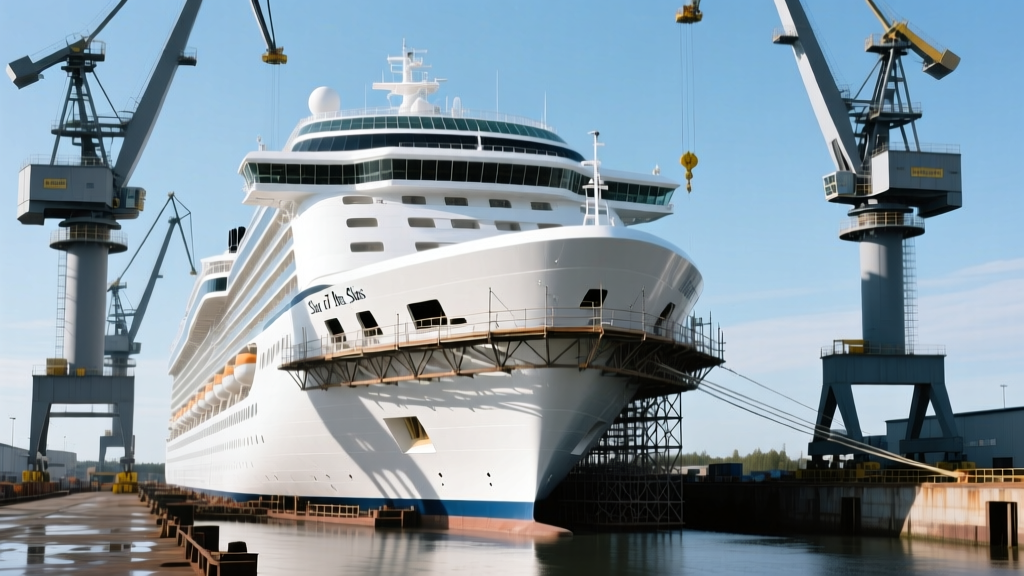
You cannot separate the cost of the Star of the Seas from the economics of its birthplace. The Meyer Turku shipyard in Finland operates within a specialized maritime cluster. The yard utilizes massive Goliath cranes and a drydock capable of assembling 100+ prefabricated steel blocks.
However, European shipbuilding faces distinct cost pressures:
- Labor Rates: Finnish maritime engineers and specialized welders command premium wages, heavily unionized and regulated under EU labor laws.
- Energy Costs: The 2023-2025 European energy crisis drastically increased the cost of operating heavy shipyard machinery and steel-fabrication furnaces.
- Supply Chain Localization: While steel may be sourced globally, the highly specialized marine HVAC, elevator systems (Kone), and navigation suites are sourced from European and North American contractors, insulating the project from cheap, lower-tier global alternatives.
Frequently Asked Questions
Is Star of the Seas more expensive than Icon of the Seas?
Yes. While the base design is nearly identical, Star of the Seas carries a 7% to 10% higher price tag (pushing past $2.15B) due to maritime inflation, increased steel prices, and higher labor costs at the Meyer Turku shipyard between the two vessels' construction windows.
How does the LNG system impact the build cost?
Integrating dual-fuel LNG engines and cryogenic storage tanks adds an estimated $150M to $200M to the baseline hull-and-machinery budget compared to legacy heavy-fuel setups. This is offset by long-term fuel savings and compliance with international emissions regulations.
How long does it take to build a ship of this scale?
From the initial steel-cutting ceremony to final sea trials and delivery, an Icon-class vessel requires approximately 30 to 36 months of active shipyard labor, preceded by 18 to 24 months of naval architecture and engineering design.
Written by
Priya KapoorPriya Kapoor is a real estate market analyst and construction economics researcher with expertise in housing affordability, development feasibility, and infrastructure investment. She holds a Master of Regional Planning from Cornell University and previously worked as a senior analyst at CBRE's Investment Properties group, where she modeled returns for $4B in mixed-use development pipelines. Priya now runs an independent research practice advising developers, municipalities, and REITs on construction cost forecasting and market timing. She publishes the quarterly "BuildMat Market Pulse" report tracking material price indices across 12 commodity categories. Based in Austin, TX, Priya serves on the board of Habitat for Humanity Austin and is a marathon runner.
More from Priya Kapoor
View all
Construction Cost
Cost to Build a 1600 Sq Ft Home in 2026: Full Breakdown
Accurate 2026 cost to build a 1600 sq ft home—material, labor, and regional pricing breakdowns included. Plan your budget with real-time estimates.
Aug 11, 2026

Wood & Lumber
Name the Types of Wood for Pressure Treatment and Preservation
Learn how to name the types of wood best suited for pressure treatment. Compare species treatability, chemical retention levels, and 2026 preservation costs.
Aug 4, 2026

Stone & Masonry
Stone Veneer Suppliers Lindenhurst: 2026 Cost Analysis
Analyze 2026 stone veneer costs in Lindenhurst, NY. Compare local supplier pricing, delivery fees, and Suffolk County installation labor rates.
Aug 4, 2026