Proven Strategies to Lower the Cost to Build a House in TN
Discover actionable strategies to reduce the cost to build a house in TN. Learn material hacks, layout tips, and regional pricing insights.
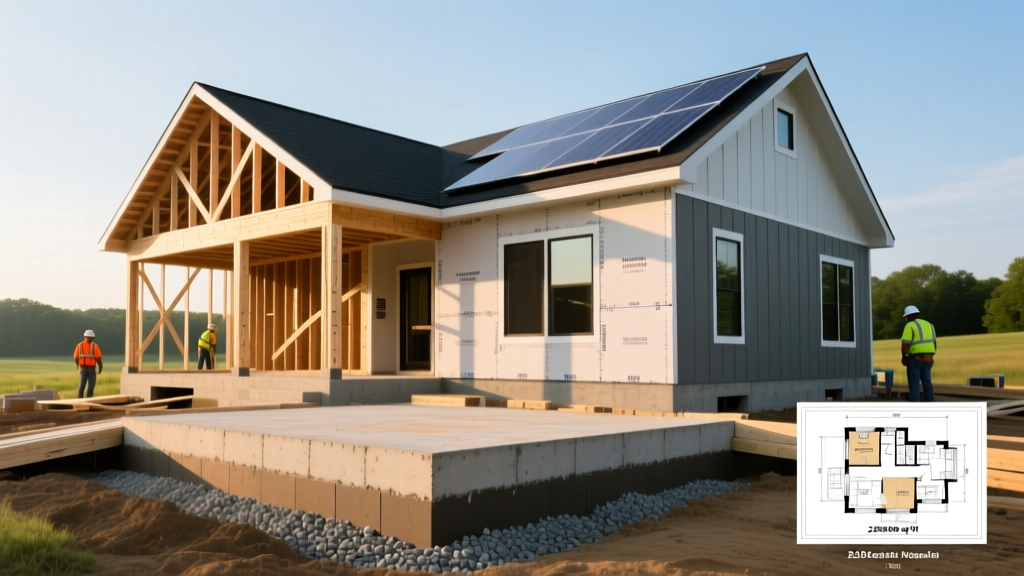
The True Cost to Build a House in TN: A Regional Breakdown
Estimating the cost to build a house in TN requires looking past state-wide averages. Tennessee's diverse topography and varying labor markets create distinct pricing micro-climates. According to data tracked by the U.S. Census Bureau Construction Statistics, the South region maintains some of the most favorable labor rates in the country, but local site conditions can rapidly inflate your baseline budget. Before attempting to cut costs on finishes, you must understand the regional baseline for shell construction and site preparation.
Regional Baseline Pricing Matrix (Per Square Foot)
- Middle TN (Nashville, Franklin, Murfreesboro): $175 - $235 / sq. ft. High labor demand and strict municipal zoning drive up soft costs.
- East TN (Knoxville, Chattanooga, Tri-Cities): $155 - $200 / sq. ft. Mountainous terrain increases site prep, but local material sourcing is highly competitive.
- West TN (Memphis, Jackson): $145 - $185 / sq. ft. Flat terrain reduces grading costs, but expansive soils require specialized foundation engineering.
- Rural TN (Unincorporated Counties): $130 - $165 / sq. ft. Lower permit fees and relaxed zoning, but well/septic installation adds $15,000 - $25,000 upfront.
Site Prep and Foundation: Beating Tennessee Soil
The single most unpredictable variable when calculating the cost to build a house in TN is the dirt beneath your feet. Soil composition dictates your foundation type, and choosing the wrong structural support system will lead to catastrophic repair bills within five years.
Middle TN Limestone and East TN Clay
If you are building in Davidson, Williamson, or Knox counties, you will likely encounter shallow topsoil sitting directly over solid limestone bedrock or dense, poorly draining red clay. Standard excavation bids rarely include rock removal. When a backhoe hits limestone, you must bring in specialized blasting crews or hydraulic hammers.
Money-Saving Strategy: Before purchasing land, mandate a geotechnical soil boring test (typically $1,200 - $1,800). If bedrock is detected within 3 feet of the surface, pivot your design to a pier-and-beam foundation rather than a full basement. Drilling deep concrete piers into the rock is significantly cheaper than blasting out 2,000 square feet of solid limestone to pour a basement floor, easily saving $15,000 to $30,000 on site prep.
West TN Expansive Soils and High Water Tables
Memphis and the surrounding Delta region sit on loess soil and highly expansive clays that swell dramatically when wet and shrink during droughts. A standard monolithic slab will crack and heave under these conditions.
Money-Saving Strategy: Instead of over-engineering a massive, heavily reinforced grade beam foundation (which can add $12,000+ to your concrete budget), utilize post-tensioned slab foundations. Post-tensioning uses high-strength steel cables tensioned after the concrete cures, compressing the slab and preventing cracks from expansive soil movement. This method uses less rebar and thinner concrete profiles, reducing material costs by 10% to 15% while providing superior structural integrity in West TN.
High-ROI Material Swaps for TN Humidity
Tennessee summers are notoriously hot and humid, creating an environment ripe for mold, wood rot, and moisture intrusion. Many builders default to premium national brands, but regional climate data suggests alternative materials offer better longevity at a lower price point.
| Material Category | Standard Builder Grade | Cost-Effective TN Upgrade | Cost Impact |
|---|---|---|---|
| Wall Sheathing | Standard OSB + Housewrap | Huber ZIP System Sheathing | +$1,800 overall, saves $1,200 in housewrap labor |
| Exterior Siding | Fiber Cement (e.g., HardiePlank) | LP SmartSide ExpertFinish | Saves 20% on material, 30% on installation labor |
| Plumbing Lines | Copper or PEX-B (Crimp) | PEX-A (Expansion / Uponor) | Saves 15% on fitting costs, eliminates leak points |
| Roofing | Standing Seam Metal | Architectural Asphalt (GAF Timberline HDZ) | Saves $12,000 - $18,000 on a 2,500 sq ft roof |
Switching from fiber cement to LP SmartSide is one of the most effective ways to lower the cost to build a house in TN without sacrificing aesthetics. Fiber cement is heavy, requires specialized cutting tools (which creates silica dust hazards), and takes longer to install. LP SmartSide is an engineered wood product treated with zinc borate to resist termites and fungal decay—both major threats in Tennessee. It cuts like standard wood, installs faster, and requires fewer structural blocking supports, drastically reducing framing labor.
Architectural Layouts That Slash Labor Costs
Complexity is the enemy of a tight construction budget. Every time a builder has to break rhythm, custom-fabricate a component, or call in a specialized subcontractor, your costs rise. Implement these design constraints during the architectural phase to keep your budget on track.
- Stack the Plumbing: Design your floor plan so that second-floor bathrooms sit directly above first-floor kitchens or laundry rooms. This creates a single, continuous plumbing stack. Running separate waste and vent lines across the house requires extra PEX, PVC, and framing modifications, easily adding $3,000 to $5,000 to your plumbing contract.
- Adopt Advanced Framing (24" O.C.): Traditional framing places wall studs 16 inches on-center. By engineering your home for 24-inch on-center framing with 2x6 studs, you use 30% less lumber while creating deeper wall cavities for thicker insulation. This is highly recommended for East TN mountain builds where winter heating costs are a concern.
- Stick to Simple Gable Roofs: Hip roofs, valleys, and dormers look elegant but require complex truss engineering, extra flashing, and high waste factors for shingles. A simple front-to-back gable roof sheds Tennessee's heavy spring rain efficiently and can be framed and dried-in by a small crew in a fraction of the time.
- Standardize Window Sizes: Custom-sized windows carry a 30% to 50% premium and 8-week lead times. Design your elevations around standard builder-grade sizes (e.g., 36x60 or 48x48 sliding or double-hung units) to leverage bulk pricing from suppliers like JELD-WEN or Andersen.
Navigating Permitting and Hidden Impact Fees
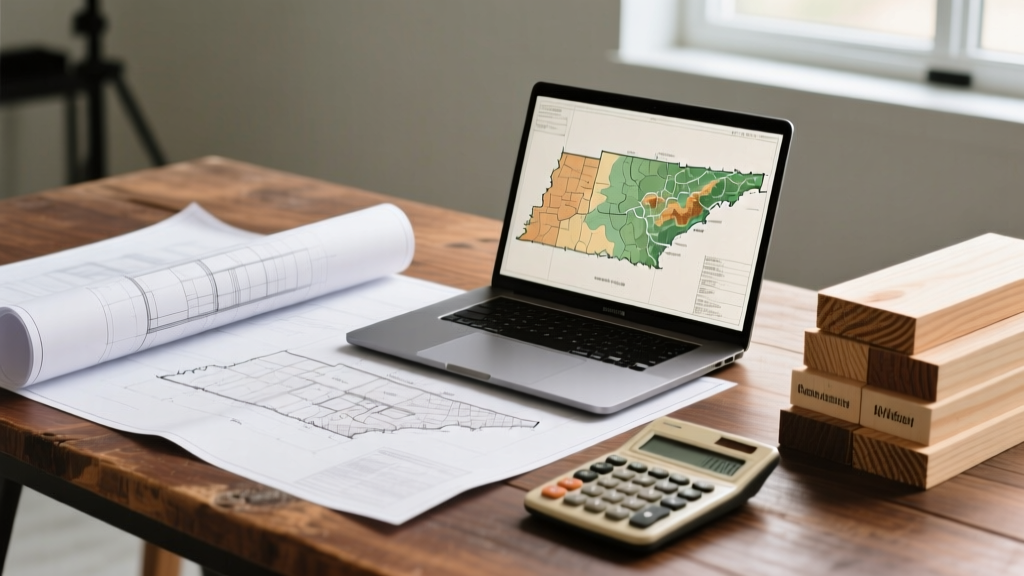
When budgeting the cost to build a house in TN, many self-builders and first-time developers overlook municipal soft costs. Impact fees, tap fees, and stormwater management requirements can silently consume 5% to 8% of your total budget.
Warning on Septic vs. Sewer: If building on the outskirts of growing corridors like Spring Hill, Mt. Juliet, or Seymour, verify sewer availability before purchasing land. A municipal sewer tap fee can cost $3,500 to $6,000. If sewer is unavailable, a conventional septic system costs $4,000 to $7,000. However, if the land fails a standard perc test due to dense clay, you will be forced to install an alternative aerobic treatment unit (ATU), which can push your waste management budget past $18,000.
To mitigate these soft costs, investigate rural zoning overlays. Building just outside the urban growth boundary (UGB) of a major city can exempt you from steep municipal impact fees, though you will trade that savings for the cost of well drilling and septic installation. Always request a comprehensive fee schedule from the county building department before finalizing your land purchase.
Energy Efficiency as a Cost-Offset Strategy
While upfront material costs matter, the total cost of ownership defines the true value of your build. The EPA's ENERGY STAR Certified Homes program outlines framing and sealing techniques that drastically reduce HVAC tonnage requirements. By investing an extra $2,500 in closed-cell spray foam insulation at the roofline and utilizing a sealed crawl space, you can often downsize your HVAC system from a 4-ton unit to a 3-ton unit. In Tennessee's aggressive cooling season, a smaller, right-sized heat pump operates more efficiently, lowering your monthly utility burden and paying for the initial insulation upgrade within four years.
Written by
James ThorntonJames Thornton is a construction industry veteran with 25 years of hands-on experience in wood framing, lumber grading, and residential building codes. He started as a framing carpenter in rural Oregon, earned his ICC Residential Building Inspector certification, and eventually became a senior plan reviewer for the City of Portland Bureau of Development Services. James holds a B.S. in Wood Science & Technology from Oregon State University and is a certified lumber grader through the West Coast Lumber Inspection Bureau (WCLIB). He has inspected over 3,000 residential construction sites and authored the city's internal guide on advanced framing techniques (2x6 at 24" O.C.). James lives in Bend, OR, where he builds custom timber-frame cabins and competes in lumberjack sports.
More from James Thornton
View all
Insulation
Best Home Insulation Materials: Complete 2026 Guide
Compare top home insulation materials for 2026. Find R-values, installed costs per square foot, and best uses for fiberglass, spray foam, and mineral wool.
Aug 4, 2026

Sustainable Building
Certify Your Green Building Material for LEED and WELL
Step-by-step guide to certifying a green building material for LEED v5 and WELL v2. Master EPDs, HPDs, and VOC limits for 2026 project specifications.
Aug 4, 2026

Stone & Masonry
Veneer Stacked Stone Panels: Interior Design & Style Showcase
Discover how veneer stacked stone panels transform interiors. Explore modern design profiles, material pairings, and technical installation specs.
Aug 4, 2026