How Much Does a Pergola Cost to Build? 2026 Financing Guide
Learn exactly how much a pergola costs to build and compare the best 2026 financing options, from HELOCs to personal loans, for your budget.

The True Cost to Build a Pergola: Material & Labor Breakdown
When homeowners ask, "how much does a pergola cost to build?", the answer depends entirely on the material profile and whether you are building a static shade structure or a motorized outdoor living room. In 2026, the national average to build a standard 12x12 (144 sq. ft.) pergola ranges from $3,600 for basic pressure-treated pine to $21,600 for a motorized louvered aluminum system.
To finance this project correctly, you must first isolate your target cost bracket. The table below breaks down the installed cost per square foot and total estimated cost for a 12x12 footprint, including standard concrete footings and professional labor.
| Material Type | Cost Per Sq. Ft. (Installed) | Total Cost (12x12) | Lifespan & Maintenance |
|---|---|---|---|
| Pressure-Treated Pine | $25 - $35 | $3,600 - $5,040 | 10-15 years; requires annual sealing |
| Western Red Cedar | $45 - $65 | $6,480 - $9,360 | 15-20 years; natural rot resistance |
| Vinyl (PVC) | $40 - $60 | $5,760 - $8,640 | 20+ years; zero maintenance, can warp in extreme heat |
| Extruded Aluminum | $60 - $90 | $8,640 - $12,960 | Lifetime; powder-coated, rust-proof |
| Motorized Louvered Roof | $100 - $150+ | $14,400 - $21,600+ | Lifetime structure; 5-10 yr warranty on motors/electronics |
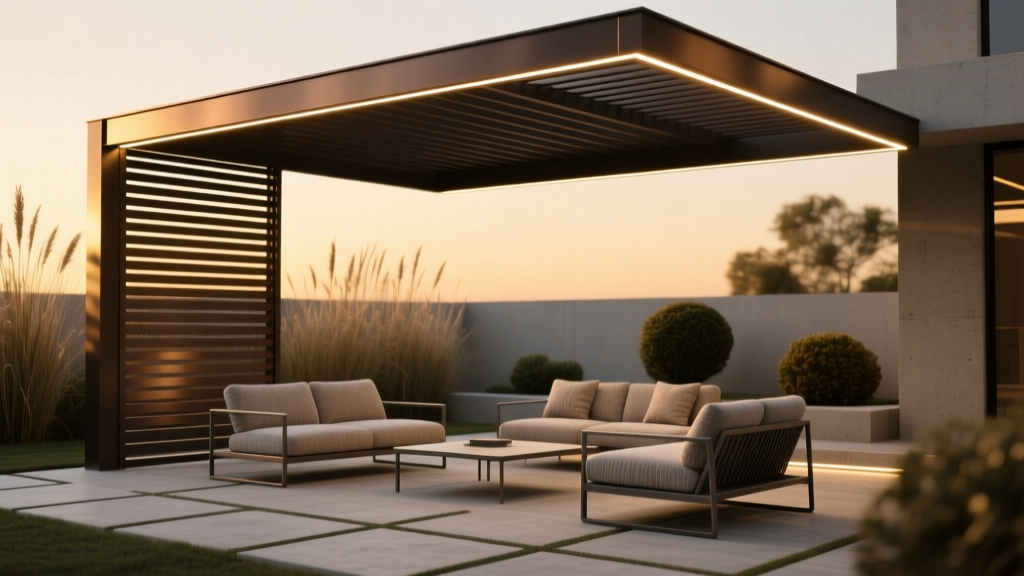
Matching Your Pergola Budget to the Right Financing Vehicle
Outdoor structures are unique because they straddle the line between cosmetic landscaping and permanent structural improvement. This distinction dictates which financing tools are available to you and whether the interest you pay is tax-deductible.
Under current IRS guidelines outlined in Publication 936, you can only deduct interest on home equity loans or HELOCs if the funds are used to "buy, build, or substantially improve" the home that secures the loan. A permanent, permitted pergola attached to the home's foundation or deck structure often qualifies as a substantial improvement, whereas a freestanded temporary kit may not. Always consult a CPA before assuming your interest is deductible.
Tier 1: Under $5,000 (DIY Kits & Basic Wood)
For basic cedar kits or pressure-treated lumber builds, your best financing vehicle is a 0% Introductory APR Credit Card. Many major issuers offer 15 to 21 months of 0% APR on purchases. If you buy a $4,200 lumber and hardware package, you can pay roughly $200 a month over 21 months without paying a cent in interest. Avoid using standard personal loans for this tier, as origination fees (typically 1% to 8%) will unnecessarily inflate a small project budget.
Tier 2: $5,000 to $15,000 (Custom Cedar & Static Aluminum)
This is the sweet spot for Home Equity Lines of Credit (HELOCs). According to the Consumer Financial Protection Bureau (CFPB), a HELOC allows you to draw only what you need, when you need it. This is ideal for custom pergola builds where material delivery and contractor draw schedules are staggered over 4 to 8 weeks. In 2026, HELOC rates are generally variable, tracking the prime rate plus a margin of 1.5% to 3.5%.
Tier 3: $15,000+ (Motorized Louvered Systems & Outdoor Kitchens)
When integrating a louvered aluminum roof (like the StruXure or Apollo systems) with electrical trenching, lighting, and outdoor kitchens, costs easily exceed $25,000. For this tier, consider a Fixed-Rate Home Equity Loan or specialized Point-of-Sale Contractor Financing. The Federal Trade Commission (FTC) warns consumers to carefully review contractor financing terms; while they often advertise "low monthly payments," the deferred interest rates can spike to 29% if the balance is not paid in full by the promotional period's end.
2026 Interest Rate Reality Check: Financing Comparison Matrix
Use this matrix to evaluate the true cost of capital for your pergola build based on your current equity position and credit profile.
| Financing Method | Est. APR (2026) | Term Length | Best Use Case | Primary Risk |
|---|---|---|---|---|
| 0% Intro APR Credit Card | 0% (then 20-26%) | 12-21 months | DIY kits, lumber purchases under $5k | Massive penalty APR if not paid in full by promo end |
| Unsecured Personal Loan | 8.0% - 14.0% | 2 - 7 years | Homeowners with low equity but excellent credit (740+) | Higher fixed rates; origination fees reduce net funding |
| HELOC | 8.5% - 10.5% (Variable) | 10-yr draw / 20-yr repay | Staggered contractor payments, custom wood/aluminum builds | Variable rates can increase monthly payment obligations |
| Home Equity Loan | 7.5% - 9.5% (Fixed) | 5 - 15 years | Large louvered systems, predictable fixed monthly budgets | Locks up a lump sum; paying interest on undeployed cash |
| Contractor POS Financing | 0% (promo) or 18-29% | 12 - 60 months | Turnkey installs where convenience outweighs cost | Deferred interest traps; hidden administrative fees |
Hidden Costs That Derail Pergola Budgets
When securing financing, borrowers frequently underwrite the exact cost of the pergola kit or materials, only to face a 15% to 25% budget overrun due to site-specific hidden costs. Ensure your loan amount or credit limit includes a buffer for the following:
- Frost-Line Footings ($800 - $1,800): In northern climates, building codes require concrete sonotube footings poured below the frost line (often 36 to 48 inches deep). Hand-digging or renting a mini-auger adds significant labor and concrete costs.
- Electrical Trenching for Louvers ($1,200 - $2,500): Motorized pergolas require a dedicated 110V circuit. Trenching from your main panel to the patio, laying PVC conduit, and hiring a licensed electrician is rarely included in the base pergola quote.
- Permitting & HOA Fees ($150 - $600): Most municipalities require structural permits for pergolas exceeding 120 square feet or those attached to the primary dwelling. HOAs may also require architectural review fees.
- Crane or Helicopter Lifts ($2,000 - $5,000+): If your backyard lacks gate access (typically less than 8 feet wide), contractors cannot use a standard forklift to move heavy aluminum beams or glulam timber, requiring specialized lifting equipment.
Step-by-Step Framework: Securing Funds Before Signing
Do not sign a contractor's proposal until your capital stack is verified. Follow this sequence to protect your cash flow:
- Obtain 3 Itemized Bids: Demand that contractors separate material costs, labor, permit fees, and electrical work. You cannot finance what you have not quantified.
- Calculate the 20% Contingency: Add 20% to the highest bid to account for soil surprises (hitting bedrock while digging footings) or material backorders.
- Pre-Qualify for Equity Products: If using a HELOC or Home Equity Loan, initiate the appraisal and underwriting process 30 days before your target build date. Appraisal delays are the leading cause of project postponements.
- Lock Your Rate: If utilizing a home equity loan or personal loan, lock your interest rate at the time of final contractor signing to protect against market volatility.
- Structure Contractor Draws: Never finance a project where the contractor demands 50%+ upfront. Structure your draw schedule to release funds only upon completion of milestones: 10% at signing, 40% at material delivery, 40% at structural completion, and 10% after final municipal inspection.
Frequently Asked Questions
Does building a pergola increase home value enough to justify a loan?
According to remodeling impact data, well-integrated outdoor living spaces typically yield a 50% to 80% return on investment at resale. A $15,000 louvered aluminum pergola may increase your home's appraised value by $7,500 to $12,000. You should finance a pergola for lifestyle utility and enjoyment, not strictly as a financial investment.
Can I use an FHA 203(k) or Fannie Mae HomeStyle loan to build a pergola?
Generally, no. Government-backed renovation loans are designed for health, safety, and structural integrity improvements (like roofs, HVAC, or foundational repairs). Cosmetic or luxury landscaping additions like pergolas are typically excluded from these specific loan programs unless they are part of a massive, whole-home structural rehabilitation.
What happens if my HOA rejects my pergola design after I've secured financing?
If you are using a HELOC or personal loan, the funds are still your responsibility to repay, even if the project is canceled. Always secure unconditional HOA architectural approval in writing before executing a loan draw or signing a binding contractor agreement.
Written by
David NakamuraDavid Nakamura is a licensed architect (AIA) and construction technology writer focused on sustainable building methods, mass timber engineering, and high-performance building envelopes. He holds a Master of Architecture from the University of Washington and is a certified Passive House Consultant (CPHC). David spent eight years at the Seattle firm Mithun, where he led the design of three LEED Platinum projects, before founding his own practice specializing in net-zero residential design. He serves on the editorial advisory board of GreenBuilder Magazine and has authored peer-reviewed papers on cross-laminated timber (CLT) connections for the Journal of Structural Engineering. In his spare time, David teaches woodworking at Pratt Fine Arts Center and kayaks the Puget Sound.
More from David Nakamura
View all
Construction Cost
Labor Cost to Build a Deck Per Sq Ft: 2026 Installation Guide
Discover the exact labor cost to build a deck per sq ft in 2026. This installation guide breaks down contractor rates, complexity factors, and hidden fees.
Aug 4, 2026

Construction Cost
How Much Does It Cost to Build a 3 Bedroom House? Financing Guide
Learn exactly how much it costs to build a 3 bedroom house and explore 2026 financing options, construction loan types, and budget frameworks for your build.
Aug 4, 2026

Construction Cost
Cost to Build a Tennis Court: 2026 Guide
How much does it cost to build a tennis court in 2026? Breakdowns for asphalt, concrete, and synthetic surfaces plus fencing and lighting.
Jul 30, 2026