How Much Does It Cost to Build a Quantum Computer Facility?
Discover how much it costs to build a quantum computer facility. We break down cryogenic, shielding, and cleanroom construction expenses for 2026.

The True Cost of Quantum Infrastructure
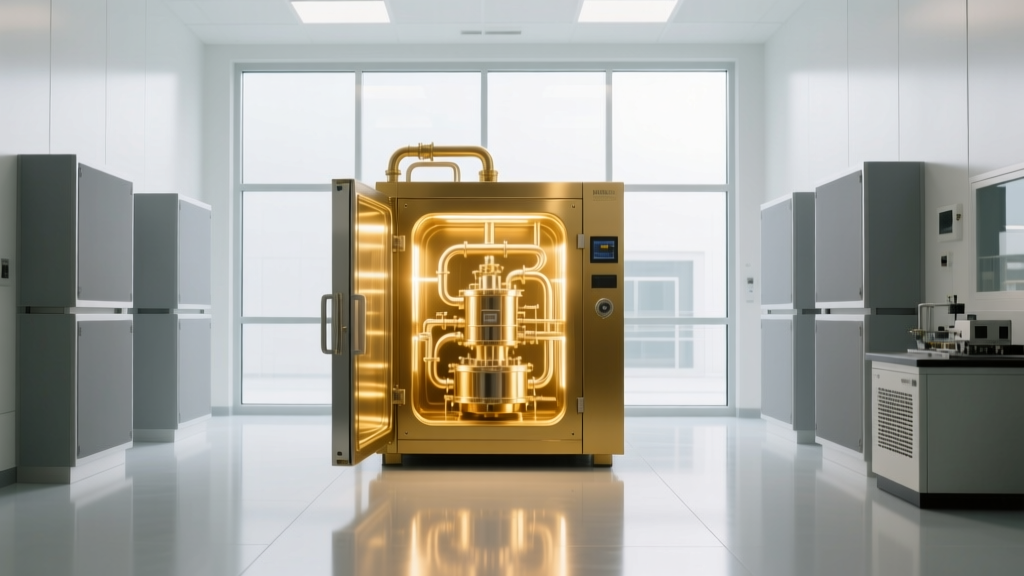
When researchers and investors ask how much does it cost to build a quantum computer, the conversation often fixates on the price of superconducting qubits or trapped-ion lasers. However, the physical qubits are useless without an extreme, highly controlled macroscopic environment. Building the physical facility to house, cool, and isolate a quantum processing unit (QPU) is a massive construction and mechanical engineering undertaking. In 2026, the cost to construct a fully operational, enterprise-grade quantum computing laboratory ranges from $1.8 million to over $6.5 million, excluding the R&D costs of the qubit architecture itself.
Core Facility Construction Cost Breakdown
Constructing a quantum lab requires merging semiconductor-grade cleanroom standards with heavy industrial cryogenic infrastructure. Below is the estimated capital expenditure (CapEx) for a standard 2,000-square-foot quantum computing facility in 2026.
| Infrastructure Category | Estimated Cost Range (2026) | Primary Construction Elements |
|---|---|---|
| Structural & Vibration Isolation | $350,000 - $850,000 | Inertia blocks, slab trenching, VC-G compliance |
| Cryogenic & Gas Delivery Systems | $450,000 - $1,200,000 | Helium-3/4 plumbing, recovery systems, bulk tanks |
| Electromagnetic & RF Shielding | $180,000 - $400,000 | Mu-metal lining, Faraday cages, RF filtering |
| Cleanroom & HVAC (ISO Class 5/6) | $300,000 - $750,000 | Laminar flow, HEPA, strict temp/humidity control |
| MEP & Power Redundancy | $250,000 - $600,000 | UPS arrays, backup generators, specialized grounding |
| Dilution Refrigerator Hardware | $800,000 - $1,800,000 | The physical cryostat and top-loading mechanisms |
| Total Estimated Facility Cost | $2,330,000 - $5,600,000 | Turnkey physical lab construction |
Structural Vibration Isolation: The Concrete Factor
Quantum states are incredibly fragile. A microscopic vibration from a nearby highway, an elevator shaft, or even heavy footsteps can cause 'decoherence,' destroying the quantum computation. To combat this, construction teams must build specialized structural inertia blocks.
Trenching and Inertia Blocks
You cannot simply place a dilution refrigerator on a standard commercial concrete slab. Engineers must trench the existing foundation to isolate the quantum lab's floor from the rest of the building. A dedicated concrete inertia block—often weighing between 40,000 and 80,000 pounds—is poured independently, resting on pneumatic or elastomeric vibration isolators. Achieving VC-G or VC-H vibration criteria (where maximum vibration velocity is limited to 3.12 µm/s or 1.56 µm/s across specific frequency bands) requires precision structural engineering and adds $150,000 to $300,000 in concrete and excavation costs alone.
Cryogenic Plumbing and the Helium Supply Chain
Superconducting quantum computers operate at roughly 15 millikelvins—colder than deep space. Achieving this requires a dilution refrigerator, which relies on a continuous mixture of Helium-3 and Helium-4 isotopes. According to the U.S. Department of Energy, maintaining these extreme cryogenic environments is one of the most resource-intensive aspects of quantum infrastructure.
- Helium-3 Costs: Helium-3 is a rare isotope, and in 2026, it costs upwards of $3,500 per liter. A single system may require 100 to 200 liters to charge, representing a $350,000 to $700,000 consumable material cost.
- Closed-Loop Recovery Systems: Because venting Helium-3 is financially catastrophic, facilities must be constructed with complex closed-loop gas recovery plumbing. This requires installing specialized stainless-steel vacuum-jacketed piping, gas bag storage arrays, and high-pressure compressors, adding roughly $200,000 to the mechanical construction budget.
Electromagnetic Shielding and Cleanroom Standards
Stray electromagnetic fields from Wi-Fi routers, cell phones, and even the building's electrical wiring can induce errors in qubit operations. The physical room housing the QPU must be transformed into a sophisticated Faraday cage.
Mu-Metal and RF Shielding
Construction crews must line the walls, ceiling, and floor of the inner lab with Mu-metal (a nickel-iron soft ferromagnetic alloy) to block low-frequency magnetic fields, followed by a continuous layer of copper or aluminum mesh for high-frequency RF shielding. Every electrical penetration, including lighting and HVAC ducts, requires specialized RF waveguide filters. This shielding envelope typically costs between $120 and $180 per square foot of surface area.
ISO Class 5/6 Cleanroom Integration
Dust particles can ruin the fabrication and packaging of quantum chips before they are ever cooled. The lab must be built to ISO Class 5 or 6 cleanroom standards. This requires installing high-efficiency particulate air (HEPA) ceiling grids, maintaining positive air pressure relative to adjacent corridors, and utilizing anti-static flooring. The National Institute of Standards and Technology (NIST) emphasizes that stringent environmental controls are non-negotiable for scaling quantum hardware reliably.
Control Electronics and Wiring Infrastructure
A quantum computer requires hundreds of coaxial cables to route microwave control signals from room-temperature electronics down to the millikelvin stage. The physical construction must accommodate massive cable trays, specialized thermal anchoring points, and racks for arbitrary waveform generators (AWGs) and cryo-CMOS control hardware.
The electrical load for the control electronics, combined with the compressors for the pulse tube cryocoolers, often requires a dedicated 3-phase power drop. Furthermore, the facility must be equipped with an Uninterruptible Power Supply (UPS) and backup diesel or natural gas generators. A sudden power loss doesn't just interrupt a calculation; it causes the dilution refrigerator to 'warm up,' which can take 48 to 72 hours and thousands of dollars in lost helium to recover from.
Frequently Asked Questions
Can I build a quantum computer in a standard data center?
No. Standard data centers are designed for high-density thermal exhaust and standard server racks. They lack the structural vibration isolation (VC-G criteria), the extreme ceiling heights required for cryostats, and the specialized Helium-3 plumbing infrastructure necessary for quantum hardware.
What is the most expensive construction component?
Excluding the dilution refrigerator hardware itself, the most expensive construction element is the Helium-3 recovery and closed-loop plumbing system, combined with the structural inertia blocks required for vibration isolation. The raw cost of the Helium-3 isotope charge also represents a massive upfront capital expenditure.
How long does facility construction take?
From site selection and structural engineering to the final commissioning of the cleanroom and cryogenic systems, building a turnkey quantum computing facility typically takes 14 to 22 months in 2026. Lead times for specialized components like Mu-metal shielding and custom dilution refrigerators often dictate the critical path of the construction schedule.
Written by
Sarah WhitfieldSarah Whitfield is a chartered quantity surveyor (MRICS) and construction cost analyst with 15 years of experience in material pricing, procurement strategy, and project budgeting. She earned her degree in Construction Management from the University of Reading (UK) and has worked on projects ranging from $2M custom homes to $180M mixed-use developments across North America and Europe. Sarah currently leads cost estimating for BuildMat Insight, maintaining a proprietary database of 4,000+ material price points updated quarterly. She is a frequent contributor to RSMeans cost data panels and has presented at the International Cost Engineering Council (ICEC) congress. Based in Denver, CO, Sarah is an avid trail runner and volunteer mentor for Women in Construction.
More from Sarah Whitfield
View all
Wood & Lumber
What Are the Different Types of Wood? A Builder's Guide
Compare structural softwoods, finish hardwoods, and engineered lumber. Analyze Janka ratings, MOE values, and 2026 pricing for construction.
Aug 4, 2026

Walls & Panels
Steel Framing vs Wood Framing: Corrosion and Moisture Defense
Compare steel framing vs wood framing for moisture resistance. Learn about galvanized coatings, condensation risks, and corrosion protection strategies.
Jul 21, 2026

Stone & Masonry
How to Cut Stone Veneer: Wet Saw vs Grinder Comparison
Compare the best tools for cutting stone veneer. We review wet saws, angle grinders, and chop saws to help you achieve clean, chip-free cuts.
Jul 21, 2026