Lowering the Average Cost to Build a House in Missouri: 2026 Guide
Discover proven strategies to lower the average cost to build a house in Missouri. Get 2026 pricing data, material hacks, and regional building tips.
The 2026 Missouri Construction Cost Landscape
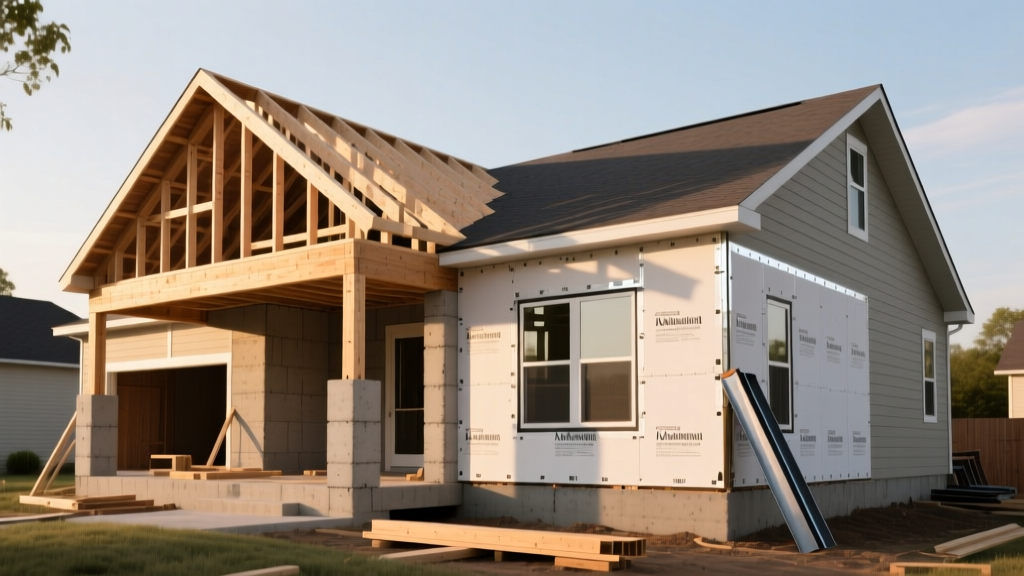
Missouri consistently ranks 10% to 15% below the national average for residential construction, largely due to lower regional labor rates and proximity to Midwestern material manufacturing hubs. However, broad averages mask the specific variables that can inflate your budget. According to the NAHB Construction Cost Survey, framing, foundation, and exterior finishes account for nearly 45% of total hard costs. Targeting these specific phases with strategic material substitutions and design simplifications is the most effective way to reduce the average cost to build a house in Missouri without compromising structural integrity.
Regional Price Variations and Site Prep Anomalies
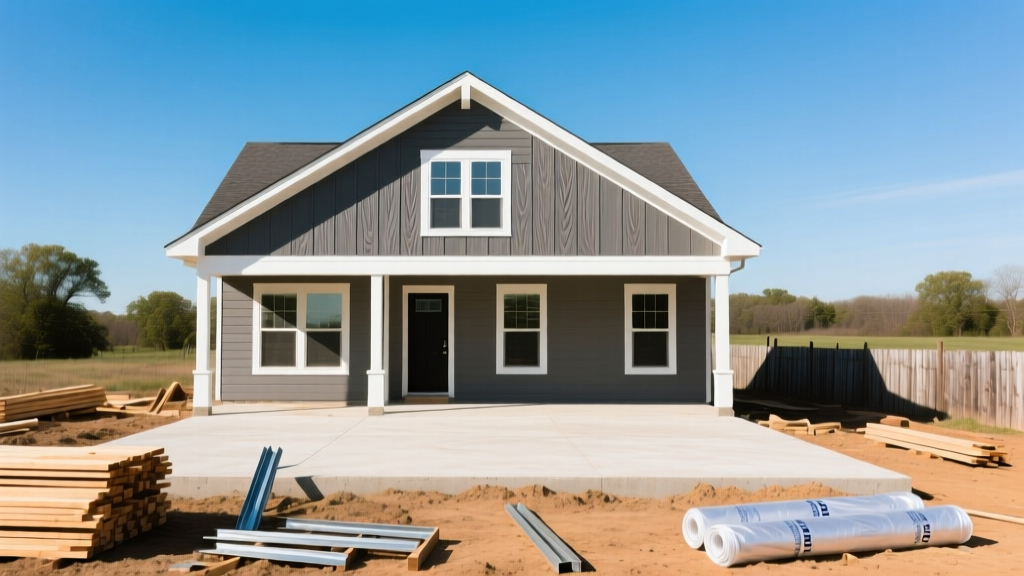
Missouri's diverse geology and varying municipal fee structures mean that building in Kansas City requires a completely different budget strategy than building in the Ozarks. Site preparation alone can swing your budget by $15,000 or more depending on your exact coordinates.
| Region | Avg Cost / Sq Ft (2026) | Primary Cost Driver & Site Prep Anomaly |
|---|---|---|
| Kansas City Metro | $155 - $180 | Expansive clay soils require engineered slabs or deeper footings (+$3,500 to $6,000). High municipal impact fees. |
| St. Louis Metro | $150 - $175 | Strict county zoning and prevailing wage requirements in certain municipalities drive labor costs up 12%. |
| Springfield / Ozarks | $130 - $155 | Karst topography and shallow limestone bedrock. Blasting or rock trenching for utilities can add $5,000 to $12,000. |
| Rural / Ag Zones | $125 - $145 | Lower permit fees, but requires well/septic installation ($15,000+) and potential rural electric tap fees. |
Material Swaps That Slash Your Budget
Value engineering is not about buying cheap materials; it is about selecting products that offer identical lifespans and warranties at a lower installed cost. Here are three specific swaps that yield the highest ROI in the Missouri climate.
1. Siding: LP SmartSide vs. Fiber Cement
James Hardie fiber cement is the default premium siding in Missouri, but it is heavy, brittle, and requires specialized cutting tools, driving up labor costs. LP SmartSide ExpertFinish engineered wood siding offers a nearly identical aesthetic and a 50-year prorated warranty. Because it is lighter and cuts with standard carbide blades, installation is 20% faster.
- HardiePlank Installed Cost: $9.50 - $12.00 per sq ft
- LP SmartSide Installed Cost: $6.50 - $8.50 per sq ft
- Total Savings on 2,200 sq ft home: $4,500 - $7,500
2. Roofing: Architectural Asphalt vs. Standing Seam Metal
While standing seam metal roofs are trending, they cost upwards of $22 per square foot installed. For a cost-effective alternative that still handles Missouri's high wind and hail, specify GAF Timberline HDZ architectural shingles. They feature a proprietary StrikeZone nailing area that speeds up installation and carries a Class 3 impact resistance rating (upgradeable to Class 4 with specific underlayments), which can lower your annual homeowners insurance premiums by up to 15% in tornado-prone counties.
3. Framing: Advanced 24-inch O.C. Framing
Traditional framing uses 2x4 studs spaced 16 inches on center (O.C.) with double top plates. By switching to 2x6 studs at 24 inches O.C. with single top plates and insulated headers (Advanced Framing or Optimum Value Engineering), you reduce lumber usage by 15% to 20%. More importantly, the wider stud bays allow for R-21 cavity insulation, significantly reducing your long-term HVAC loads during Missouri's humid summers and freezing winters.
Design Hacks: Foundation and Roofline Economics
Foundation: Slab-on-Grade vs. Walkout Basement
Basements are culturally expected in Missouri, but a full walkout basement adds $45,000 to $70,000 to your foundation budget due to extensive excavation, retaining walls, and waterproofing. If your lot allows, a post-tensioned slab-on-grade is vastly cheaper. To mitigate the loss of storage, design a 100-square-foot interior mechanical/storage room on the main floor, and utilize a 3-car garage with an extended bay for bulk storage. This single design decision can shave 15% off your total hard costs.
Roofline: Simple Front-Gable vs. Multi-Hip
Hip roofs require complex jack rafters, more truss engineering, and generate 15% more material waste during shingling. A simple front-gable or side-gable roof with a 6/12 pitch is the most cost-efficient roofline to frame and sheath. It also provides superior attic ventilation via continuous ridge and soffit vents, which is critical for preventing ice dams in northern Missouri winters.
Hidden Missouri Costs: Radon, Soil, and Weather
Failing to account for regional environmental factors during the estimating phase will result in costly change orders mid-build.
- Radon Mitigation: The EPA classifies much of western and central Missouri as Zone 1 (highest potential for elevated radon levels). Do not wait for a post-construction radon test. Install a passive radon venting system (a 4-inch PVC pipe routed from a gravel bed under the slab through the roof) during the foundation pour. Cost: $400 during construction vs. $2,500 for a retrofit active system later.
- Winter Concrete Pours: If your schedule pushes foundation work into January or February, ready-mix suppliers (per ASTM C94 standards) will charge a premium for hot water mixing and non-chloride accelerating admixtures (like calcium nitrate) to prevent freezing. Budget an extra $20 to $30 per cubic yard for cold-weather concrete, plus the cost of insulated curing blankets.
- Septic vs. Sewer: In rural counties (e.g., Christian, Stone, or Lincoln), municipal sewer is rarely available. A standard lateral line septic system costs $6,000 to $9,000, but if your soil percolation test fails due to heavy clay or shallow rock, you will be forced to install an aerobic treatment unit (ATU) or a drip irrigation field, pushing costs to $15,000 to $22,000. Always make your land purchase contingent on a successful perc test.
Navigating the Owner-Builder Route
Missouri state law (RSMo 327) does not require a state-level general contractor license for residential construction, which theoretically allows owner-builders to act as their own GC. According to U.S. Census Bureau construction data, owner-built homes can reduce total project costs by 15% to 25% by eliminating the general contractor's overhead and profit margin.
However, local jurisdictions have strict workarounds. St. Louis County and Kansas City require owner-builders to pass a rigorous contractor exam or sign affidavits limiting the frequency of owner-built homes (usually one per three years). Furthermore, you must secure a builder's risk insurance policy and manage all subcontractor lien waivers. If you lack experience scheduling trades—specifically the critical path between framers, HVAC rough-in, and drywallers—the interest carry costs on your construction loan will quickly erase the 20% GC fee you saved.
Expert Takeaway: To successfully beat the average cost to build a house in Missouri, act as the project manager for design and material procurement, but hire a licensed GC on a 'cost-plus-fixed-fee' contract strictly for on-site trade coordination and liability management.
Written by
Elena RodriguezElena Rodriguez is a civil engineer and technical writer specializing in concrete technology, masonry systems, and ASTM/ACI compliance. She earned her B.S. in Civil Engineering from Texas A&M University and spent a decade at a materials testing laboratory, performing over 2,000 concrete compressive strength tests and masonry prism evaluations. Elena is an ACI-certified Field Testing Technician (Grade I) and a member of ASTM Committee C12 on Natural Building Stone. She currently consults on forensic engineering cases involving concrete failures and moisture intrusion. Based in San Antonio, TX, Elena is a proud member of the Society of Women Engineers (SWE) and coaches her daughter's FIRST Robotics team.
More from Elena Rodriguez
View all
Walls & Panels
Cost Analysis: Light Gauge Steel Framing Advantages and Disadvantages
Evaluate light gauge steel framing advantages and disadvantages through a strict cost analysis lens, comparing material, labor, and lifecycle expenses.
Aug 4, 2026

Walls & Panels
Gypsum Board Types: Exact Specifications, Thickness & Dimensions
Compare standard, Type X, and moisture-resistant gypsum board types. Get exact specifications, thicknesses, dimensions, and ASTM standards for your project.
Aug 4, 2026

Fire Resistance
Best Fire-Resistant Outdoor Decking Materials: 2026 Buyer Guide
Discover the best fire-resistant outdoor decking materials for 2026. Compare Class A PVC, aluminum, and hardwood options for WUI compliance and safety.
Aug 4, 2026