How Much Does It Cost to Build a Sunroom? 2026 Financing Guide
Discover how much it costs to build a sunroom in 2026. Compare three-season vs. four-season pricing, hidden fees, and the best financing options.
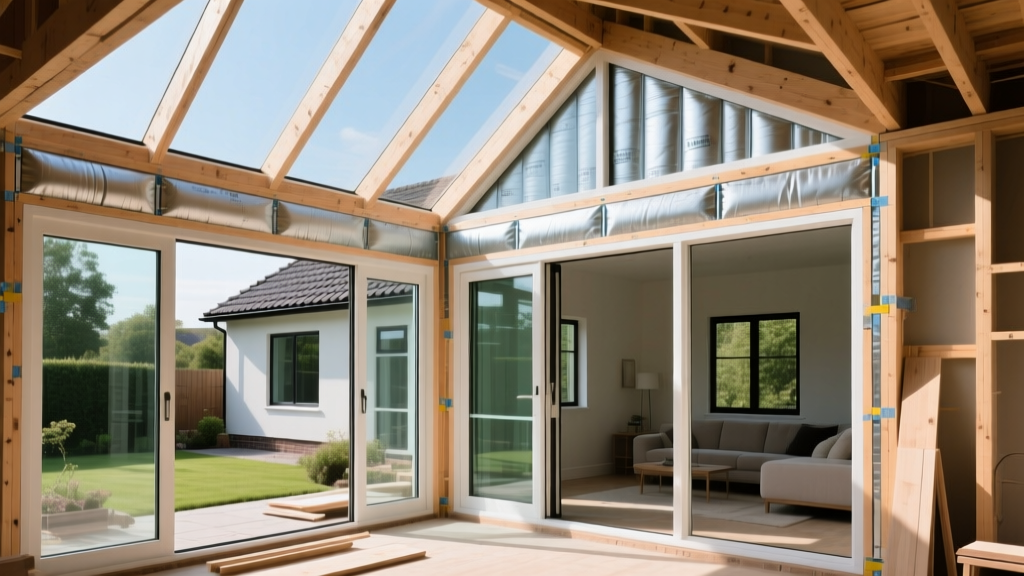
The True Cost to Build a Sunroom: 2026 Pricing Breakdown
When homeowners ask how much does it cost to build a sunroom, the answer depends entirely on thermal performance, foundation requirements, and HVAC integration. In 2026, the national average for a professionally installed sunroom ranges from $25,000 to $85,000, with custom four-season conservatories exceeding $120,000. According to industry data aggregated by HomeGuide, material and labor costs have stabilized post-pandemic, but specialized energy-efficient glazing and electrical upgrades continue to drive premium pricing.
To budget accurately, you must categorize your project by its intended seasonal use and structural integration. A three-season room operates as an enclosed porch, while a four-season room functions as a fully conditioned extension of your home's Gross Living Area (GLA).
| Sunroom Type | Cost Per Sq. Ft. | Total Cost (200 Sq. Ft.) | HVAC Requirement | GLA Inclusion |
|---|---|---|---|---|
| Prefabricated Kit (DIY/Pro Install) | $75 - $150 | $15,000 - $30,000 | None / Portable | No |
| Three-Season (Stick-Built) | $150 - $280 | $30,000 - $56,000 | None / Ceiling Fan | No |
| Four-Season (Insulated) | $350 - $600 | $70,000 - $120,000 | Permanent / Mini-Split | Yes |
| Solarium / Conservatory | $500 - $900+ | $100,000 - $180,000+ | Dedicated Climate Control | Yes |
Material vs. Labor Cost Split
For a standard four-season sunroom, expect materials to consume 55% to 65% of the total budget. High-performance Low-E argon-filled insulated glass units (IGUs) with a U-factor of 0.25 or lower are mandatory in most northern climate zones to pass local energy codes. Thermally broken aluminum frames or fiberglass-clad wood frames account for the bulk of this material cost. Labor, including site preparation, foundation pouring, framing, and glazing, typically accounts for the remaining 35% to 45%.
Strategic Financing: How to Pay for Your Sunroom
Because a sunroom is a capital improvement that can increase your property's appraisal value, leveraging home equity is usually the most cost-effective financing route. However, your specific equity position and the project's scale will dictate the optimal loan product.
Financing Options Comparison Matrix
| Loan Type | Best For | Estimated 2026 Rates | Collateral Required | Pros & Cons |
|---|---|---|---|---|
| Home Equity Line of Credit (HELOC) | Phased builds, owner-managed projects | Variable (7.5% - 9.5%) | Home Equity | Pay interest only on drawn funds; variable rates carry risk. |
| Home Equity Loan (HEL) | Turnkey contractor builds with fixed bids | Fixed (7.0% - 8.5%) | Home Equity | Predictable monthly payments; requires lump-sum disbursement. |
| Cash-Out Refinance | Bundling sunroom with whole-home remodel | Fixed (6.5% - 7.5%) | Home Equity | Resets primary mortgage term; high closing costs (2-5%). |
| FHA 203(k) Rehab Loan | Buyers purchasing fixer-uppers with sunroom plans | Fixed (FHA Market Rates) | Property | Low down payment; strict HUD contractor requirements and paperwork. |
| Unsecured Personal Loan | Prefab kits, small 3-season enclosures | Fixed (10% - 18%) | None | Fast funding, no equity needed; high interest rates. |
Decision Framework: Which Loan Fits Your Equity Position?
- High Equity (>30%) + Fixed Contractor Bid: Choose a Home Equity Loan. Locking in a fixed rate protects you from market volatility, and the lump sum aligns perfectly with a general contractor's draw schedule (e.g., 20% deposit, 40% at framing, 40% at completion).
- High Equity + DIY/Phased Build: Choose a HELOC. If you are pouring the slab in May, framing in June, and ordering custom glass for an August install, a HELOC prevents you from paying interest on unspent capital.
- Low Equity (<15%): You will likely need an Unsecured Personal Loan or specialized Contractor Financing (often facilitated by third-party lenders like GreenSky or Synchrony). Be warned: contractor financing frequently relies on deferred-interest promotions (e.g., "0% for 18 months"). If the balance is not paid in full by month 18, retroactive interest is applied to the original principal at rates often exceeding 25%.
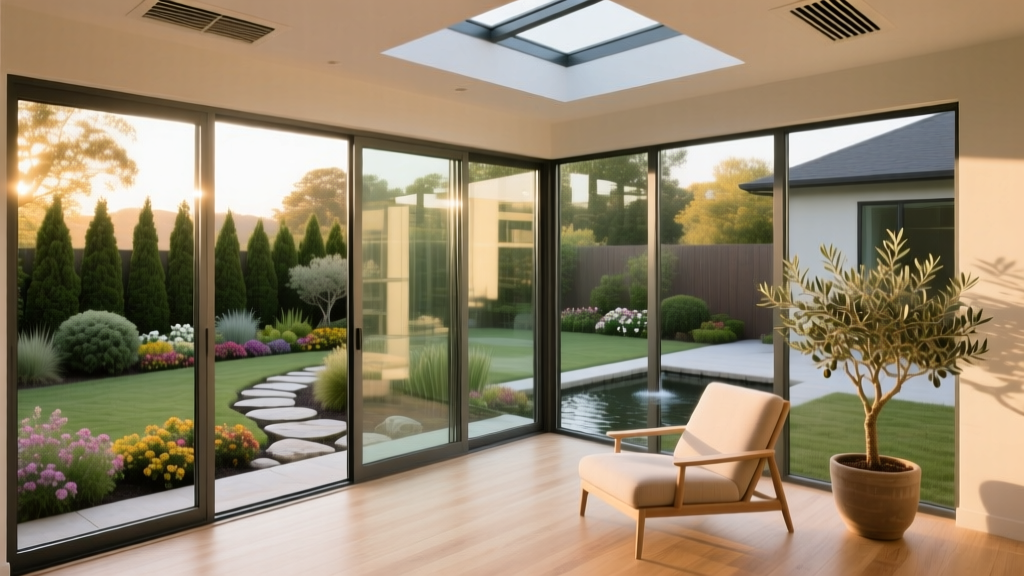
Hidden Site-Prep and Permitting Costs That Derail Budgets
Most online sunroom cost calculators fail to account for site-specific engineering and utility upgrades. When calculating how much it costs to build a sunroom, factor in these frequent budget-killers:
Warning: The Electrical Panel Bottleneck
Adding a four-season sunroom often requires a dedicated 240V circuit for a ductless mini-split HVAC system (e.g., Mitsubishi M-Series). If your home currently has a 100-amp or 150-amp electrical panel, the utility company and local code will likely mandate an upgrade to a 200-amp or 400-amp service. Cost impact: $2,500 to $5,500 before drywall even begins.
- Frost-Protected Foundations: A three-season room can often be built on a floating monolithic slab. A four-season room requires frost footings (typically 36 to 48 inches deep, depending on your local frost line) to prevent winter heaving from cracking the thermal envelope. Excavation and concrete costs can add $4,000 to $8,000.
- Roof Tie-In and Structural Headers: If your sunroom abuts an existing roof eave, a structural engineer must design a ledger board attachment and potentially reinforce the existing roof trusses to handle the new snow and wind loads. Engineering stamps cost $800 to $1,500.
- Impact-Resistant Glazing Codes: Homeowners in coastal hurricane-prone regions (HVHZ) must use Miami-Dade certified impact-resistant glass or install engineered storm shutters. This upgrades glazing costs by 30% to 50%.
Appraisal Realities: Will a Sunroom Increase Home Value?
From a financing perspective, you must understand how appraisers view your new space. According to the ANSI Z765 standard for measuring square footage, a sunroom only counts toward your home's Gross Living Area (GLA) if it meets strict criteria:
- It must be heated and cooled by a permanent HVAC system (space heaters and portable ACs do not qualify).
- It must be insulated to the same R-value standards as the primary dwelling.
- It must have direct access to the main house without passing through an unconditioned space.
If your sunroom qualifies as GLA, appraisers will value it similarly to your existing square footage (e.g., $200/sq. ft. in your local market). If it is a three-season room, it is appraised as an "outdoor amenity" or porch. According to Remodeling Magazine's Cost vs. Value data, outdoor and patio additions generally recoup 50% to 65% of their cost at resale. Therefore, financing a $100,000 solarium with a 20-year home equity loan is a poor financial decision if you plan to sell within five years, as the market will not fully reimburse the capital outlay.
Your 5-Step Financing Execution Plan
Do not sign a contractor agreement until your capital stack is secured. Follow this sequence to protect your leverage:
- Order an Appraisal or CMA: Before borrowing against your home, verify your current equity position. A Comparative Market Analysis (CMA) from a local realtor is free and provides a realistic baseline.
- Secure Three Itemized Bids: Demand bids that separate site-prep, foundation, framing, glazing, and electrical. This prevents contractors from hiding margin in vague "labor" line items.
- Apply for Financing with a 15% Buffer: If your chosen bid is $60,000, apply for a $69,000 HELOC or Home Equity Loan. Construction projects invariably encounter hidden site conditions (e.g., hitting bedrock during footing excavation).
- Negotiate Contractor Draw Schedules: Never pay more than 15% upfront. Tie subsequent payments to verifiable milestones: completion of frost footings, passing of the municipal framing inspection, and final delivery of the insulated glass units.
- File for Homestead/Permit Exemptions: Check with your local county tax assessor. In some jurisdictions, adding conditioned square footage triggers an immediate property tax reassessment, while a three-season enclosure does not.
Understanding exactly how much it costs to build a sunroom requires looking past the brochure price of the glass and aluminum. By aligning your structural choices with the right financing vehicle, you can build a space that enhances your daily life without compromising your long-term financial leverage.
Written by
Sarah WhitfieldSarah Whitfield is a chartered quantity surveyor (MRICS) and construction cost analyst with 15 years of experience in material pricing, procurement strategy, and project budgeting. She earned her degree in Construction Management from the University of Reading (UK) and has worked on projects ranging from $2M custom homes to $180M mixed-use developments across North America and Europe. Sarah currently leads cost estimating for BuildMat Insight, maintaining a proprietary database of 4,000+ material price points updated quarterly. She is a frequent contributor to RSMeans cost data panels and has presented at the International Cost Engineering Council (ICEC) congress. Based in Denver, CO, Sarah is an avid trail runner and volunteer mentor for Women in Construction.
More from Sarah Whitfield
View all
Wood & Lumber
What Are the Different Types of Wood? A Builder's Guide
Compare structural softwoods, finish hardwoods, and engineered lumber. Analyze Janka ratings, MOE values, and 2026 pricing for construction.
Aug 4, 2026

Walls & Panels
Steel Framing vs Wood Framing: Corrosion and Moisture Defense
Compare steel framing vs wood framing for moisture resistance. Learn about galvanized coatings, condensation risks, and corrosion protection strategies.
Jul 21, 2026

Stone & Masonry
How to Cut Stone Veneer: Wet Saw vs Grinder Comparison
Compare the best tools for cutting stone veneer. We review wet saws, angle grinders, and chop saws to help you achieve clean, chip-free cuts.
Jul 21, 2026