How Much Does a Tomahawk Missile Cost to Build? 2026 Breakdown
Discover how much a Tomahawk missile costs to build in 2026. We break down aerospace material costs, fabrication facility requirements, and assembly expenses.
Deconstructing the Flyaway Price Tag vs. True Build Cost
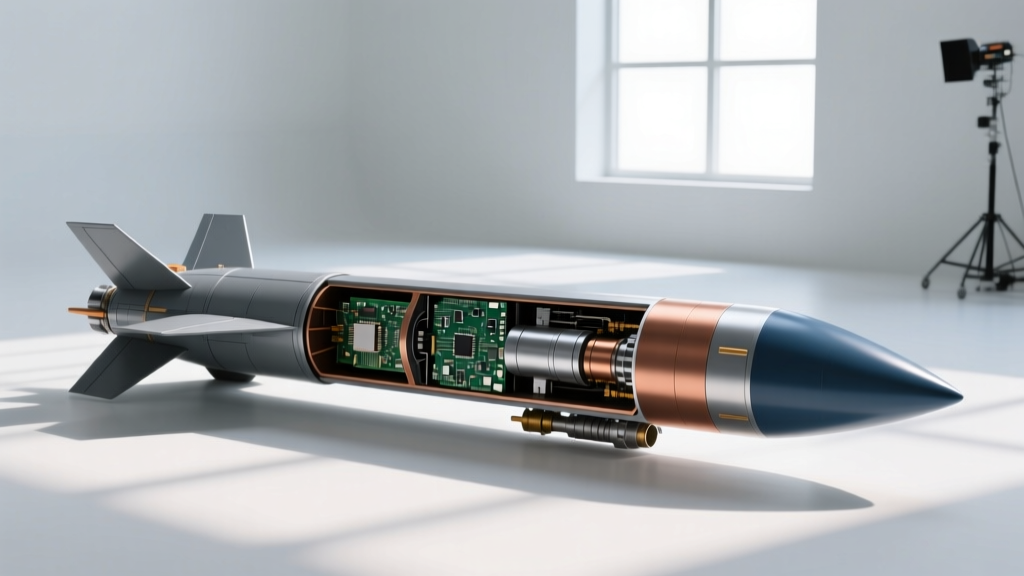
When evaluating advanced aerospace fabrication, defense contractors approach missile manufacturing as a highly specialized construction and assembly project. For procurement officers, industrial engineers, and cost estimators analyzing the Block V variant, understanding the exact manufacturing expenditure requires separating program overhead from raw physical build costs. While the widely cited flyaway procurement price hovers around $2 million per unit in recent defense budgets, the actual cost to physically build the airframe, cast the propellant, and integrate the avionics tells a different story about modern aerospace material economics.
The $2 million figure includes research and development amortization, logistics, and contractor profit margins. The true build cost—the direct materials, direct labor, and facility allocation required to assemble one physical unit from raw stock to flight-ready status—is significantly lower but requires a complex supply chain of specialized construction materials and precision fabrication environments. According to the Center for Strategic and International Studies (CSIS), the Tomahawk Block V represents a massive leap in maritime strike capability, necessitating upgraded materials that directly impact the factory floor budget.
Airframe and Structural Material Costs
The physical skeleton of a cruise missile must withstand extreme aerodynamic stress, saltwater corrosion (for submarine-launched variants), and intense thermal loads. Estimators must account for the raw material costs and the machining waste inherent in aerospace fabrication.
Titanium and Advanced Alloys
The primary structural bulkheads, engine mounts, and critical stress points are machined from aerospace-grade titanium, specifically Ti-6Al-4V. As of 2026, aerospace-grade titanium billet costs between $35 and $45 per kilogram. However, the buy-to-fly ratio (the weight of raw material purchased versus the weight of the finished part) in titanium machining is often 5:1 or higher. To yield 150 kg of finished titanium airframe components, the facility must purchase and machine 750 kg of raw billet, pushing the raw titanium material cost alone to approximately $30,000 per unit.
Carbon-Fiber Reinforced Polymers (CFRP)
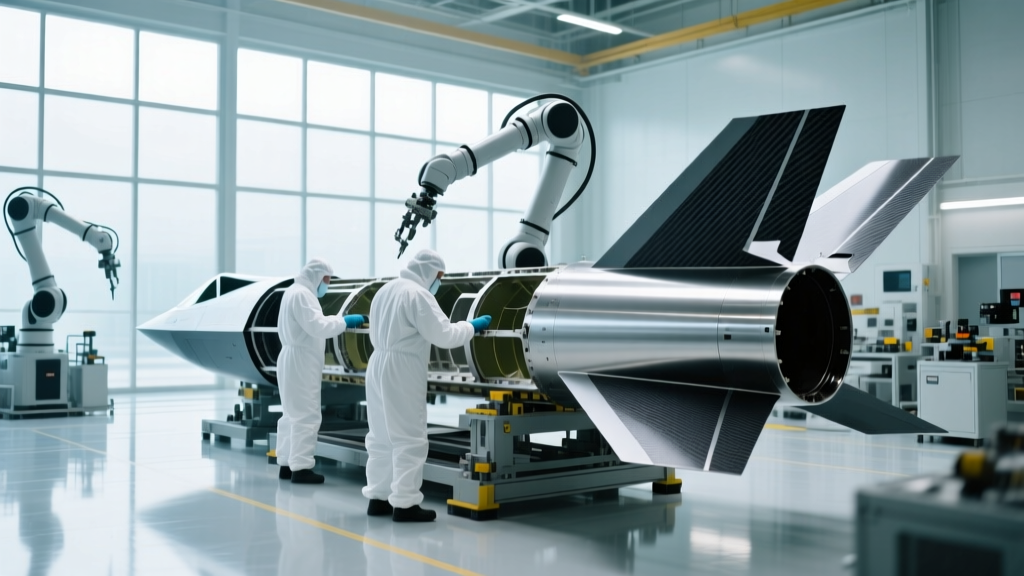
The aerodynamic control surfaces, including the folding fins and tail stabilizers, are constructed from autoclave-cured carbon-fiber composites. The raw prepreg carbon fiber costs roughly $120 per kilogram. The true cost driver here is the facility requirement: curing these parts requires massive industrial autoclaves capable of sustaining 120 PSI and temperatures exceeding 350°F (175°C). The energy consumption and maintenance amortization of these autoclaves add an estimated $14,000 per missile to the composite fabrication ledger.
Modern Block V variants incorporate specialized radar-absorbent coatings and structural composites to reduce their radar cross-section (RCS). Applying these proprietary ferrite-based paints and integrating RAM into the composite skin requires climate-controlled spray booths with advanced particulate filtration, adding roughly $22,000 in materials and direct facility time per airframe.
Propulsion Fabrication and Blast-Proof Facility Requirements
The Tomahawk utilizes a two-stage propulsion system: a solid rocket booster for initial launch ejection and a Williams F107-WR-402 turbofan engine for sustained subsonic cruise. The construction and operation of the facilities required to build these systems represent a massive capital expenditure that must be amortized across production runs.
Solid Rocket Booster and HTPB Casting
The solid rocket booster uses HTPB (Hydroxyl-terminated polybutadiene) mixed with ammonium perchlorate and aluminum powder. Mixing and casting volatile solid propellants cannot be done in a standard warehouse. It requires specialized Energetic Materials facilities. These structures feature 3-foot-thick reinforced concrete blast walls, specialized blast-relief roofing, and intrinsically safe electrical systems to prevent static discharge. Constructing a single propellant mixing bay costs upwards of $18 million. When amortized over a multi-year production contract of 500+ missiles, the facility cost allocated to the booster casting is approximately $45,000 per unit.
Turbofan Engine Assembly
The Williams F107 turbofan is a marvel of miniaturized jet engineering. While the engine is often procured as a complete unit from a subcontractor, its integration requires precise alignment jigs and fuel-line pressure testing rigs. The raw materials for the engine—including Inconel 718 for the turbine blades to withstand extreme heat—account for roughly $85,000 of the build cost. The specialized testing cells, lined with acoustic dampening materials and equipped with high-flow jet fuel ventilation systems, add another $12,000 in facility overhead per engine test cycle.
Avionics Integration and Cleanroom Construction
The most expensive physical components of the missile are not the metals or the fuel, but the guidance and navigation suites. The Block V utilizes a combination of GPS, TERCOM (Terrain Contour Matching), and DSMAC (Digital Scene Matching Area Correlator) for pinpoint accuracy. Furthermore, the newly integrated Maritime Strike capability requires advanced active radar seekers.
Assembling these delicate optical sensors and microprocessors requires ISO Class 5 (Class 100) cleanrooms. Constructing a 2,000-square-foot ISO Class 5 cleanroom with HEPA filtration, specialized HVAC systems, and anti-static flooring costs approximately $1.2 million. The direct labor for integrating the seeker head, calibrating the optical sensors, and sealing the radome takes roughly 120 hours of highly specialized technician time. At an average burdened aerospace labor rate of $145 per hour, the direct labor and cleanroom allocation for avionics integration totals $38,500 per unit.
2026 Manufacturing Cost Matrix
The following table provides a detailed breakdown of the direct build costs for a single Tomahawk Block V missile, excluding program management, logistics, and contractor profit margins. These figures represent the raw industrial and material expenditure required on the factory floor.
| Cost Category | Specific Components / Facilities | Estimated Cost (USD) |
|---|---|---|
| Airframe Materials | Ti-6Al-4V Titanium, CFRP Fins, RAM Coatings | $115,000 |
| Propulsion Systems | F107 Turbofan, HTPB Booster, Inconel Turbines | $285,000 |
| Avionics & Seeker | TERCOM/DSMAC, Maritime Radar, GPS/INS | $410,000 |
| Warhead & Fuzing | WDU-43/B Penetrator or Submunitions, Safety Arming | $75,000 |
| Direct Assembly Labor | Integration, Wiring, Fueling, Sealing (approx. 800 hrs) | $116,000 |
| Facility Amortization | Cleanrooms, Blast Bays, Autoclaves, Test Cells | $95,000 |
| Total Direct Build Cost | Raw Materials + Direct Labor + Facility Allocation | $1,096,000 |
The Hidden Cost of Facility Amortization and Testing
A critical mistake novice estimators make when calculating aerospace build costs is ignoring the testing infrastructure. Before a missile is shipped to the Navy, it must undergo rigorous environmental and functional testing. This includes vibration testing on electrodynamic shakers, thermal vacuum cycling to simulate high-altitude and exoatmospheric temperatures, and electromagnetic interference (EMI) shielding tests.
Constructing an anechoic chamber for EMI testing requires specialized RF-shielding materials, such as copper mesh and carbon-loaded foam pyramids. A standard 30x30 foot aerospace anechoic chamber costs approximately $2.5 million to construct and outfit. When combined with the thermal vacuum chambers and vibration tables, the testing facility overhead adds roughly $45,000 to the build cost of every single unit that rolls off the line.
"The true cost of defense manufacturing is rarely found in the raw metals; it is found in the highly controlled, blast-proof, and climate-regulated environments required to assemble them safely. You are not just buying titanium and microchips; you are buying the square footage of Class 100 cleanrooms and reinforced concrete bunkers."
Supply Chain Realities and 2026 Production Ramps
As the Department of Defense pushes to replenish stockpiles and increase production rates in 2026, the economics of scale begin to shift. According to the Navy Procurement of Ammunition budget justification books, multi-year procurement contracts are designed to stabilize the supply chain and lower the per-unit flyaway cost. By guaranteeing a steady production rate, RTX (formerly Raytheon) can negotiate bulk pricing for titanium forgings and secure long-term leases on the specialized autoclaves required for composite curing.
However, supply chain bottlenecks for rare-earth metals used in the guidance system's microelectronics and the solid rocket motor's ammonium perchlorate oxidizer can cause sudden spikes in raw material costs. Estimators tracking these projects must monitor the spot prices of aerospace-grade titanium and the availability of specialized defense microchips, as these two variables will dictate whether the direct build cost remains near the $1.1 million mark or creeps higher as production scales up to meet global demand.
Key Takeaways for Industrial Estimators
- Material Waste is a Primary Driver: Always apply a minimum 4:1 buy-to-fly ratio when estimating titanium and Inconel machining costs for aerospace structures.
- Facility Overhead is Non-Negotiable: You cannot build solid rocket motors or integrate optical seekers in standard industrial parks. Factor in the amortization of blast-proof bays and ISO Class 5 cleanrooms.
- Avionics Dominate the Ledger: While the airframe is massive, the TERCOM/DSMAC and maritime radar seekers account for nearly 40% of the direct physical build cost.
Written by
Priya KapoorPriya Kapoor is a real estate market analyst and construction economics researcher with expertise in housing affordability, development feasibility, and infrastructure investment. She holds a Master of Regional Planning from Cornell University and previously worked as a senior analyst at CBRE's Investment Properties group, where she modeled returns for $4B in mixed-use development pipelines. Priya now runs an independent research practice advising developers, municipalities, and REITs on construction cost forecasting and market timing. She publishes the quarterly "BuildMat Market Pulse" report tracking material price indices across 12 commodity categories. Based in Austin, TX, Priya serves on the board of Habitat for Humanity Austin and is a marathon runner.
More from Priya Kapoor
View all
Construction Cost
Cost to Build a 1600 Sq Ft Home in 2026: Full Breakdown
Accurate 2026 cost to build a 1600 sq ft home—material, labor, and regional pricing breakdowns included. Plan your budget with real-time estimates.
Aug 11, 2026

Wood & Lumber
Name the Types of Wood for Pressure Treatment and Preservation
Learn how to name the types of wood best suited for pressure treatment. Compare species treatability, chemical retention levels, and 2026 preservation costs.
Aug 4, 2026

Stone & Masonry
Stone Veneer Suppliers Lindenhurst: 2026 Cost Analysis
Analyze 2026 stone veneer costs in Lindenhurst, NY. Compare local supplier pricing, delivery fees, and Suffolk County installation labor rates.
Aug 4, 2026