How to Accurately Estimate Cost of Deck Materials in 2026
Learn how to accurately estimate cost of deck materials in 2026. Breakdowns for composite, wood, framing, and hidden hardware expenses for precise budgeting.
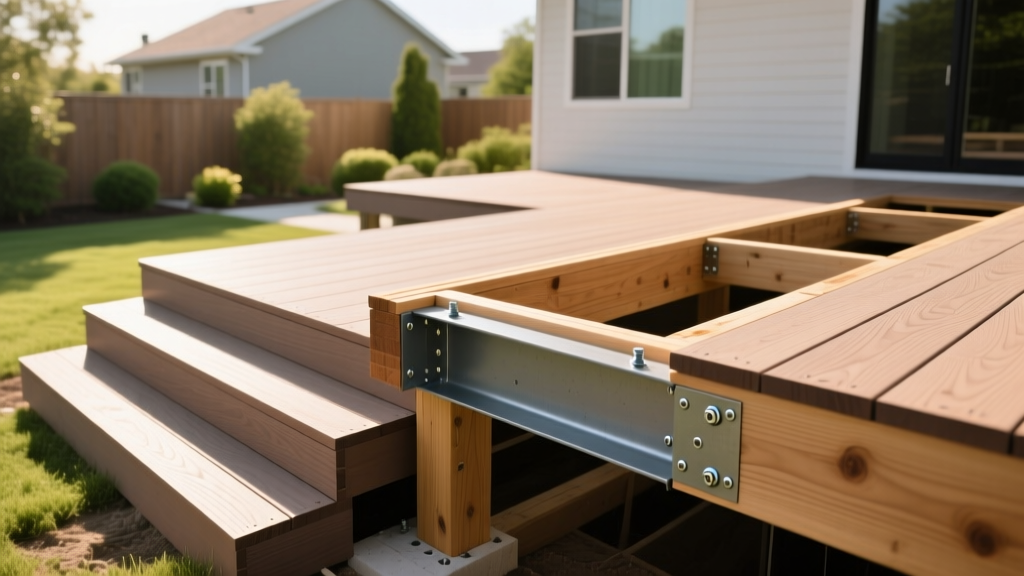
The Hidden Variables in Deck Material Pricing
Estimating the cost of deck materials goes far beyond multiplying total square footage by a generic price-per-foot metric. In 2026, while base pressure-treated lumber prices have stabilized following years of supply chain volatility, premium capped composite and advanced PVC decking lines have seen targeted price increases driven by new polymer capping technologies. When homeowners and contractors attempt to estimate cost of deck materials using only surface area, they routinely underestimate their final budget by 25% to 40%.
The discrepancy stems from ignoring the substructure-to-surface ratio, the specific joist spacing required for synthetic boards, and the micro-costs of structural hardware. A 192-square-foot (12x16) deck built with premium composite decking and aluminum framing will require a fundamentally different material takeoff than the same footprint built with pressure-treated pine. According to Angi's comprehensive deck cost guide, national material averages can fluctuate wildly based on these exact structural decisions, making a granular, line-item estimation framework essential for accurate planning.
Never order exact square footage. For standard rectangular decks, add a 10% waste factor for cuts and defects. For decks with diagonal picture-framing, inlays, or curved edges, increase this waste factor to 15% or even 20%. Synthetic decking manufacturers will not accept returns on cut boards, and dye-lot variations mean you cannot order supplemental batches later without risking visible color mismatches.
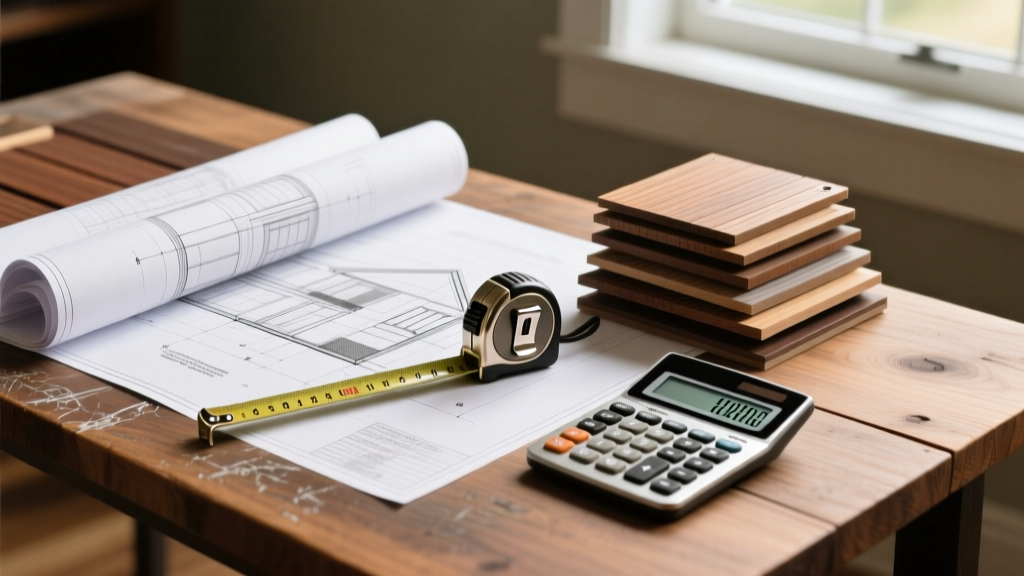
2026 Core Decking Material Cost Matrix
The surface boards represent the most visible expense in your project. Below is the 2026 material-only pricing matrix for the most common decking categories. These costs reflect the boards themselves and do not include substructure, fasteners, or labor.
| Material Type | Cost per Sq. Ft. (2026) | 192 Sq. Ft. (12x16) Cost | Joist Spacing Requirement |
|---|---|---|---|
| Pressure-Treated Southern Yellow Pine | $3.50 - $5.00 | $672 - $960 | 16" O.C. |
| Western Red Cedar | $7.50 - $10.00 | $1,440 - $1,920 | 16" O.C. |
| Tropical Hardwood (Ipe / Cumaru) | $14.00 - $18.50 | $2,688 - $3,552 | 16" O.C. |
| Capped Composite (e.g., Trex Transcend Lineage) | $11.50 - $14.50 | $2,208 - $2,784 | 16" O.C. (12" O.C. for diagonal) |
| Advanced PVC (e.g., TimberTech Landmark) | $13.00 - $16.50 | $2,496 - $3,168 | 16" O.C. (12" O.C. for diagonal) |
Substructure and Framing: Where Budgets Actually Break
The most critical error when attempting to estimate cost of deck materials is treating the substructure as an afterthought. The framing, footings, and structural hardware typically account for 30% to 45% of the total material budget. In 2026, building codes in most North American jurisdictions require deeper footings and more robust lateral load connectors, directly impacting material takeoffs.
Pressure-Treated Lumber Framing vs. Aluminum Systems
Standard 2x8 and 2x10 pressure-treated (PT) joists remain the baseline for deck framing. For a 12x16 deck, you will need approximately 180 to 220 linear feet of joist lumber, costing between $1.80 and $2.50 per linear foot. However, PT lumber is prone to warping, twisting, and crown shifts, which can cause composite decking to buckle or ripple over time.
To mitigate this, many builders are shifting to light-gauge steel or aluminum framing systems, such as Trex Elevations. Aluminum framing costs between $16.00 and $22.00 per linear foot. While this triples the framing material cost, it guarantees a perfectly flat substructure, will never rot, and allows for wider joist spans (up to 24" O.C. in some engineered configurations), which can offset the higher per-foot cost by requiring fewer joists and footings.
The Necessity of Joist Tape
If you are installing composite or PVC decking over traditional wood joists, you must budget for butyl-based joist tape (such as Trex Protect or TimberTech Seam Tape). Water pools on the flat surface of wood joists beneath the decking, leading to premature rot and compromised structural integrity. Butyl tape costs approximately $0.15 to $0.25 per linear foot. For a standard 12x16 deck, budget an additional $60 to $90 for this non-negotiable waterproofing layer.
Fasteners, Hardware, and the "Micro-Costs"
Fasteners and structural connectors represent a small percentage of the overall budget, but specifying the wrong hardware can lead to catastrophic failure. The North American Deck and Railing Association (NADRA) emphasizes that improper fastener selection is a leading cause of deck collapses and surface failures.
- Hidden Fastener Systems: Clip-based systems (like Trex Hideaway or TimberTech CONCEALoc) cost between $1.10 and $1.60 per square foot. For a 192 sq. ft. deck, expect to spend $210 to $300 on clips and starter kits. These require grooved-edge boards, which carry a 5% to 8% price premium over square-edge boards.
- Top-Down Face Screws: If you prefer the clean look of hidden fasteners but want the structural pull-out strength of face screws, systems like the Camo Marksman Pro tool ($55) paired with Camo EDGES fasteners ($75 per box of 1,000) are the 2026 industry standard for composite and hardwoods.
- Structural Connectors: Ledger board attachments require specialized structural screws (like Simpson Strong-Tie SDWS) or through-bolts. Budget roughly $125 to $180 for joist hangers, hurricane ties, and ledger screws for a standard 12x16 attached deck.
- Corrosion Resistance: According to Simpson Strong-Tie's corrosion guidelines, the chemical preservatives in modern pressure-treated lumber (like ACQ and MCQ) are highly corrosive to standard galvanized steel. You must specify ZMAX (G185) or stainless steel connectors for all structural hardware, which adds a 15% to 30% premium over standard galvanized parts.
Step-by-Step Material Takeoff Framework
To ensure your estimate cost of deck materials is accurate, follow this sequential takeoff process before ordering:
- Calculate Gross Square Footage: Multiply length by width, then add the 10-15% waste factor.
- Determine Board Layout: Decide if boards will run parallel to the house or diagonally. Diagonal layouts require 12" O.C. joist spacing instead of 16" O.C., increasing framing lumber requirements by roughly 20%.
- Tally Substructure Linear Footage: Calculate the linear feet of beams, joists, and rim joists required based on your spacing. Add 10% for framing waste.
- Count Footings and Concrete: Divide total beam length by maximum span (usually 6 to 8 feet depending on local snow loads). Calculate the number of Sonotubes, post bases, and bags of 5000 PSI concrete mix required.
- Specify Railing and Stairs: Measure linear feet of railing. Note that stair material costs are exponential; each stair tread requires specific stringer hardware, fascia covers, and specialized riser lighting if desired.
- Add the Micro-Costs: Itemize joist tape, hidden fastener clips, structural screws, and post-cap hardware.
Edge Cases That Destroy Material Estimates
Picture Framing and Inlays
A "picture frame" border hides the end-grain of composite boards and provides a premium, finished look. However, it requires additional blocking beneath the deck to support the perpendicular border boards. This blocking increases framing lumber costs and requires additional hidden fastener clips. Budget an extra $3.00 to $5.00 per linear foot of deck perimeter for the labor and extra hardware associated with picture framing.
Multi-Level Transitions and Stair Material Multipliers
Stairs are the most expensive component of any deck on a per-square-foot basis. A single flight of stairs requires stringer material, tread boards, riser fascia, and specialized stair brackets. Furthermore, composite stair treads often require a specific "stair tread" profile (which features a built-in bullnose) that costs 30% to 50% more per linear foot than standard decking boards. If your design includes a landing or a directional turn in the stairs, you must account for the additional structural posts and concrete footings required to support the mid-flight landing.
"When planning a deck build, material estimation must account for the local climate's impact on structural requirements. High snow-load regions mandate deeper footings and tighter joist spacing, which fundamentally alters the substructure material takeoff compared to identical designs in temperate zones."
Accurately calculating the cost of deck materials requires moving past simple square-footage multipliers. By accounting for the substructure requirements of modern synthetic boards, specifying code-compliant corrosion-resistant hardware, and applying rigorous waste factors, you can develop a 2026 material budget that reflects the true cost of a safe, durable, and architecturally sound outdoor living space.
Written by
Sarah WhitfieldSarah Whitfield is a chartered quantity surveyor (MRICS) and construction cost analyst with 15 years of experience in material pricing, procurement strategy, and project budgeting. She earned her degree in Construction Management from the University of Reading (UK) and has worked on projects ranging from $2M custom homes to $180M mixed-use developments across North America and Europe. Sarah currently leads cost estimating for BuildMat Insight, maintaining a proprietary database of 4,000+ material price points updated quarterly. She is a frequent contributor to RSMeans cost data panels and has presented at the International Cost Engineering Council (ICEC) congress. Based in Denver, CO, Sarah is an avid trail runner and volunteer mentor for Women in Construction.
More from Sarah Whitfield
View all
Wood & Lumber
What Are the Different Types of Wood? A Builder's Guide
Compare structural softwoods, finish hardwoods, and engineered lumber. Analyze Janka ratings, MOE values, and 2026 pricing for construction.
Aug 4, 2026

Walls & Panels
Steel Framing vs Wood Framing: Corrosion and Moisture Defense
Compare steel framing vs wood framing for moisture resistance. Learn about galvanized coatings, condensation risks, and corrosion protection strategies.
Jul 21, 2026

Stone & Masonry
How to Cut Stone Veneer: Wet Saw vs Grinder Comparison
Compare the best tools for cutting stone veneer. We review wet saws, angle grinders, and chop saws to help you achieve clean, chip-free cuts.
Jul 21, 2026