Composite Material Deck Guide: Costs & Installation 2026
Discover everything about building a composite material deck in 2026. Compare top brands, installation costs, joist spacing, and hidden fastener systems.
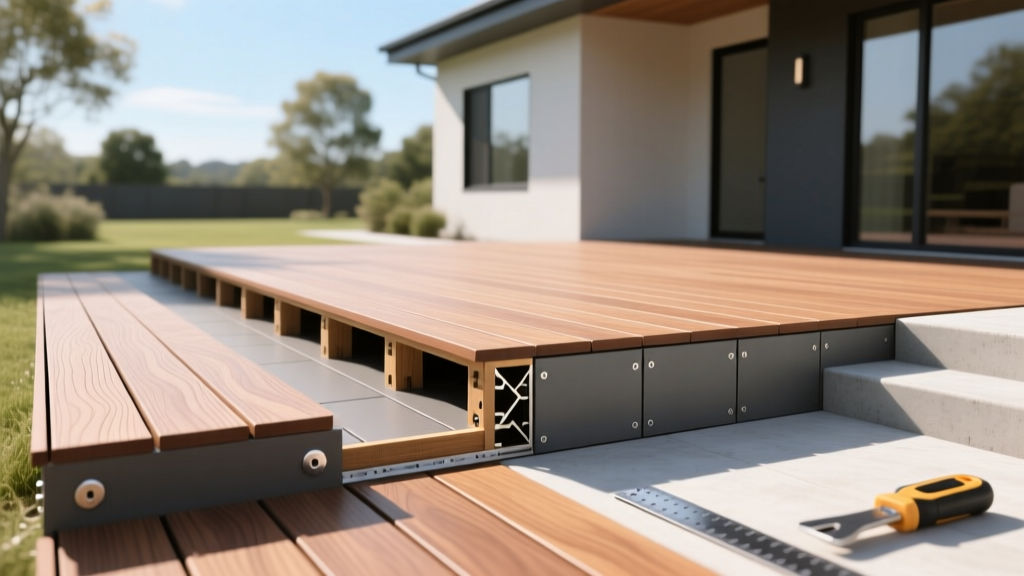
Why Choose a Composite Material Deck?
The evolution of composite decking over the last decade has fundamentally shifted the economics and longevity of outdoor living spaces. First-generation uncapped composites were prone to staining, fading, and mold infiltration. Today, a modern composite material deck utilizes a high-density wood-plastic core fully encased in a protective polymer shell. This capping technology provides a 50-year limited fade and stain warranty, effectively eliminating the annual sealing, sanding, and staining cycles required by pressure-treated lumber or tropical hardwoods like Ipe.
Beyond durability, the 2026 market introduces advanced thermal-reflective polymer caps that keep deck surfaces up to 40% cooler under direct summer sunlight compared to older composite generations. For homeowners weighing the high upfront material costs against long-term maintenance savings, composite decking typically reaches its break-even point against pressure-treated wood around year seven, factoring in the rising costs of professional deck staining and sealants.
2026 Composite Decking Brand Comparison Matrix
Not all composite boards are engineered equally. The market is dominated by three primary manufacturers, each offering distinct core compositions, cap thicknesses, and aesthetic profiles. Below is a technical comparison of the flagship capped composite lines available this year.
| Brand | Flagship Line | Core Composition | Warranty | Material Cost (per sq. ft.) |
|---|---|---|---|---|
| Trex | Transcend Lineage | Recycled Wood/PE Film | 50-Year Fade & Stain | $18.50 - $23.00 |
| TimberTech | Terrain+ / Prime+ | Capped Wood Composite | 30-Year Fade & Stain | $14.00 - $18.00 |
| Fiberon | Concordia | Symmetrical Capped Composite | 50-Year Fade & Stain | $16.00 - $20.50 |
Note: Material costs reflect 2026 average retail pricing for standard grooved-edge boards and do not include fasteners, framing, or labor.
Breaking Down the True Installed Cost
A common mistake in deck planning is budgeting strictly for the composite boards themselves. A composite material deck requires a robust substructure. While the decking surface will last 50 years, standard pressure-treated southern yellow pine joists typically degrade within 20 to 25 years. To match the lifespan of the composite surface, many builders now recommend light-gauge steel framing (such as Trex Elevations) or heavily treated ground-contact lumber.
Cost Breakdown for a Standard 16x20 Deck (320 sq. ft.)
| Project Component | Economy Build (Wood Frame) | Premium Build (Steel Frame) |
|---|---|---|
| Composite Decking Material | $5,120 | $5,120 |
| Substructure & Framing | $2,800 | $5,400 |
| Hidden Fasteners & Hardware | $450 | $450 |
| Professional Labor & Demolition | $7,500 | $9,200 |
| Total Estimated Cost | $15,870 ($49.59/sq ft) | $20,170 ($63.03/sq ft) |
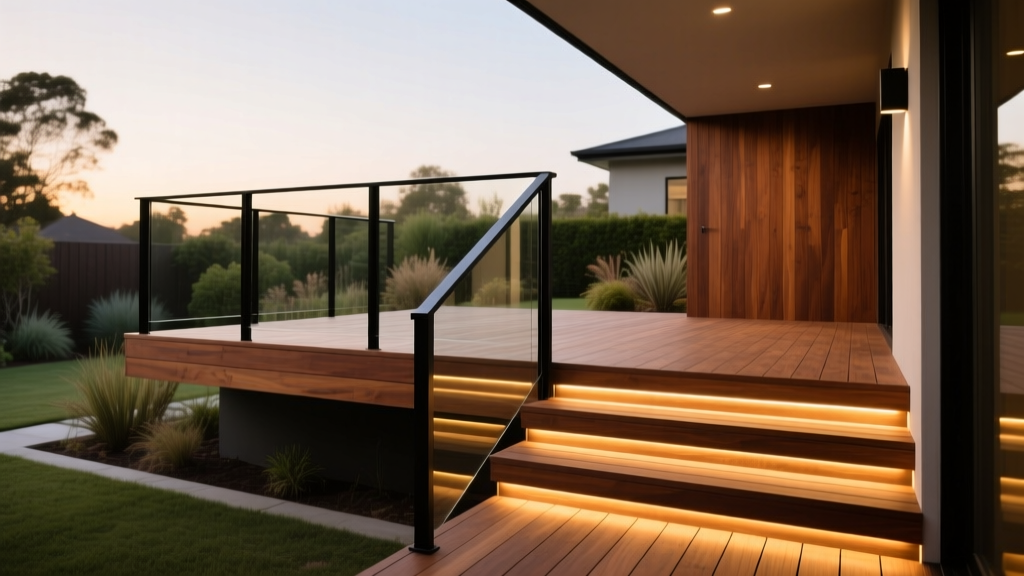
Engineering & Installation: Where DIYers Fail
Composite boards behave fundamentally differently than natural wood. They are heavier, more flexible, and highly reactive to temperature fluctuations. Adhering to manufacturer-specific engineering tolerances is non-negotiable to prevent warping, buckling, and warranty voidance.
Joist Spacing and Load Bearing
Because composite lacks the rigid cellular structure of solid timber, it requires tighter joist spacing to prevent sagging under dynamic loads. According to the Trex Installation Guide, standard straight-laid composite boards require a maximum joist spacing of 16 inches on-center (OC). However, if you are installing the boards on a 45-degree diagonal, the joist spacing must be reduced to 12 inches OC. Stair stringers demand even tighter tolerances; composite stair treads must be supported by stringers spaced no more than 12 inches OC, and some thinner-profile fascia-tread applications require 10 inches OC.
Managing Thermal Expansion and Contraction
Composite boards expand and contract significantly along their length based on ambient temperature. A 20-foot board installed at 40°F in early spring can expand by up to 1/4 inch when summer temperatures reach 100°F. If butt joints are installed tightly without accounting for this movement, the boards will buckle and push against the house ledger.
Fastening Systems: Hidden vs. Face-Screwed
The aesthetic appeal of a composite material deck is heavily dependent on the fastening method. Hidden clip systems (like the Trex Hideaway or TimberTech CONCEALoc) slide into the grooved edges of the boards, securing them to the joists while remaining entirely invisible from above. These systems automatically enforce the required 3/16-inch lateral gap between boards. For picture-framing the perimeter or installing fascia boards where hidden clips cannot reach, builders must use color-matched composite screws (such as Cortex). These screws drive flush into the board and are covered by a matching composite plug, rendering the hardware invisible.
Substructure Ventilation Requirements
One of the most frequently cited reasons for warranty claim denials by major composite manufacturers is inadequate substructure ventilation. Composite boards are designed to shed water off their polymer caps, but moisture will inevitably accumulate underneath the deck. If trapped, this moisture creates a microclimate that can lead to mold growth on the joists and cause the composite boards to absorb moisture from their unprotected bottom edges, leading to edge-swelling and cupping.
The North American Decking and Railing Association (NADRA) and manufacturer guidelines mandate a minimum of 1.5 inches to 2 inches of unobstructed vertical clearance between the bottom of the deck joists and the ground or concrete patio below. For decks built close to the ground, builders must incorporate adequate cross-ventilation skirting or leave open gaps to ensure continuous airflow.
Maintenance Realities: What "Low-Maintenance" Actually Means
While a composite material deck eliminates the need for chemical sealants and power sanding, it is not entirely maintenance-free. The polymer cap is highly resistant to stains, but it is not impervious to surface debris, pollen, and organic matter. If left unchecked, decaying leaves and standing water can foster surface mildew.
- Routine Cleaning: Sweep the deck weekly during heavy pollen seasons and autumn leaf drop.
- Deep Cleaning: Twice a year, wash the deck using a soft-bristle brush and a mixture of warm water and mild, non-bleach dish soap.
- Pressure Washing Warning: Never use a high-pressure nozzle (above 3,100 PSI) or hold the wand closer than 8 inches to the surface. High-pressure streams can permanently etch and scar the polymer cap, creating rough grooves that trap dirt and void the manufacturer's stain warranty.
For stubborn stains like grease from a grill, use a dedicated composite deck cleaner approved by the manufacturer. Avoid harsh solvents, acetone, or bleach, which can break down the UV inhibitors embedded in the polymer shell.
Summary: Is Composite Right for Your Project?
Investing in a composite material deck is a long-term play. It is the ideal choice for homeowners who plan to stay in their homes for at least seven to ten years, allowing the eliminated maintenance costs to offset the premium initial investment. By strictly adhering to engineered joist spacing, accommodating thermal expansion, and ensuring proper substructure ventilation, your composite deck will deliver decades of structural integrity and aesthetic performance with minimal ongoing effort. For further technical specifications and code compliance updates, always consult the official manufacturer installation guides before finalizing your framing blueprints.
Written by
Marcus ChenMarcus Chen is a licensed structural engineer (PE) and building materials analyst with over 12 years of experience across residential, commercial, and industrial construction. He holds a Master of Science in Civil Engineering from UC Berkeley and spent six years at Thornton Tomasetti before transitioning to independent consulting and technical writing. Marcus specializes in material selection for seismic-prone regions, concrete reinforcement strategies, and lifecycle cost analysis. His work has been cited by the American Concrete Institute (ACI) and the Structural Engineers Association of California (SEAOC). When he is not on a job site or at his desk, you will find him hiking the Sierra Nevada or restoring a 1920s craftsman bungalow in Oakland, CA.
More from Marcus Chen
View all
Construction Cost
How Much Did the Eiffel Tower Cost to Build?
How much did the Eiffel Tower cost to build in 1889? We adjust for inflation and compare its budget to modern skyscraper construction.
Aug 4, 2026

Fire Resistance
What Is a Fire Resistant Material? Testing & Certification Guide
Discover what is a fire resistant material through ASTM and UL testing. Learn how fire ratings, certifications, and assemblies work in construction.
Aug 4, 2026

Construction Cost
How Much Did the Burj Khalifa Cost to Build?
How much did the Burj Khalifa cost to build? We break down the $1.5B project and extract 5 money-saving strategies for your next build.
Jul 30, 2026