Cost to Build a Deck Per Sq Ft: 2026 Material Comparison
Compare the 2026 cost to build a deck per sq ft across pressure-treated wood, composite, PVC, and aluminum. Includes framing, labor, and hidden fees.
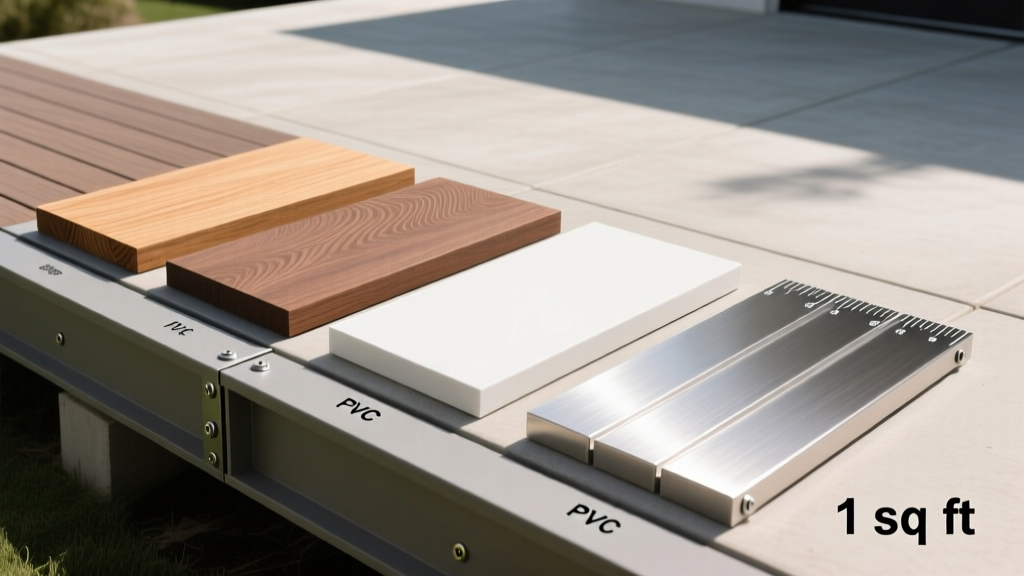
The True Baseline: Breaking Down Decking Costs
When calculating the cost to build a deck per sq ft in 2026, homeowners must look beyond the sticker price of the decking boards. The final installed price is a composite of material grade, substructure requirements, site accessibility, and regional labor rates. While basic pressure-treated pine remains the entry-level standard, advanced polymer composites and extruded aluminum have captured significant market share due to their extended lifespans and reduced maintenance profiles.
According to industry data tracked by Forbes Home Improvement, national averages for deck construction have stabilized following the supply chain volatility of the early 2020s, but skilled labor shortages continue to push installation costs upward. Below is a comprehensive material comparison to help you allocate your budget accurately.
2026 National Cost Snapshot (Installed)
- Economy (Pressure-Treated Wood): $25 - $35 per sq ft
- Mid-Range (Capped Composite): $45 - $65 per sq ft
- Premium (Advanced PVC): $60 - $85 per sq ft
- Specialty (Aluminum/Fire-Rated): $75 - $110 per sq ft
Material-by-Material Cost Matrix
The following matrix isolates the board cost from the total installed cost, illustrating how framing and labor impact the final cost to build a deck per sq ft.
| Decking Material | Board Cost (Per Sq Ft) | Framing & Labor | Total Installed Cost | Expected Lifespan |
|---|---|---|---|---|
| #1 Southern Yellow Pine (PT) | $3.00 - $5.50 | $22 - $30 | $25 - $35 | 10 - 15 Years |
| Capped Wood-Plastic Composite | $8.00 - $12.50 | $35 - $50 | $45 - $65 | 25 - 30 Years |
| Cellular PVC (Polyvinyl Chloride) | $12.00 - $16.00 | $45 - $65 | $60 - $85 | 30 - 50 Years |
| Extruded Aluminum | $18.00 - $25.00 | $55 - $85 | $75 - $110 | 50+ Years |
Deep Dive: Material Performance and Pricing
Pressure-Treated Wood: The Budget Baseline
Pressure-treated (PT) lumber, specifically #1 or #2 grade Southern Yellow Pine, is the most common decking material in North America. For structural integrity, ensure your contractor uses AWPA (American Wood Protection Association) standard UC4A (ground contact) for support posts and UC3B (above ground) for joists and decking.
- Pros: Lowest upfront cost; widely available; easy to cut and modify on-site; naturally stiff, requiring standard 16-inch on-center (OC) joist spacing.
- Cons: High maintenance (requires annual cleaning and bi-annual sealing); prone to cupping, checking, and splintering; shrinks significantly as it dries.
Pro-Tip: Specify KDAT (Kiln-Dried After Treatment) lumber. Standard PT wood is saturated with liquid preservatives and will warp violently as it dries in the sun. KDAT lumber is pre-shrunk, drastically reducing post-installation fastener pops and board twisting.
Capped Composite: The Market Standard
Capped composite decking, such as Trex Transcend Lineage or TimberTech Terrain+, consists of a wood-flour and recycled plastic core encased in a protective polymer shell. This shell prevents moisture intrusion, mold, and fading. The Trex Cost Calculator highlights that while the boards cost roughly three times more than wood, the elimination of staining and sealing offsets the premium over a 10-year period.
- Pros: Fade and stain warranties (typically 25-50 years); no sanding or sealing required; hidden fastener systems (like Trex Hideaway) provide a clean, screw-free surface.
- Cons: Thermal expansion requires strict adherence to manufacturer gapping (usually 1/8 inch per 10 feet); darker colors can retain significant heat in direct southern sun; requires specialized carbide-tipped blades for clean cuts.
Advanced PVC: The Premium Coastal Choice
Cellular PVC decking (e.g., Azek Landmark, Wolf Serenity) contains zero wood fibers. It is engineered from expanded polyvinyl chloride, making it entirely impervious to water absorption. This makes it the undisputed champion for coastal homes, boat docks, and high-humidity environments where composite cores might eventually swell if the end-caps are compromised.
- Pros: Zero moisture absorption; highly resistant to salt spray and mold; lighter weight than composite; can be heat-bent for curved deck perimeters and radiused stairs.
- Cons: Highest material cost among polymers; lacks the rigid stiffness of wood or composite, often requiring 12-inch OC joist spacing (which increases framing costs); surface can be easily scratched by heavy metal furniture.
Aluminum Decking: The Niche Fire-Rated Option
Extruded aluminum decking systems (such as LockDry or Wahoo Decks) feature interlocking planks that create a completely watertight surface, allowing the space below to be used as dry storage. More importantly, aluminum is non-combustible, making it mandatory for homes located in WUI (Wildland-Urban Interface) fire zones in states like California and Colorado.
- Pros: 100% fireproof (WUI compliant); creates a dry lower-level space without secondary under-deck drainage systems; impervious to rot, insects, and UV degradation.
- Cons: Highest overall cost to build a deck per sq ft; produces a metallic acoustic echo when walked on with hard-soled shoes; limited color palette; requires specialized aluminum-compatible structural screws to prevent galvanic corrosion.
Hidden Cost Variables That Skew Estimates
Online calculators often fail to account for site-specific variables that drastically alter the final invoice. Budget an additional 15-25% for the following edge cases:
- Demolition and Haul-Away: Tearing down an existing deck and disposing of materials adds $5 to $12 per sq ft, especially if the old wood contains CCA (chromated copper arsenate), which requires specialized hazardous waste disposal in some municipalities.
- Foundation Upgrades: Standard poured concrete footings cost $150-$250 per pier. If your soil has poor load-bearing capacity or high water tables, engineers may require helical piles, which cost $300-$500+ per pier.
- Steel Framing: Upgrading from PT wood joists to light-gauge steel framing (e.g., Trex Elevens) adds $8 to $12 per sq ft but guarantees a perfectly flat substructure that will never warp or rot, which is critical for supporting rigid PVC or aluminum boards.
Decision Framework: ROI and Resale Value
Choosing a material is not just about upfront costs; it is about long-term value retention. According to remodeling industry analyses cited by Architectural Digest, outdoor living spaces consistently yield high returns on investment, but the material dictates the maintenance burden passed on to the next homeowner.
Expert Insight: A pressure-treated wood deck may recoup 75-80% of its cost at resale, but buyers will immediately factor in the $1,500-$3,000 required to sand and stain it. Capped composite decks recoup roughly 60-70% of their higher initial cost, but the 'move-in ready, zero-maintenance' marketing angle significantly accelerates the home's time on the market.
Frequently Asked Questions
Does the cost to build a deck per sq ft decrease for larger decks?
Yes, but only marginally. While you may achieve slight economies of scale on material purchases (e.g., buying full pallets of composite boards), the fixed costs—such as permitting, equipment mobilization, and stair/stringer construction—remain constant. Expect a maximum discount of 5-8% for decks exceeding 500 square feet.
How much do railings impact the total cost?
Railings are priced per linear foot (LF), not per square foot, and they heavily influence the budget. Standard PT wood railings cost $25-$40 per LF. Upgrading to composite railings with aluminum balusters jumps to $60-$90 per LF, while frameless tempered glass panels can exceed $150-$250 per LF. A deck with a high perimeter-to-area ratio (like a long, narrow walkway deck) will see a disproportionately high railing cost.
Can I install composite or PVC over my existing wood frame?
Technically yes, but it is rarely recommended. Existing wood joists are often warped or spaced at 16-inch OC, whereas many PVC and composite boards require 12-inch OC for proper support. Furthermore, attaching new composite boards to old, rotting joists compromises the warranty and structural integrity. A complete tear-down to the footings is the industry standard for warranty compliance.
Written by
James ThorntonJames Thornton is a construction industry veteran with 25 years of hands-on experience in wood framing, lumber grading, and residential building codes. He started as a framing carpenter in rural Oregon, earned his ICC Residential Building Inspector certification, and eventually became a senior plan reviewer for the City of Portland Bureau of Development Services. James holds a B.S. in Wood Science & Technology from Oregon State University and is a certified lumber grader through the West Coast Lumber Inspection Bureau (WCLIB). He has inspected over 3,000 residential construction sites and authored the city's internal guide on advanced framing techniques (2x6 at 24" O.C.). James lives in Bend, OR, where he builds custom timber-frame cabins and competes in lumberjack sports.
More from James Thornton
View all
Insulation
Best Home Insulation Materials: Complete 2026 Guide
Compare top home insulation materials for 2026. Find R-values, installed costs per square foot, and best uses for fiberglass, spray foam, and mineral wool.
Aug 4, 2026

Sustainable Building
Certify Your Green Building Material for LEED and WELL
Step-by-step guide to certifying a green building material for LEED v5 and WELL v2. Master EPDs, HPDs, and VOC limits for 2026 project specifications.
Aug 4, 2026

Stone & Masonry
Veneer Stacked Stone Panels: Interior Design & Style Showcase
Discover how veneer stacked stone panels transform interiors. Explore modern design profiles, material pairings, and technical installation specs.
Aug 4, 2026