Deck Composite Decking Taxonomy: Core Types & Selection Guide
Explore the 2026 deck composite decking taxonomy. Compare capped WPC, mineral-based boards, structural profiles, and climate-specific selection frameworks.
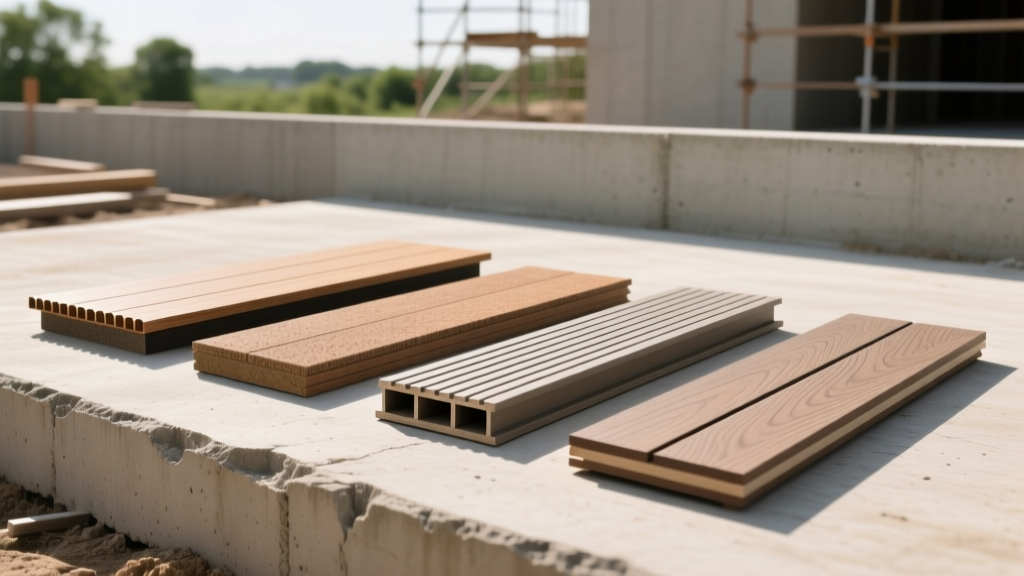
The Material Taxonomy of Deck Composite Decking
Selecting the right deck composite decking requires moving beyond superficial color swatches and understanding the underlying material engineering. The composite decking market has evolved through three distinct generations, each with unique chemical compositions, structural behaviors, and failure modes. In 2026, the distinction between traditional wood-plastic composites (WPC) and advanced mineral-based composites (MBC) dictates not only the upfront material cost but also the long-term structural integrity, thermal expansion rates, and joist spacing requirements of your outdoor living space.
Generational Breakdown: WPC vs. MBC vs. Polymer
Modern composite boards are not a monolith. The core composition fundamentally alters how the board reacts to moisture, UV radiation, and mechanical stress.
Generation 2: Capped Wood-Plastic Composites (WPC)
Capped WPC remains the most common deck composite decking material on the market. The core consists of a blend of recycled high-density polyethylene (HDPE) or polyvinyl chloride (PVC) mixed with wood flour (sawdust). To solve the moisture absorption and UV fading issues of early-generation uncapped boards, manufacturers now co-extrude a 1.5mm to 2mm thick polymer shell (the "cap") around the core.
- Strengths: Excellent acoustic dampening (feels solid underfoot), wide availability, and realistic wood-grain embossing.
- Vulnerabilities: If the protective cap is deeply scratched or gouged, the exposed wood-flour core can absorb moisture, leading to localized swelling or mold growth in the micro-climate of the scratch.
Generation 3: Mineral-Based Composites (MBC)
Mineral-based composites represent the cutting edge of the industry. Instead of wood flour, the core is engineered using calcium carbonate (limestone) blended with advanced polypropylene. According to material durability research from the USDA Forest Products Laboratory, replacing organic wood fibers with inorganic minerals fundamentally eliminates the food source for mold and reduces water absorption to near zero.
- Strengths: Zero water absorption (rates below 0.1%), superior dimensional stability, and significantly lighter weight than WPC. Even if deeply scratched, the mineral core will not swell or rot.
- Vulnerabilities: Higher cost per linear foot, and the rigid mineral core can be more brittle during cold-weather cutting, requiring specialized carbide-tipped saw blades to prevent chipping.
Do not confuse deck composite decking with 100% cellular PVC (like Azek or TimberTech Advanced PVC). PVC contains no wood or mineral fillers. While PVC offers the highest stain resistance, it is more prone to thermal expansion and lacks the rigid structural span ratings of dense composite boards.
Structural Profiles: Solid Core vs. Scalloped Bottom
Beyond chemical composition, the physical extrusion profile dictates installation labor and structural framing requirements.
Solid Core Profiles
Solid boards are extruded as a single, dense mass. They are heavier (often 2.5 to 3.0 lbs per linear foot) but offer superior edge strength. This is critical for "picture-framing" the perimeter of the deck or creating mitered corners, where the edge of the board is exposed and subjected to lateral impact.
Scalloped Bottom Profiles
Scalloped boards feature a ribbed or arched cutout along the bottom edge, reducing material weight by 15% to 20%. This makes carrying 20-foot boards significantly easier for solo installers. However, the reduced mass slightly decreases acoustic dampening, and the thin bottom edges are more susceptible to damage if heavy objects are dragged across the deck surface.
2026 Performance & Pricing Matrix
The following matrix outlines the current market positioning for premium deck composite decking lines, reflecting 2026 material costs (excluding framing and labor).
| Brand & Line | Material Type | Cost per Sq. Ft. | Max Joist Span | Fade/Stain Warranty |
|---|---|---|---|---|
| Trex Transcend Lineage | Capped WPC (Solid) | $9.50 - $11.00 | 24" O.C. | 50-Year Limited |
| TimberTech Prime+ Collection | Capped WPC (Scalloped) | $7.00 - $8.50 | 16" O.C. | 25-Year Limited |
| Deckorators Voyage | Mineral-Based (MBC) | $10.50 - $12.50 | 16" O.C. | Lifetime Limited |
| Fiberon Concordia | Capped WPC (Solid) | $8.00 - $9.50 | 16" O.C. | 50-Year Limited |
Climate-Specific Selection Framework
Material selection must align with the specific environmental stressors of your build site.
Coastal and Saltwater Environments
For oceanfront properties, salt spray accelerates the degradation of organic materials. Mineral-based composites (MBC) are the optimal choice here. Because they contain zero wood flour, they are entirely immune to the salt-induced osmotic blistering that can occasionally affect lower-tier WPC caps. Ensure all hidden fasteners are specified as 316-grade marine stainless steel.
High UV and Arid Climates
In the Southwest, surface temperatures on dark composite boards can exceed 150°F. Lighter-colored capped WPC boards with proprietary heat-mitigation technologies (such as Trex's CoolDeck or specific reflective polymer shells) are mandatory to prevent barefoot burns. Furthermore, arid climates require strict adherence to thermal expansion gaps.
Freeze-Thaw and Heavy Snow Load Zones
In northern regions, moisture that penetrates the board will freeze and expand. Solid-core capped WPC boards with a fully wrapped polymer shell (covering all four sides, including the bottom groove) are essential. Avoid boards with an exposed, flat bottom, as snow melt can wick upward into the core via capillary action.
Real-World Installation Failure Modes
Even premium deck composite decking will fail if installation nuances are ignored. Contractors and DIYers must account for the following edge cases:
Thermal Expansion & Contraction
Composite materials expand and contract significantly more than pressure-treated lumber. A 20-foot composite board can expand up to 1/8 inch for every 40°F change in temperature. Actionable fix: Always install boards when they are at the median temperature for your region. Leave a strict 3/16-inch gap at all end-joints and use slotted holes for face-screwing near the ends to allow lateral movement.
The "Mushrooming" Effect
Driving standard wood screws into composite boards pushes the dense WPC material upward, creating a raised "mushroom" lip around the screw head. This lip traps dirt and creates a tripping hazard. Actionable fix: If face-fastening, you must use composite-specific screws featuring a reverse-thread section directly under the head (e.g., CAMO or Simpson Strong-Tie composite screws) which reams out the material and pulls it flush.
Static Discharge in Dry Climates
The polymer caps on composite boards can generate significant static electricity, resulting in painful shocks to homeowners in low-humidity environments. Actionable fix: For builds in arid zones, apply a commercial anti-static decking treatment annually, or select specific MBC lines that naturally dissipate static charges more effectively than HDPE-capped WPC.
Code Compliance and Joist Spacing
Composite boards do not possess the same sheer strength as natural timber. Adhering to structural codes is non-negotiable to prevent sagging and catastrophic failure. According to the American Wood Council's DCA-6 Prescriptive Residential Deck Guide, composite decking manufacturers dictate the maximum allowable joist spacing, and these spans must be verified via the specific brand's ICC-ES evaluation report.
As a baseline rule outlined in the International Residential Code (IRC) Chapter 5 regarding floor and deck framing:
- Standard Installation (90° to joists): Most 5.5-inch composite boards require a maximum joist spacing of 16 inches on-center (O.C.).
- Diagonal Installation (45° to joists): The effective span increases, requiring joist spacing to be reduced to a strict 12 inches O.C.
- Heavy Load Zones: If the deck will support a hot tub, large planters, or heavy outdoor kitchens, reduce joist spacing to 12 inches O.C. regardless of the board's orientation or the manufacturer's maximum span rating.
By understanding the precise taxonomy of deck composite decking—from the chemical makeup of the core to the structural demands of the profile—you can engineer an outdoor space that remains structurally sound and visually pristine for decades, avoiding the costly callbacks and material failures that plague poorly planned projects.