Labor Cost to Build a Deck Per Square Foot by Material (2026)
Compare the labor cost to build a deck per square foot across wood, composite, PVC, and aluminum. Expert 2026 pricing and installation insights.
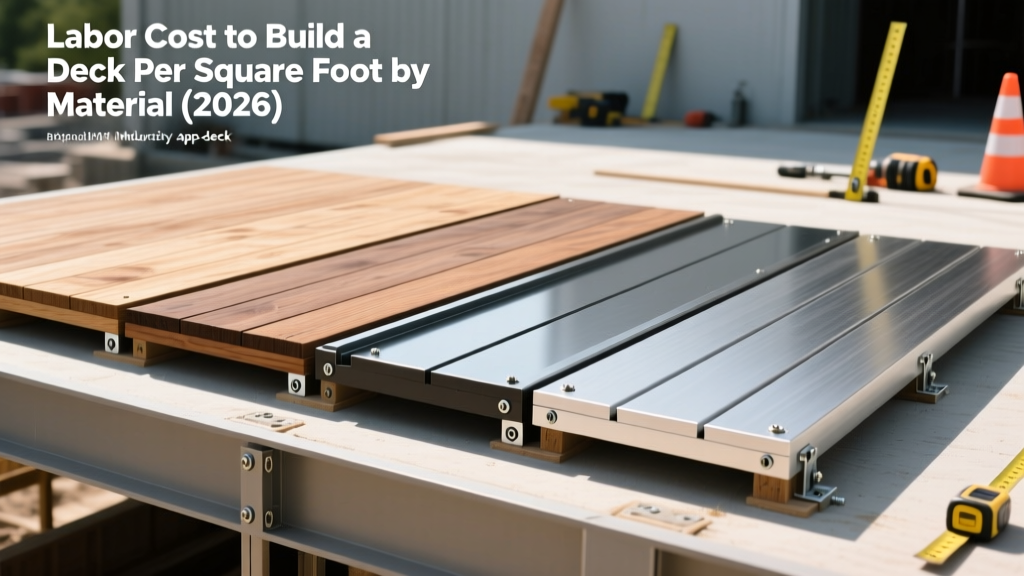
The True Variable in Deck Construction: Labor by Material
When budgeting for an outdoor living space, homeowners often fixate on the price of the decking boards themselves. However, the labor cost to build a deck per square foot is rarely a flat rate. It fluctuates dramatically based on the physical properties, fastening requirements, and structural prerequisites of the material you select. A contractor cannot install cellular PVC with the same speed and methodology as pressure-treated pine. Understanding these installation nuances is critical for accurate 2026 project forecasting.
2026 National Labor Averages (Surface & Framing Installation Only)
- Pressure-Treated Wood: $8.00 – $14.00 per sq. ft.
- Capped Composite: $13.00 – $22.00 per sq. ft.
- Cellular PVC: $16.00 – $26.00 per sq. ft.
- Aluminum Decking: $22.00 – $35.00 per sq. ft.
Note: These ranges reflect labor for framing, joist taping, and surface board installation. They exclude demolition, concrete footings, and complex stair/railing fabrication.
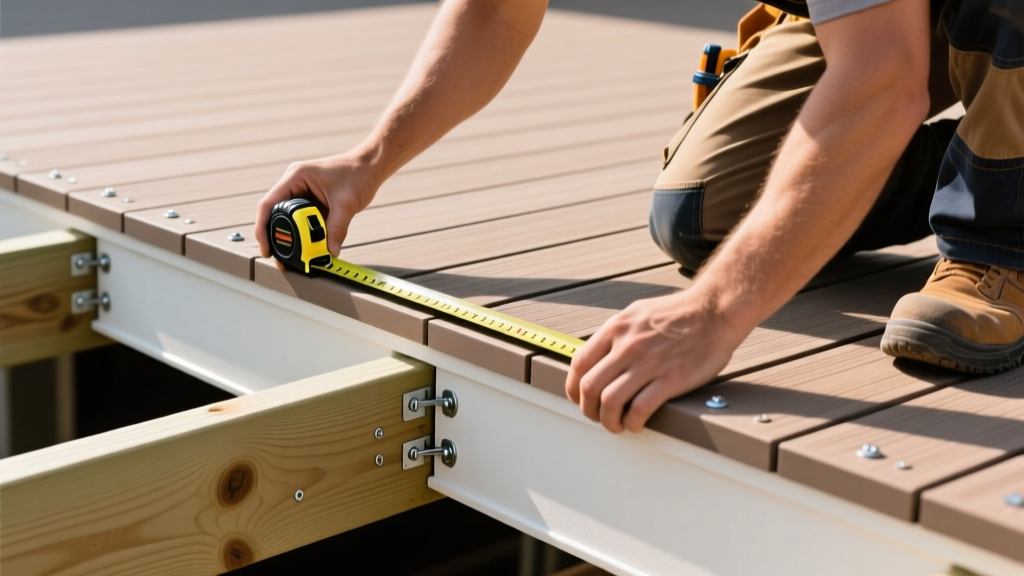
Material-by-Material Labor Breakdown
Pressure-Treated Wood: The Baseline Speed
Pressure-treated (PT) southern yellow pine remains the benchmark for deck labor efficiency. The labor cost to build a deck per square foot with PT wood sits between $8 and $14 because the installation process is highly standardized. Contractors use standard carbide-tipped blades and can face-screw or use pneumatic nailers without specialized clips.
However, a hidden labor sink with PT wood is board culling and straightening. Because PT lumber is often sold wet and prone to warping, carpenters spend an average of 12% to 15% of their surface installation time crowning boards, forcing twisted lumber into place with clamps, and discarding severely bowed pieces. Upgrading to KDAT (Kiln-Dried After Treatment) lumber reduces this wasted labor time, though it increases material costs.
Capped Composite: The Hidden Fastener Tax
Brands like Trex Transcend and TimberTech Pro dominate the composite market. While composite boards are perfectly straight (eliminating the culling time of wood), the labor cost jumps to $13–$22 per square foot due to the fastening system. According to Trex official installation guidelines, hidden fastener systems are mandatory for most modern composite profiles to allow for natural thermal expansion and contraction.
Installing hidden clips (like the Trex Hideaway system) requires sliding each clip into the board groove and driving a screw at a precise 45-degree angle into the joist. This process takes approximately 30% to 40% longer than top-down face screwing. Furthermore, composite boards are significantly heavier than wood (often exceeding 3 lbs per linear foot), requiring two-person handling for longer spans, which inherently slows down the crew's square-footage-per-hour rate.
Cellular PVC: Thermal Management and Precision Cutting
Cellular PVC, such as AZEK Landmark, represents the premium tier of synthetic decking. Labor costs range from $16 to $26 per square foot. PVC is highly susceptible to thermal expansion—up to 1/8 inch per 10 feet of board length depending on temperature swings. Installers must meticulously calculate and maintain expansion gaps at every end-joint and perimeter edge based on the ambient temperature on the exact day of installation.
Additionally, PVC requires specialized cutting blades (typically fine-toothed modified triple chip grind) to prevent chipping the polymer cap. Cutting PVC also generates high static electricity, which attracts dust and debris to the board surface, requiring installers to implement rigorous mid-build cleaning protocols to avoid permanently embedding dirt into the embossed wood-grain textures during construction.
Aluminum Decking: Metalworking Meets Carpentry
Aluminum decking systems (like Ariddek or Nexan) are niche, high-performance products designed for extreme fire zones or waterproof under-deck dry spaces. The labor cost to build a deck per square foot peaks at $22–$35. Framing an aluminum deck requires strict adherence to the manufacturer's joist spacing (often 16 or 24 inches on center, but with zero tolerance for variance). If a joist is even 1/4 inch out of plumb, the interlocking aluminum panels will not seat correctly.
Installers must use metal-cutting chop saws and specialized snips, completely separate from their woodworking tools to avoid cross-contamination of steel shavings, which can cause surface rust spots on the aluminum. Furthermore, the joists must be entirely wrapped in a high-grade butyl flashing tape to prevent galvanic corrosion between the pressure-treated framing and the aluminum boards, adding 2 to 3 hours of prep labor for an average 300-square-foot deck.
Comparison Matrix: Labor Drivers by Material
| Feature | PT Wood | Composite | Cellular PVC | Aluminum |
|---|---|---|---|---|
| Avg. Labor Cost / SqFt | $8 - $14 | $13 - $22 | $16 - $26 | $22 - $35 |
| Standard Joist Spacing | 16" OC | 16" OC (12" diagonal) | 16" OC | 16" or 24" OC |
| Primary Fastening | Face Screws / Nails | Hidden Clips | Hidden Clips / Plugs | Interlocking / Screws |
| Cutting Tool Required | Standard Carbide | Carbide / Polycrystal | Fine-Tooth Polymer | Non-Ferrous Metal Blade |
| Primary Labor Bottleneck | Board straightening | Clip installation speed | Thermal gap calculation | Galvanic tape prep |
Hidden Labor Multipliers That Skew Per-Square-Foot Pricing
Contractors quoting a flat 'per square foot' labor rate are usually providing a baseline for a simple, ground-level rectangular platform. Real-world site conditions introduce multipliers that drastically alter the final invoice. According to industry data tracked by Angi's deck cost guide, site-specific variables can increase baseline labor by 20% to 50%.
- Demolition and Haul-Away: Tearing down an existing deck and disposing of the debris typically adds $3.50 to $6.00 per square foot in labor and dump fees. Composite and PVC tear-outs are heavier and more expensive to dispose of than wood.
- Staircase Fabrication: Stairs are never priced by the square foot. Carpenters charge per 'tread and riser' set, usually ranging from $150 to $300 per step in labor. A composite staircase with integrated lighting and custom fascia can easily add $1,500+ in pure labor to a project.
- Elevation and Under-Deck Access: Second-story decks require scaffolding, specialized bracing, and significantly more time to hoist materials. If the deck requires a dry-space system (like Trex RainEscape) underneath, expect to add $4.00 to $7.00 per square foot for the meticulous waterproofing membrane installation.
- Pattern Complexity: A standard parallel board layout is the baseline. Upgrading to a picture-frame border, diagonal herringbone, or multi-colored seam patterns increases cutting waste and labor hours by 25% to 40%.
Frequently Asked Questions
Does paying for premium composite boards reduce labor costs?
No. In fact, premium composite boards (like Trex Transcend Lineage or TimberTech Advanced PVC) often require more labor time than budget composites. Premium lines frequently feature deeper, more complex embossing and stricter thermal expansion tolerances, requiring installers to work more deliberately to avoid scuffing the high-end polymer caps during the clipping process.
Why do some contractors refuse to quote labor per square foot for aluminum?
Aluminum decking systems are highly specialized. Many general carpenters lack the specific metalworking tools and experience with galvanic separation required for aluminum. Those who do install it often price by the hour (Time & Materials) or as a flat project bid rather than a square-foot rate to protect themselves against the steep learning curve and precise joist-tolerance adjustments required on-site.
How does diagonal board installation impact the labor rate?
Installing decking boards at a 45-degree angle to the joists increases labor costs by 15% to 25%. This layout requires the underlying joists to be spaced closer together (typically 12 inches on center instead of 16 inches for composites) to prevent sagging, which increases framing labor. Additionally, every board requires an angled miter cut at both ends, doubling the cutting time and increasing material waste.
Written by
David NakamuraDavid Nakamura is a licensed architect (AIA) and construction technology writer focused on sustainable building methods, mass timber engineering, and high-performance building envelopes. He holds a Master of Architecture from the University of Washington and is a certified Passive House Consultant (CPHC). David spent eight years at the Seattle firm Mithun, where he led the design of three LEED Platinum projects, before founding his own practice specializing in net-zero residential design. He serves on the editorial advisory board of GreenBuilder Magazine and has authored peer-reviewed papers on cross-laminated timber (CLT) connections for the Journal of Structural Engineering. In his spare time, David teaches woodworking at Pratt Fine Arts Center and kayaks the Puget Sound.
More from David Nakamura
View all
Construction Cost
Labor Cost to Build a Deck Per Sq Ft: 2026 Installation Guide
Discover the exact labor cost to build a deck per sq ft in 2026. This installation guide breaks down contractor rates, complexity factors, and hidden fees.
Aug 4, 2026

Construction Cost
How Much Does It Cost to Build a 3 Bedroom House? Financing Guide
Learn exactly how much it costs to build a 3 bedroom house and explore 2026 financing options, construction loan types, and budget frameworks for your build.
Aug 4, 2026

Construction Cost
Cost to Build a Tennis Court: 2026 Guide
How much does it cost to build a tennis court in 2026? Breakdowns for asphalt, concrete, and synthetic surfaces plus fencing and lighting.
Jul 30, 2026