2026 Deck Material List: Complete Cost Breakdown Guide
Plan your build with our comprehensive 2026 deck material list. Get exact cost breakdowns for composite, wood, framing, and hardware per square foot.

The Anatomy of a Complete Deck Material List
Estimating a deck build by calculating only the square footage of the surface boards is the most common cause of budget overruns in outdoor construction. A professional-grade deck material list accounts for the substructure, code-mandated hardware, concrete footings, and a precise waste factor. In 2026, material costs have stabilized compared to the early 2020s, but premium composites and specialized structural steel remain significant line items.
According to the National Association of Home Builders (NAHB) construction cost tracking data, exterior project material costs fluctuate regionally by up to 18%, making a localized, itemized deck material list essential for accurate bidding and DIY budgeting.
2026 Decking Surface Materials: Cost & Performance Matrix
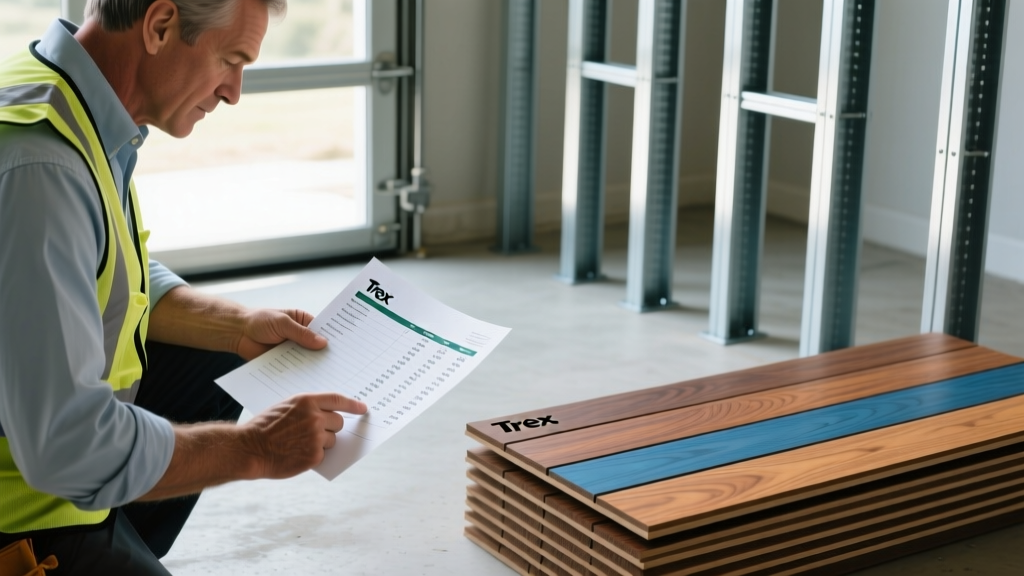
The surface material dictates the aesthetic and maintenance profile of your outdoor space. Below is a cost breakdown of the primary decking categories available in 2026, priced per square foot (materials only).
| Material Type | Specific Model/Brand | Cost per Sq. Ft. | Lifespan |
|---|---|---|---|
| Pressure-Treated Pine | Standard #1 Grade PT | $3.50 - $5.50 | 15-20 Years |
| Premium Wood | Western Red Cedar | $6.50 - $9.00 | 20-25 Years |
| Capped Composite | Trex Transcend Lineage | $12.50 - $15.00 | 25-50 Years |
| Advanced PVC | TimberTech AZEK Landmark | $13.50 - $16.50 | 30-50 Years |
| Extruded Aluminum | Wahoo Decks DryDeck | $18.00 - $24.00 | Lifetime |
Substructure and Framing: The Hidden Costs
The framing system supports the entire load and must comply with the latest International Residential Code (IRC) span requirements. The American Wood Council (AWC) provides definitive span tables that dictate whether you need 2x8, 2x10, or 2x12 joists based on your decking material's weight and the distance between beams.
Wood vs. Steel Framing Costs
- Pressure-Treated Wood Framing: A standard 2x8x16' PT joist costs between $14.00 and $18.00 in 2026. While cheap upfront, wood is susceptible to warping, crown issues, and moisture rot, which can cause composite decking to buckle or squeak over time.
- Structural Steel Framing: Systems like Fortress Evolution or Trex Elevate steel joists cost $24.00 to $32.00 per 16' joist. Steel guarantees perfectly straight spans, wider joist spacing capabilities (up to 24' OC for some composites), and total immunity to rot.
The Forgotten Line Items: Hardware and Fasteners
A comprehensive deck material list must include the specialized hardware that ensures structural integrity and a clean aesthetic. These items frequently cause delays when omitted from initial procurement.
- Joist Protection Tape: Applying butyl or asphalt-based tape (e.g., Trex Protect or TimberTech Deck Tape) to the top edge of wood joists prevents water infiltration and rot. Budget $35.00 to $45.00 per 50-foot roll. A 12x16 deck typically requires 4 to 5 rolls.
- Hidden Fastening Systems: For composite decking, exposed screws are largely obsolete. Stainless steel hidden clips (like the Trex Hideaway system) cost roughly $75.00 per 50 sq. ft. bucket. Ensure you also purchase the compatible composite drill bit and starter clips.
- Structural Screws: Replace standard carriage bolts and lag screws with structural screws like GRK RSS or Simpson Strong-Drive. A box of 50 GRK RSS 3/8' x 5' structural screws costs around $42.00 and requires no pre-drilling, saving hours of labor.
- Post Bases and Caps: Elevating wood posts off the concrete footing prevents wicking and rot. Simpson Strong-Tie EPB44Z elevated post bases cost roughly $28.00 each.
Footings and Concrete Requirements
Footing depth is dictated by your local frost line. In northern climates, footings may need to be 48 inches deep, drastically increasing concrete volume. For a standard 12-inch diameter Sonotube form, you will need approximately 3.5 bags of 80-lb Quikrete 5000 concrete mix per footing if mixed by hand, or roughly 0.25 cubic yards of ready-mix per footing if ordering a truck.
- Sonotubes (12' diameter, 48' length): $16.00 - $22.00 each.
- Quikrete 5000 (80 lb bag): $6.50 - $8.00 per bag.
- Rebar (1/2' x 48'): $4.50 per stick (two per footing for structural reinforcement).
Quantity Calculation Framework: The 12x16 Deck Example
To build an accurate deck material list, you must translate square footage into linear and unit measurements. Here is the exact mathematical framework for a standard 12-foot by 16-foot rectangular deck, assuming 16-inch on-center (OC) joist spacing and 5.5-inch wide composite boards.
Material Math for 192 Sq. Ft. Deck
1. Surface Boards: 192 sq ft / 0.458 sq ft per linear foot (for 5.5' boards) = 419 linear feet. Add 10% waste = 461 linear feet. Order thirty-eight 16-foot boards.
2. Joists (16' OC): Deck width is 12 feet (144 inches). 144 / 16 = 9 spaces. Add 1 for the rim = 10 joists. Order ten 2x8x16' joists, plus two for rim joists.
3. Hidden Fasteners: 192 sq ft requires four 50-sq-ft buckets of clips, plus one box of starter clips for the perimeter.
4. Joist Tape: 12 joists x 16 feet = 192 linear feet. Four 50-foot rolls will cover the field joists and rim joists.
Sourcing and Procurement Strategies
Where you purchase your deck materials significantly impacts your final budget. Big-box home improvement centers offer convenience and easy returns, but their composite decking inventory is often limited to mid-tier lines. For premium PVC or high-end capped composites, specialized lumber yards and authorized Trex or TimberTech dealers provide access to the full color palette, specialized steel framing components, and bulk-discount pricing on orders exceeding 500 square feet.
Always request a 'takeoff' from your supplier. Most professional lumber yards will run your architectural plans through their estimating software to generate a highly accurate deck material list, often catching missing hardware or blocking requirements that manual calculations miss. Verify that all pressure-treated lumber carries the AWPI (American Wood Protection Association) stamp indicating it is rated for ground contact (UC4A) for posts and above-ground (UC3B) for joists and decking.
Written by
James ThorntonJames Thornton is a construction industry veteran with 25 years of hands-on experience in wood framing, lumber grading, and residential building codes. He started as a framing carpenter in rural Oregon, earned his ICC Residential Building Inspector certification, and eventually became a senior plan reviewer for the City of Portland Bureau of Development Services. James holds a B.S. in Wood Science & Technology from Oregon State University and is a certified lumber grader through the West Coast Lumber Inspection Bureau (WCLIB). He has inspected over 3,000 residential construction sites and authored the city's internal guide on advanced framing techniques (2x6 at 24" O.C.). James lives in Bend, OR, where he builds custom timber-frame cabins and competes in lumberjack sports.
More from James Thornton
View all
Insulation
Best Home Insulation Materials: Complete 2026 Guide
Compare top home insulation materials for 2026. Find R-values, installed costs per square foot, and best uses for fiberglass, spray foam, and mineral wool.
Aug 4, 2026

Sustainable Building
Certify Your Green Building Material for LEED and WELL
Step-by-step guide to certifying a green building material for LEED v5 and WELL v2. Master EPDs, HPDs, and VOC limits for 2026 project specifications.
Aug 4, 2026

Stone & Masonry
Veneer Stacked Stone Panels: Interior Design & Style Showcase
Discover how veneer stacked stone panels transform interiors. Explore modern design profiles, material pairings, and technical installation specs.
Aug 4, 2026