Maintaining Decking Material Composite: Cleaning Guide
Learn how to properly clean and maintain decking material composite boards. Expert tips on pressure washing, stain removal, and seasonal care.

The 'Zero Maintenance' Myth vs. Capped Reality
When composite decking first entered the market, it was heavily marketed as a 'zero maintenance' alternative to pressure-treated lumber. In reality, maintaining decking material composite boards requires a strategic, low-maintenance approach rather than a no-maintenance one. Early generation uncapped composites (manufactured prior to 2010) were essentially a uniform blend of wood fibers and plastics, making them highly susceptible to moisture absorption, mold growth, and UV fading.
Modern composite decking utilizes a co-extruded cap layer—a protective shell of polyethylene or PVC that completely encapsulates the wood-plastic core. This cap layer, found on premium lines like Trex Transcend and TimberTech AZEK, provides exceptional resistance to stains, scratches, and fading. However, this polymer shell requires specific cleaning protocols. Using the wrong chemicals or excessive pressure can cause micro-fissures in the cap, compromising its UV inhibitors and voiding manufacturer warranties.
Chemical Compatibility: Protecting the Co-Extruded Cap
The most common mistake homeowners make when maintaining decking material composite is treating it like natural wood. Wood requires harsh strippers and brighteners; composite requires gentle, pH-neutral or oxygen-based cleaners.
Never use chlorine bleach (sodium hypochlorite) on composite decking. Chlorine bleach breaks down the cellular structure of the polymer cap, strips the UV stabilizers, and causes irreversible chalking and fading. It also corrodes the hidden metal fasteners and joist hangers beneath the deck. Always use oxygen-based bleach (sodium percarbonate) for mold and mildew removal.
Essential Tools and Approved Cleaning Agents
Assemble these specific tools before beginning your maintenance routine to ensure the cap layer remains intact:
- Soft-Bristle Deck Brush: Use a brush with synthetic, flagged bristles. Stiff wire or hard nylon bristles will leave permanent micro-scratches on the polymer shell.
- Oxygen Bleach Powder: Sodium percarbonate-based cleaners (like OxiClean or specialized deck oxygenators) lift organic stains without degrading the composite.
- Oxalic Acid Cleaner: Required specifically for tannin stains caused by decaying leaves or berries.
- Plastic Putty Knife: Essential for clearing debris from the grooved edges of hidden-fastener boards without gouging the material.
- Pressure Washer (Optional): Must be adjustable. According to the Trex Care and Cleaning Guide, pressure washers should not exceed 3,100 PSI and must be equipped with a 40-degree fan tip.
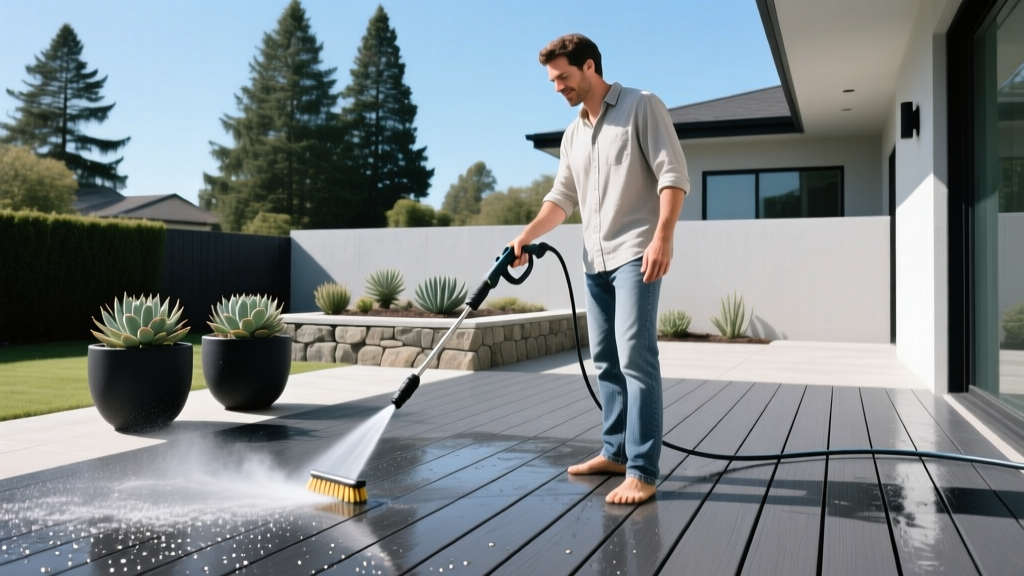
Step-by-Step Deep Cleaning Protocol
Perform this deep cleaning process at least twice a year (Spring and late Fall) to prevent organic matter from bonding to the cap layer.
- Clear the Surface and Gaps: Sweep away loose debris. Use a plastic putty knife to clear dirt, pine needles, and pollen from the grooves between the boards. Trapped moisture in these grooves is the primary cause of edge mold.
- Pre-Rinse the Deck: Use a standard garden hose to wet the surface. This prevents the cleaning solution from absorbing too quickly into any surface scratches.
- Apply Oxygen Bleach Solution: Mix oxygen bleach powder with warm water according to the manufacturer's ratio (usually 1 cup per gallon). Apply generously using a pump sprayer. Allow it to dwell for 10 to 15 minutes, but do not let it dry on the surface.
- Agitate the Surface: Scrub the deck with your soft-bristle brush, working in the direction of the board's embossed wood-grain texture to lift dirt from the grooves.
- Rinse with Precision: Rinse thoroughly with a garden hose. If using a pressure washer, maintain a strict minimum distance of 8 inches from the surface, use a 40-degree fan tip, and keep the wand moving continuously. Holding the stream in one spot for more than two seconds will etch the cap layer.
Troubleshooting Common Composite Deck Issues
Even with routine cleaning, specific environmental factors can cause localized issues. Use this diagnostic matrix to resolve them safely.
| Issue | Root Cause | Expert Solution |
|---|---|---|
| Tannin Stains (Black/Brown spots) | Decaying leaves, berries, or wet mulch left on the deck. | Apply an oxalic acid-based composite deck brightener. Let sit for 15 minutes, scrub gently, and rinse. Do not use chlorine bleach, which will set the stain permanently. |
| Hard Water Spots (White rings) | Mineral deposits from sprinkler overspray or hose drying. | Mix a 50/50 solution of white vinegar and distilled water. Spray on the spots, let sit for 5 minutes, and wipe completely dry with a microfiber cloth. |
| BBQ Grease / Oil Stains | Dripping fats from grills or outdoor kitchens. | Immediately blot (do not wipe) with paper towels. Clean with hot water and a heavy-duty dish soap (like Dawn). For set-in stains, use a commercial composite-safe degreaser. |
| Chalky White Residue | Anti-caking agents in cheap ice melt products. | Wash with warm water and mild dish soap. Switch to pure calcium chloride ice melt for future winter use. |
Seasonal Maintenance Matrix
Spring & Summer: Protection and Prevention
Spring is the time for your primary deep clean to remove winter grime and pollen. During the summer, focus on preventative maintenance. Sweep the deck weekly to remove pollen and organic matter. If you use a grill, place a heavy-duty, composite-safe splatter mat underneath it. Avoid mats with rubber or latex backings, as these can trap moisture and cause localized discoloration of the polymer cap due to heat retention.
Fall & Winter: Moisture and Freeze Management
In the fall, leaf removal must be frequent. Wet leaves left on composite decking for more than 48 hours will leach tannins that can penetrate microscopic imperfections in the cap. During winter, snow removal requires care. According to TimberTech's maintenance guidelines, you should use a plastic snow shovel or a pusher-style shovel. Never use a metal shovel, which will gouge the cap. For ice, use only calcium chloride-based ice melts. Avoid rock salt (sodium chloride) containing anti-caking agents like sodium ferrocyanide, which leave abrasive, chalky residues.
Pro Tip: When shoveling snow off a composite deck, always shovel in the direction of the board's length. Shoveling across the width of the boards increases the risk of the shovel blade catching the edge of the grooved channel and peeling back the cap layer.
Long-Term Cost Analysis: Composite vs. Wood Maintenance
Understanding the financial reality of maintaining decking material composite helps contextualize the initial investment. While composite boards cost 30% to 50% more upfront than pressure-treated pine, the maintenance economics heavily favor composite over a 15-year lifecycle.
15-Year Maintenance Cost Comparison (Per 500 Sq. Ft. Deck)
- Pressure-Treated Wood: Requires annual cleaning, sanding, and re-sealing/staining every 2-3 years. Average cost of materials and professional labor over 15 years: $3,500 - $5,200.
- Capped Composite: Requires bi-annual washing with oxygen bleach and occasional spot treatment. Average cost of cleaning supplies over 15 years: $250 - $400.
Note: Data reflects average national material and labor rates. Composite maintenance assumes no structural repairs, as the polymer cap prevents the rot and splintering that typically necessitates wood board replacement.
By adhering to these specific chemical guidelines and mechanical limits, your composite deck will retain its structural integrity and aesthetic appeal for decades. For further technical specifications regarding your specific board profile, always consult the Fiberon Decking Care and Maintenance documentation or your specific manufacturer's warranty booklet.
Written by
David NakamuraDavid Nakamura is a licensed architect (AIA) and construction technology writer focused on sustainable building methods, mass timber engineering, and high-performance building envelopes. He holds a Master of Architecture from the University of Washington and is a certified Passive House Consultant (CPHC). David spent eight years at the Seattle firm Mithun, where he led the design of three LEED Platinum projects, before founding his own practice specializing in net-zero residential design. He serves on the editorial advisory board of GreenBuilder Magazine and has authored peer-reviewed papers on cross-laminated timber (CLT) connections for the Journal of Structural Engineering. In his spare time, David teaches woodworking at Pratt Fine Arts Center and kayaks the Puget Sound.
More from David Nakamura
View all
Construction Cost
Labor Cost to Build a Deck Per Sq Ft: 2026 Installation Guide
Discover the exact labor cost to build a deck per sq ft in 2026. This installation guide breaks down contractor rates, complexity factors, and hidden fees.
Aug 4, 2026

Construction Cost
How Much Does It Cost to Build a 3 Bedroom House? Financing Guide
Learn exactly how much it costs to build a 3 bedroom house and explore 2026 financing options, construction loan types, and budget frameworks for your build.
Aug 4, 2026

Construction Cost
Cost to Build a Tennis Court: 2026 Guide
How much does it cost to build a tennis court in 2026? Breakdowns for asphalt, concrete, and synthetic surfaces plus fencing and lighting.
Jul 30, 2026