Maintenance Guide: Deck Materials With the Longest Lifespan
Discover the exact maintenance routines for deck materials with the longest lifespan, including aluminum, composite, and tropical hardwoods.
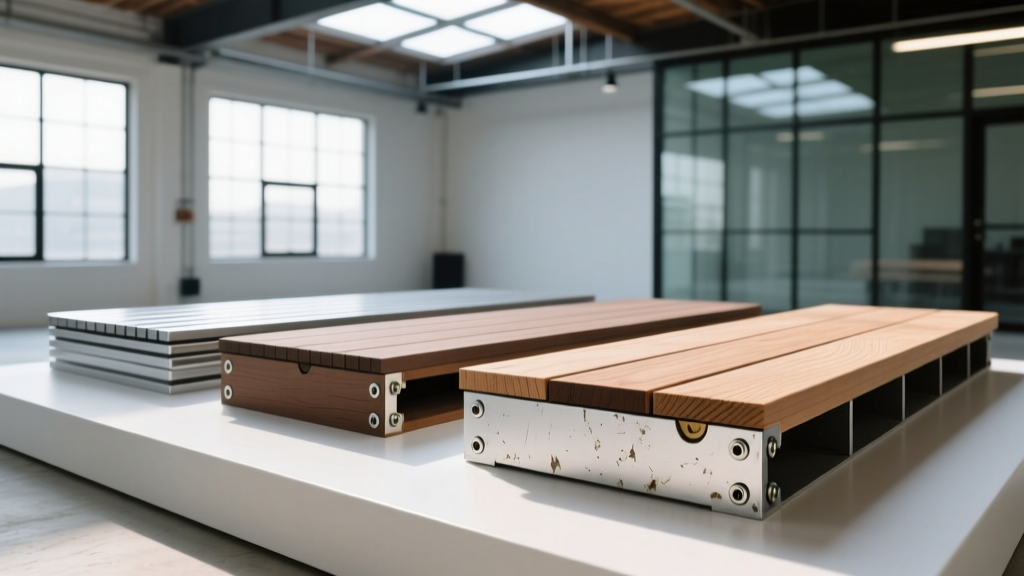
The Lifespan Hierarchy: What Actually Lasts 50+ Years?
When evaluating deck materials with the longest lifespan, manufacturers often quote theoretical maximums that assume perfect conditions. In reality, a deck's longevity is dictated by the intersection of material science and localized maintenance. According to the U.S. Forest Products Laboratory, biological decay and UV degradation are the primary enemies of outdoor structures, but the mechanisms differ wildly across material classes.
| Material Class | Specific Product Examples | Theoretical Lifespan | Realistic Lifespan (Maintained) | Primary Failure Mode |
|---|---|---|---|---|
| Extruded Aluminum | Wahoo Decks, LockDry | 50+ Years | 40-50 Years | Neoprene gasket dry-rot; galvanic corrosion |
| Cellular PVC / Polymer | Azek Landmark, TimberTech Advanced PVC | 50 Years | 30-40 Years | Surface scratching; thermal expansion warping |
| Capped Wood-Plastic Composite | Trex Transcend Lineage | 35-50 Years | 25-35 Years | Cap delamination; core mold if uncapped edges are exposed |
| Tropical Hardwood | Ipe, Cumaru, Garapa | 40-75 Years | 30-50 Years | Surface checking; fastener pull-through from wood movement |
Aluminum Decking: Managing the 'Zero-Maintenance' Myth
Powder-coated extruded aluminum is widely considered the ultimate choice among deck materials with the longest lifespan. However, 'low maintenance' does not mean 'no maintenance.' The structural integrity of aluminum relies heavily on its interlocking joint systems and hidden fasteners.
Critical Maintenance Protocols for Aluminum
- Gasket Preservation: Watertight aluminum systems (like LockDry) rely on neoprene rubber gaskets between the extrusions. UV exposure causes these gaskets to dry-rot and shrink after 10-15 years. Apply a UV-blocking rubber protectant, such as 303 Aerospace Protectant, to the gasket channels annually to extend their life to 30+ years.
- Preventing Galvanic Corrosion: Aluminum is highly susceptible to galvanic corrosion when it comes into contact with dissimilar metals in the presence of an electrolyte (rainwater). Never use standard galvanized or zinc-coated screws. Exclusively use 316-grade stainless steel fasteners for all structural connections and hidden clips.
- Drainage Channel Clearing: Aluminum decking features integrated gutters. If organic debris (pine needles, seed pods) clogs the pitch, standing water will accelerate the degradation of the powder-coat finish. Flush the channels with a garden hose bi-annually.
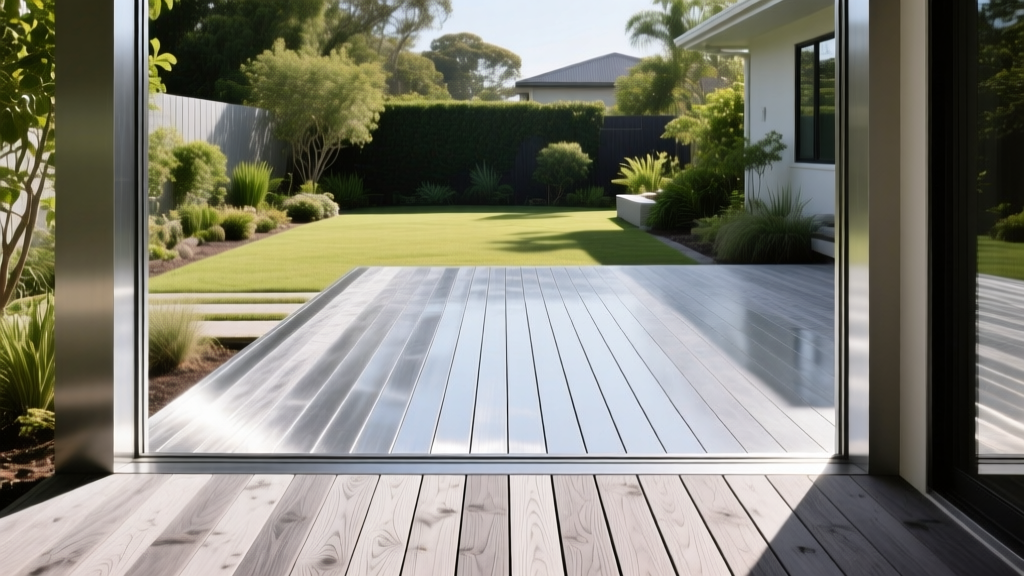
Capped Polymer and Composite: Protecting the 30-Year Shell
Modern composite and PVC decking utilizes a co-extruded polymer cap that shields the inner core from moisture and UV rays. The lifespan of these boards is entirely dependent on the integrity of this outer shell. Once the cap is breached, the wood-flour core (in WPC) becomes vulnerable to rapid fungal decay.
Preserving the Polymer Cap
The most common maintenance error that destroys capped composite is improper cleaning. Homeowners frequently use high-pressure power washers to blast away dirt, inadvertently stripping the protective polymer layer.
"Pressure washing capped composite at settings above 3,100 PSI or using a zero-degree nozzle tip will micro-fracture the polymer cap, creating entry points for moisture and voiding the manufacturer's fade-and-stain warranty."
Proper Cleaning Technique: Use a standard garden hose or a pressure washer capped at 1,500 PSI with a 40-degree fan tip. For stubborn organic stains or tannin bleed from nearby trees, use a dedicated composite deck cleaner containing sodium percarbonate (oxygen bleach) rather than sodium hypochlorite (chlorine bleach). Scrub with a soft-bristle nylon brush along the direction of the embossed wood grain to prevent micro-scratching.
Tropical Hardwoods: The Oiling vs. Silvering Debate
Dense tropical hardwoods like Ipe (Tabebuia) boast a Janka hardness rating of 3,680 lbf and natural oils that make them virtually immune to rot and insect infestation. The American Wood Protection Association notes that naturally durable heartwoods require no chemical preservatives for ground contact, let alone above-ground decking. However, UV radiation will still break down the surface lignin.
Maintenance Path A: The Oiled Finish (High Maintenance)
If you want to maintain the rich, dark mahogany color of Ipe or Cumaru, you must apply a penetrating oil finish annually or bi-annually. Crucial Rule: Never use film-forming finishes like polyurethane or solid stains. Tropical hardwoods are too dense to absorb these products, and the UV degradation of the wood surface will cause the film to peel and flake within one season. Use a high-quality penetrating oil specifically formulated for dense hardwoods, such as Penofin Hardwood Formula or Messmer's UV+. Apply the oil, let it penetrate for exactly 15 minutes, and aggressively wipe off all excess. Leaving excess oil on the surface will result in a sticky, tacky finish that attracts dirt.
Maintenance Path B: The Silver Patina (Low Maintenance)
If you allow the wood to weather naturally, it will turn a silvery-grey within 6 to 12 months. This UV degradation only affects the top 1/32nd of an inch of the board; the structural integrity remains completely intact. To maintain a silver deck, simply sweep it regularly and wash it annually with a mild detergent to prevent mold spores from taking root in the surface micro-checks. To prevent uneven graying, ensure the deck has no overhanging branches that create patchy UV exposure.
The Hidden Lifespan Killer: Substructure and Fasteners
A deck is only as durable as its framing. You can install 50-year aluminum decking over standard pressure-treated pine joists, but the joists will rot in 15 to 20 years, rendering the expensive decking useless. To truly maximize the lifespan of your deck, the substructure must match the decking.
Annual Maintenance Calendar & 10-Year Cost Breakdown
Understanding the time and financial investment required for deck materials with the longest lifespan helps contextualize the initial purchase price. The data below reflects a standard 400-square-foot deck.
| Material | Annual Time Investment | 10-Year Maintenance Cost (Materials) | Required Tools & Supplies |
|---|---|---|---|
| Aluminum | 2-3 Hours | $150 - $200 | Garden hose, mild soap, UV rubber protectant |
| Capped PVC / Composite | 4-6 Hours | $250 - $350 | Soft brush, oxygen bleach cleaner, hose |
| Ipe / Cumaru (Oiled) | 12-16 Hours | $800 - $1,200 | Penetrating oil, lint-free rags, orbital sander (for prep) |
| Ipe / Cumaru (Silvered) | 3-4 Hours | $100 - $150 | Stiff bristle push broom, mild detergent |
Expert Troubleshooting: When 'Low Maintenance' Fails
Even the most durable materials experience edge-case failures. The North American Decking and Railing Association (NADRA) recommends annual structural inspections to catch these issues before they compromise the deck.
Symptom: White, chalky residue on aluminum decking
Cause: Oxidation of the aluminum substrate due to a breach in the powder-coat finish, often caused by impact damage or harsh chemical cleaners.
Fix: Lightly buff the oxidized area with a non-abrasive Scotch-Brite pad. Clean with an aluminum-specific brightener, rinse thoroughly, and apply a marine-grade clear acrylic sealant to the affected zone to halt further oxidation.
Symptom: Black spots on the underside of composite decking
Cause: While the top cap is impervious to mold, the bottom and side grooves of wood-plastic composites often contain exposed wood flour. In high-humidity environments with poor under-deck ventilation, mold colonizes the uncapped edges.
Fix: Improve cross-ventilation beneath the deck. Spray the underside of the boards with a commercial moldicide formulated for wood-plastic composites. Do not attempt to paint or seal the underside, as this will trap moisture inside the core and accelerate decay.
Symptom: Ipe boards are cupping or crowning
Cause: Tropical hardwoods experience significant tangential shrinkage and swelling. Cupping occurs when the bottom of the board absorbs more moisture than the top, often due to inadequate ground clearance or missing ventilation.
Fix: Ensure a minimum of 18 inches of unobstructed airflow beneath the deck. If the boards are already cupped, wait for a dry spell, remove the affected boards, and re-install them using a specialized hardwood clip system that allows for 3/32-inch lateral expansion and contraction, rather than face-screwing them tightly to the joists.
Written by
Elena RodriguezElena Rodriguez is a civil engineer and technical writer specializing in concrete technology, masonry systems, and ASTM/ACI compliance. She earned her B.S. in Civil Engineering from Texas A&M University and spent a decade at a materials testing laboratory, performing over 2,000 concrete compressive strength tests and masonry prism evaluations. Elena is an ACI-certified Field Testing Technician (Grade I) and a member of ASTM Committee C12 on Natural Building Stone. She currently consults on forensic engineering cases involving concrete failures and moisture intrusion. Based in San Antonio, TX, Elena is a proud member of the Society of Women Engineers (SWE) and coaches her daughter's FIRST Robotics team.
More from Elena Rodriguez
View all
Walls & Panels
Cost Analysis: Light Gauge Steel Framing Advantages and Disadvantages
Evaluate light gauge steel framing advantages and disadvantages through a strict cost analysis lens, comparing material, labor, and lifecycle expenses.
Aug 4, 2026

Walls & Panels
Gypsum Board Types: Exact Specifications, Thickness & Dimensions
Compare standard, Type X, and moisture-resistant gypsum board types. Get exact specifications, thicknesses, dimensions, and ASTM standards for your project.
Aug 4, 2026

Fire Resistance
Best Fire-Resistant Outdoor Decking Materials: 2026 Buyer Guide
Discover the best fire-resistant outdoor decking materials for 2026. Compare Class A PVC, aluminum, and hardwood options for WUI compliance and safety.
Aug 4, 2026