Best Deck Paint Brands & Product Lines Deep-Dive for 2026
Compare the best deck paint brands and product lines for 2026. Deep-dive into formulations, durability, costs, and ideal use cases for wood and composite.
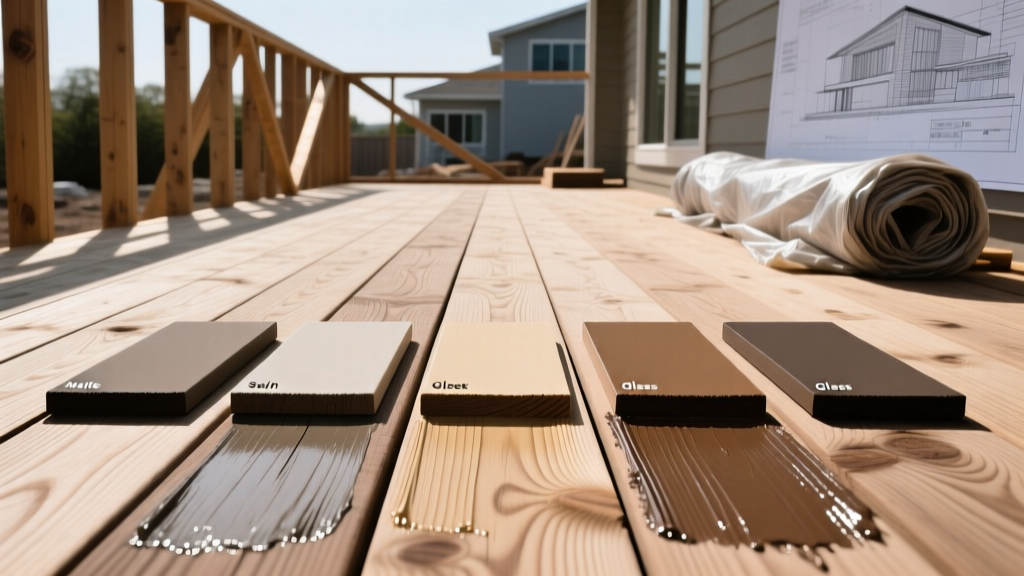
The Chemistry of Deck Coatings: Film-Forming vs. Penetrating
Selecting the right deck paint is fundamentally an exercise in moisture management and UV mitigation. Unlike interior paints, exterior deck coatings must endure horizontal water pooling, direct UV degradation, and the dimensional expansion and contraction of wood substrates. The market is divided into two primary chemical categories: penetrating solid stains and film-forming elastomeric resurfacers.
Penetrating solid stains (often mislabeled as paint by consumers) utilize acrylic or alkyd resins that soak 1/16th of an inch into the wood grain before forming a micro-thin film (2-4 mils). Film-forming elastomeric paints, conversely, are 100% acrylic polymers engineered to build a thick, continuous membrane (10-20 mils) that bridges gaps and locks out moisture entirely. Understanding this distinction is critical; applying a high-build elastomeric over a damp substrate guarantees catastrophic delamination within 18 months.
Brand Deep-Dive: Kilz (Over Armor & Enamel)
Kilz Over Armor Textured Wood/Concrete Coating
Kilz Over Armor is a high-solids, 100% acrylic elastomeric designed specifically for horizontally weathered surfaces. It is engineered to bridge hairline cracks up to 1/4-inch wide and lock down splinters.
- Mil Thickness: 10-14 mils per coat (requires two coats for warranty compliance).
- Coverage Rate: 50-75 square feet per gallon (two-coat system).
- Dry Time: 6 hours to touch; 72 hours for light foot traffic; 14 days for full polymer cross-linking.
- Cost: $42 - $48 per gallon.
Kilz Porch & Patio Floor Paint (Acrylic Enamel)
For covered decks or composite substructures where extreme UV and standing water are less prevalent, Kilz’s standard acrylic enamel offers a hard, low-luster shell. It lacks the bridging capabilities of Over Armor but provides superior scuff resistance for high-traffic covered outdoor living spaces.
Brand Deep-Dive: Rust-Oleum (RockSolid Line)
Rust-Oleum RockSolid 20X Deck Resurfacer
Rust-Oleum’s 20X formulation pushes the boundary of viscosity, offering a coating twenty times thicker than standard acrylic latex paints. It is heavily aggregated with pumice and silica to provide aggressive slip resistance, making it ideal for pool surrounds and ramp applications.
- Mil Thickness: 18-22 mils per coat.
- Coverage Rate: 40-60 square feet per gallon.
- Substrate Requirement: Bare, weathered wood or concrete. Will not adhere to previously painted or sealed surfaces without aggressive mechanical profiling (shot blasting or 40-grit grinding).
- Cost: $55 - $65 per gallon.
The primary trade-off with the 20X line is application labor. The material behaves more like a trowel-grade mastic than a paint. Back-rolling is mandatory to ensure the material is forced into the wood pores rather than just resting on the surface.
Brand Deep-Dive: Sherwin-Williams (SuperDeck & Resilience)
Sherwin-Williams SuperDeck Solid Color Stain
While technically categorized as a solid stain, SuperDeck functions as a flexible, film-forming deck paint for professionals who want to avoid the peeling risks of high-build elastomerics. It utilizes a flexible alkyd-acrylic hybrid resin that moves with the wood’s seasonal moisture fluctuations.
- Mil Thickness: 3-5 mils.
- Coverage Rate: 200-250 square feet per gallon.
- UV Resistance: Exceptional. Iron oxide pigments provide superior fade resistance compared to standard carbon black pigments used in cheaper brands.
- Cost: $52 - $58 per gallon.
Sherwin-Williams Resilience Exterior Acrylic
Resilience is Sherwin-Williams’ premium exterior house paint, but its Advanced Moisture Technology allows it to be applied to damp substrates (up to 20% moisture content). While not a dedicated floor enamel, it is frequently used by contractors on covered deck ceilings, fascia, and vertical railing components where moisture entrapment is a primary concern.
Product Line Comparison Matrix
| Brand / Product Line | Coating Type | Mil Thickness | Coverage (sq ft/gal) | Price Range | Ideal Use Case |
|---|---|---|---|---|---|
| Kilz Over Armor | Elastomeric Resurfacer | 10-14 mils | 50-75 | $42 - $48 | Old, splintered wood with minor cracking |
| Rust-Oleum RockSolid 20X | Textured High-Build | 18-22 mils | 40-60 | $55 - $65 | Pool decks, ramps, high-slip zones |
| S-W SuperDeck Solid | Flexible Acrylic Stain | 3-5 mils | 200-250 | $52 - $58 | Newer wood, composite, low-maintenance needs |
| Kilz Porch & Patio | Acrylic Enamel | 2-4 mils | 300-350 | $35 - $40 | Covered decks, concrete subfloors |
Application Failures & Edge Cases
The most common cause of deck paint failure is not the product itself, but the mismanagement of substrate moisture. According to the USDA Forest Products Laboratory's Wood Handbook, exterior wood must be at or below 15% moisture content (MC) before applying any film-forming coating. Applying an elastomeric resurfacer over wood with 18% MC traps moisture inside the cellular structure. When summer heat vaporizes this trapped water, the resulting hydrostatic pressure will blister and sheer the paint from the substrate.
VOC Regulations and Flash Drying
Environmental regulations are continually reshaping deck paint formulations. The EPA's National Volatile Organic Compound Emission Standards strictly limit the VOC content in architectural coatings. To comply, manufacturers have reduced the co-solvents that traditionally kept acrylic paints "open" (workable) longer. The result in 2026 is that modern low-VOC deck paints flash-dry significantly faster in high heat. If you are painting in temperatures above 85°F, the paint will skin over in the roller tray within 15 minutes, leading to lap marks and uneven mil thickness on the deck surface.
Cost Breakdown: Material vs. Preparation
When budgeting for a deck paint project, contractors and homeowners frequently miscalculate the ratio of material costs to labor and preparation costs. For a standard 400-square-foot pressure-treated pine deck, the material cost for a premium product like Rust-Oleum RockSolid 20X (requiring 8 gallons at $60/gal) is $480. However, the preparation phase—which includes power washing, applying a wood brightener (oxalic acid), sanding mill glaze, and replacing popped fasteners—typically accounts for 70% of the total project cost.
If you attempt to bypass the preparation phase by painting over oxidized, gray wood fibers, the paint will adhere to the dead fibers rather than the structural lignin. The dead fibers will detach from the board within one freeze-thaw cycle, taking your $60-per-gallon coating with it. Always budget for a two-day preparation window and utilize a moisture meter to verify the substrate is below 15% MC before opening your first can of paint.