Composite Decking Base Material Cost Installation Guide for 2026
Evaluate 2026 composite decking base material cost installation options. Compare framing, decking tiers, and fasteners with our framework.
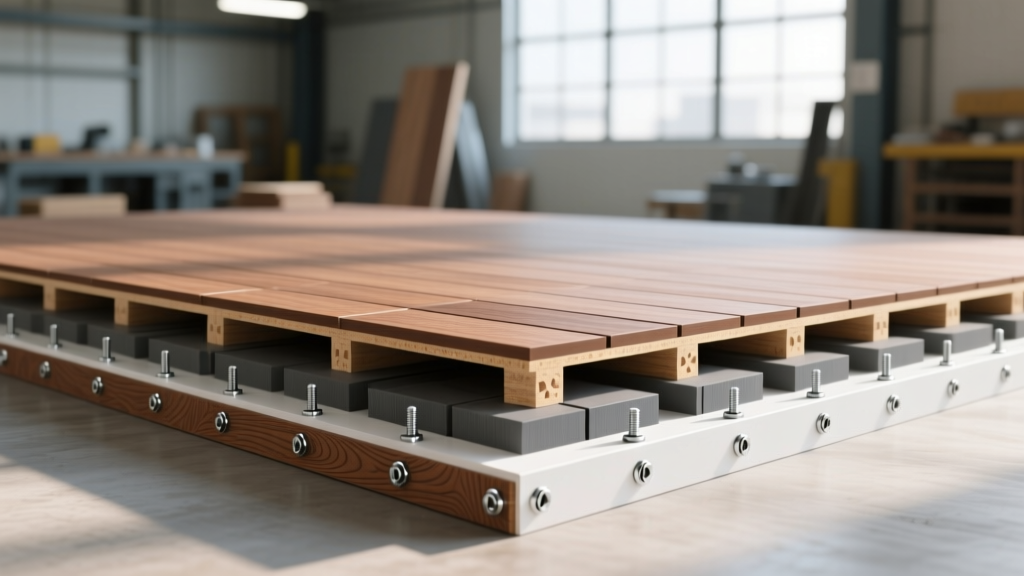
The Anatomy of a Composite Deck: Base, Surface, and Hardware
Calculating the true composite decking base material cost installation requires looking beyond the price per square foot of the surface boards. A deck is a structural system. The longevity of a capped composite or PVC surface is entirely dependent on the dimensional stability of its substructure, the corrosion resistance of its fasteners, and the precision of its joist spacing. In 2026, material science has advanced, but the fundamental physics of moisture management and thermal expansion remain unchanged. This framework dissects the substructure, surface tiers, and installation variables to help you engineer a deck that meets specific budget and performance criteria.
Base Material Selection: Framing the Substructure
The base material dictates the joist span, fastening method, and ultimate lifespan of the deck. While pressure-treated (PT) lumber remains the baseline, steel and composite framing systems are capturing market share due to their resistance to warping and rot. According to structural guidelines maintained by the American Wood Council, framing spans must be calculated based on the specific live and dead loads of the region, but material choice dramatically alters the spacing requirements.
| Framing Material | 2026 Avg. Cost (Per LF) | Max Joist Span (Standard) | Moisture & Rot Resistance | Best Application |
|---|---|---|---|---|
| #2 Southern Yellow Pine (PT) | $2.50 - $3.80 | 16' (for 2x10) | Moderate (Requires sealing) | Standard residential builds, tight budgets |
| Light-Gauge Galvanized Steel | $6.50 - $9.20 | Up to 24' (Engineered) | Exceptional (Inorganic) | Low-profile decks, commercial, high-moisture |
| Composite/PVC Framing | $8.00 - $12.50 | 12' to 16' (Varies by brand) | Exceptional (Inorganic) | Dock systems, ground-level builds |
Expert Insight: When using steel framing (such as Trex Elevate or Fortress Evolution), you must use self-drilling structural screws with neoprene washers. Standard wood screws will fail against the steel webbing, and the lack of wood expansion requires precise pre-drilling or specialized fasteners to prevent surface dimpling on the composite boards above.
Composite Decking Tiers and Surface Material Costs
Composite decking is manufactured via extrusion, combining wood flour and high-density polyethylene (HDPE) or polypropylene, encased in a polymer shell. The cost installation matrix shifts heavily depending on whether you select a scalloped (hollowed) bottom profile or a solid profile. Scalloped boards reduce material weight and cost but require stricter joist spacing (often 12 inches on-center for diagonal layouts) compared to solid boards.
2026 Pricing Matrix by Tier
| Tier | Brand / Line Example | Material Cost (Per Sq Ft) | Profile | Warranty |
|---|---|---|---|---|
| Entry-Level | Trex Enhance / Fiberon Good Life | $4.50 - $6.00 | Scalloped | 25-Year Limited |
| Mid-Tier | TimberTech Terrain / Trex Select | $6.50 - $8.50 | Solid / Scalloped | 25 to 30-Year |
| Premium | Trex Transcend Lineage / TimberTech Landmark | $9.00 - $13.50 | Solid | 50-Year Limited |
| Advanced PVC | Azek Landmark / Wolf Serenity | $11.00 - $16.00 | Solid / Cellular | Lifetime / 50-Year |
Installation Variables: Where Labor Costs Multiply
Labor accounts for 50% to 65% of the total composite decking base material cost installation. In 2026, specialized deck contractors charge between $75 and $115 per hour, or roughly $18 to $28 per square foot for labor alone. The following installation choices directly impact this labor multiplier:
- Hidden Fasteners vs. Face Screws: Hidden clip systems (like Trex Hideaway or TimberTech CONCEALoc) cost an additional $0.90 to $1.40 per square foot in hardware. However, they reduce installation time by up to 30% compared to pre-drilling and countersinking face screws, often resulting in a net-neutral labor cost while delivering a superior aesthetic.
- Joist Spacing and Diagonal Patterns: Standard composite boards require 16-inch on-center (OC) joist spacing for perpendicular installs. If the design calls for a 45-degree diagonal pattern, joist spacing must be reduced to 12 inches OC to prevent sagging. This increases base material costs by 25% and adds roughly 15% to labor time due to increased cutting and fastening.
- Joist Tape Application: Applying butyl-based flashing tape (e.g., Trex Protect or G-Tape) to the top of wood joists is non-negotiable for modern builds. It prevents water intrusion into the screw holes and protects the PT lumber from rot. Budget $0.45 per linear foot for the tape and add 1.5 hours of labor per 100 square feet.
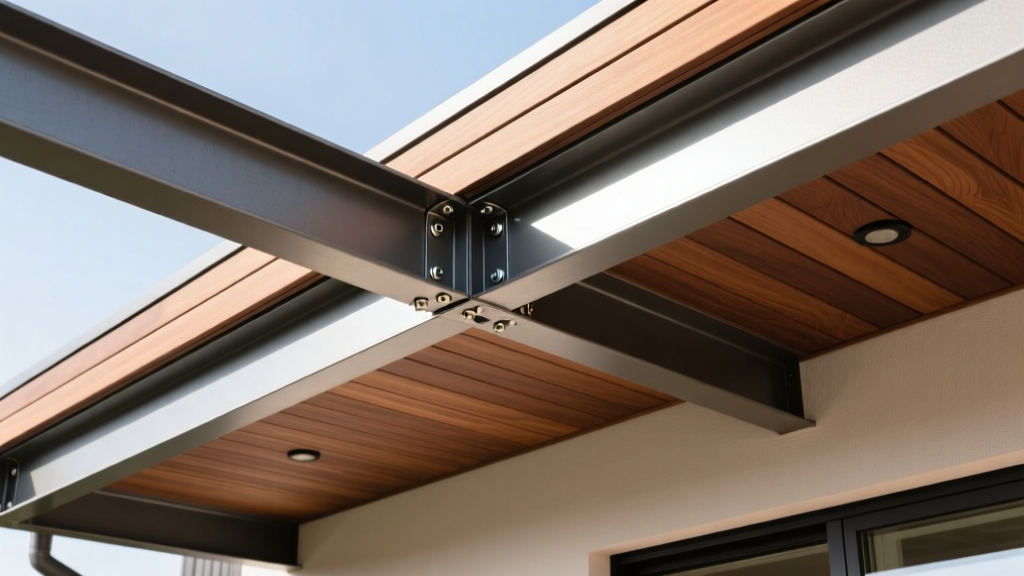
The Selection Framework: Matching Budget to Build
Use this decision matrix to align your composite decking base material cost installation strategy with your specific environmental and financial constraints.
Scenario A: High Moisture / Coastal Environment
- Base: Light-gauge galvanized steel framing (eliminates wood rot and termite risk).
- Surface: Advanced PVC (Azek) or Premium Capped Composite with a solid profile.
- Hardware: 316-grade stainless steel hidden fasteners (304-grade will pit and corrode in salt air).
- Expected Cost Multiplier: 1.8x to 2.2x baseline residential cost.
Scenario B: Standard Suburban Residential (Optimal Value)
- Base: #2 Pressure-Treated Southern Yellow Pine, protected with butyl joist tape.
- Surface: Mid-tier capped composite (scalloped profile for weight/cost savings).
- Hardware: Standard 304 stainless steel hidden clips with composite start/stop boards face-screwed using color-matched composite screws.
- Expected Cost Multiplier: 1.0x (Baseline).
Scenario C: Low-Profile / Ground-Level Build
- Base: Composite or PVC framing sleepers laid over a crushed gravel base. Wood cannot be used here due to lack of cross-ventilation.
- Surface: Premium solid-profile composite (scalloped boards trap moisture against the ground and will mold).
- Hardware: Face screws with composite plugs, as hidden clips require side-clearance that ground-level builds often lack.
- Expected Cost Multiplier: 1.4x baseline.
Critical Failure Modes to Avoid
Even premium materials will fail if the installation physics are ignored. The North American Decking and Railing Association (NADRA) frequently cites improper fastening and inadequate ventilation as the primary causes of composite deck failure. Avoid these specific edge cases:
- Ignoring Thermal Expansion: Composite materials expand and contract significantly with temperature fluctuations. A 16-foot board installed at 40°F can expand up to 3/16 of an inch when summer temperatures hit 95°F. If you butt boards tightly together without leaving the manufacturer-specified 1/8-inch gap at the ends, the boards will buckle and push the fascia boards off the rim joists.
- Insufficient Ground Clearance: Most manufacturer installation guides mandate a minimum of 1.5 inches of unobstructed ventilation between the bottom of the joists and the ground, and 12 inches for the decking surface. Failing to maintain this clearance traps humid air, leading to mold growth on the uncapped bottom edges of the boards.
- Over-tightening Face Screws: When face-screwing composite boards (typically required for the first and last board, or on stair treads), driving the screw too deep crushes the polymer cap and creates a 'volcano' effect where the compressed material rises around the screw head. Always use a depth-setting collar on your drill and finish with a composite plug.
By systematically evaluating the substructure, selecting the appropriate surface tier, and accounting for the labor multipliers of hidden fasteners and joist tape, you can accurately forecast the total composite decking base material cost installation. This framework ensures that the investment yields a structurally sound, visually flawless outdoor space that performs to its 50-year warranty expectations.
Written by
Elena RodriguezElena Rodriguez is a civil engineer and technical writer specializing in concrete technology, masonry systems, and ASTM/ACI compliance. She earned her B.S. in Civil Engineering from Texas A&M University and spent a decade at a materials testing laboratory, performing over 2,000 concrete compressive strength tests and masonry prism evaluations. Elena is an ACI-certified Field Testing Technician (Grade I) and a member of ASTM Committee C12 on Natural Building Stone. She currently consults on forensic engineering cases involving concrete failures and moisture intrusion. Based in San Antonio, TX, Elena is a proud member of the Society of Women Engineers (SWE) and coaches her daughter's FIRST Robotics team.
More from Elena Rodriguez
View all
Walls & Panels
Cost Analysis: Light Gauge Steel Framing Advantages and Disadvantages
Evaluate light gauge steel framing advantages and disadvantages through a strict cost analysis lens, comparing material, labor, and lifecycle expenses.
Aug 4, 2026

Walls & Panels
Gypsum Board Types: Exact Specifications, Thickness & Dimensions
Compare standard, Type X, and moisture-resistant gypsum board types. Get exact specifications, thicknesses, dimensions, and ASTM standards for your project.
Aug 4, 2026

Fire Resistance
Best Fire-Resistant Outdoor Decking Materials: 2026 Buyer Guide
Discover the best fire-resistant outdoor decking materials for 2026. Compare Class A PVC, aluminum, and hardwood options for WUI compliance and safety.
Aug 4, 2026