Black Chain Link Fence Lifespan: Durability & Coating Analysis
Analyze the true lifespan of a black chain link fence. Compare vinyl coatings, galvanization classes, and framework specs for maximum durability.
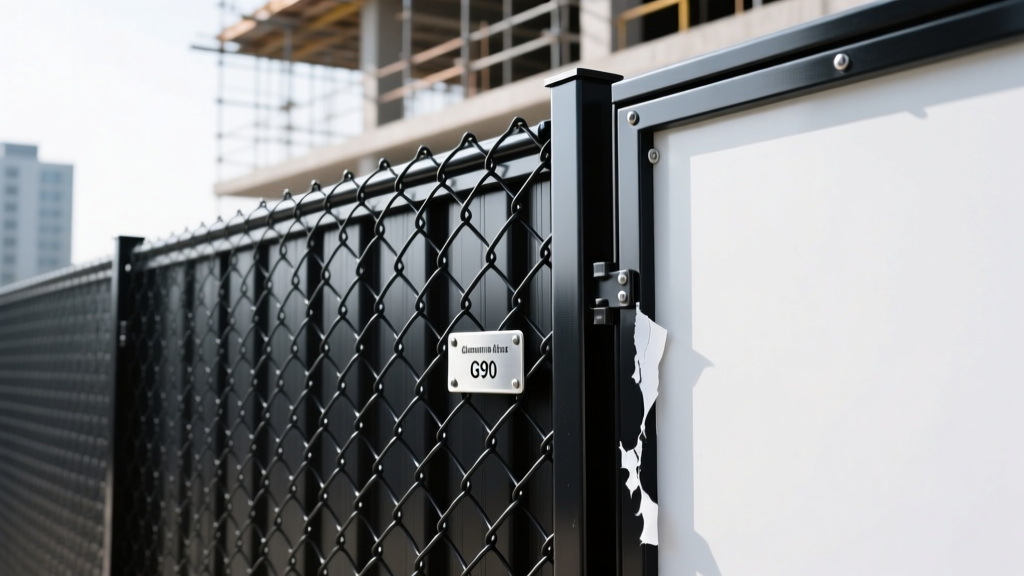
The Anatomy of Black Chain Link Fabric
A black chain link fence is not simply painted steel; it is a multi-layered corrosion defense system engineered to withstand mechanical impact and environmental degradation. The true lifespan of the fence—ranging from a mere 8 years to well over 25 years—depends entirely on the metallurgical and chemical composition of these three distinct layers:
- The Core Wire: High-tensile steel wire, typically drawn to 9-gauge (0.148 inches) for commercial/security applications or 11.5-gauge (0.120 inches) for standard residential use.
- The Zinc Layer (Galvanization):strong> A sacrificial metallic coating applied via hot-dip or electroplating that prevents the steel core from oxidizing.
- The Polymer Coating: The exterior black layer (PVC, polyester, or powder coat) that provides UV resistance, aesthetic integration with landscaping, and an initial physical barrier against moisture.
When evaluating durability, homeowners and contractors often fixate on the black exterior coating. However, according to technical guidelines from the Chain Link Fence Manufacturers Institute (CLFMI), the polymer layer is merely the first line of defense. Once the black coating is compromised by UV degradation or physical abrasion, the underlying zinc layer dictates whether the fence survives another decade or begins to fail structurally within months.
Galvanization Classes: The Hidden Lifespan Multiplier
The most critical specification in chain link manufacturing is the zinc coating weight, governed by ASTM A392 standards. Zinc acts as a sacrificial anode; it corrodes preferentially to protect the steel core. The American Galvanizers Association notes that zinc depletion rates are directly proportional to environmental exposure, making the initial coating thickness paramount.
| Specification | Zinc Weight (oz/sq ft) | Coating Thickness | Expected Bare Lifespan* | Best Application |
|---|---|---|---|---|
| Class 1 (Commercial) | 0.40 oz | ~0.65 mils | 5 - 8 years | Dry, inland climates; temporary fencing; low-budget residential. |
| Class 3 (Residential/Heavy) | 0.80 oz | ~1.30 mils | 15 - 20+ years | Coastal zones, high humidity, industrial areas, long-term residential. |
*Expected bare lifespan refers to the zinc layer's survival after the black polymer coating has completely degraded or been physically removed.
Black Coating Technologies: Extruded vs. Bonded vs. Powder
The black exterior finish drastically alters both the visual appeal and the physical durability of the mesh. Not all black coatings are created equal. Below is a comparative matrix of the three primary coating technologies used in 2026 manufacturing.
1. Extruded PVC (Vinyl)
A thick, flexible PVC sheath (typically 0.20 to 0.25 inches thick) that is physically pulled over the galvanized wire like a sleeve.
- Durability: Highest impact resistance. Will not crack when the fence is struck by rocks, baseballs, or heavy branches.
- Failure Mode: Because it is a sleeve, water can enter through cut ends or damaged selvedges. If water gets trapped between the PVC and the zinc, it creates a greenhouse effect, accelerating hidden corrosion.
- UV Stability: Excellent, provided the PVC is compounded with titanium dioxide (TiO2) UV inhibitors to prevent the black color from chalking into a dull gray.
2. Bonded PVC (Vinyl)
A much thinner PVC layer (approx. 0.05 to 0.08 inches) that is chemically fused to the zinc layer using a primer and heat-bonding process.
- Durability: Lower impact resistance than extruded. Can chip or flake if subjected to severe mechanical abrasion.
- Failure Mode: Peeling. If the chemical bond fails due to improper factory priming, large sheets of the black coating can delaminate, exposing bare wire.
- Advantage: Because it is fused, water cannot penetrate underneath the coating. If the coating is intact, the zinc is 100% protected from capillary moisture.
3. Powder Coated (Polyester/Epoxy)
An electrostatically applied dry powder that is baked onto the wire, creating a hard, uniform shell.
- Durability: Extremely hard and scratch-resistant, but brittle. Prone to micro-fracturing when the chain link fabric flexes under high wind loads.
- Failure Mode: Chipping at the knuckles (the woven joints of the diamond mesh) where the wire bends and rubs during installation and wind sway.
Framework and Fittings: The True Point of Failure
A black chain link fence is only as durable as its structural skeleton. The most common reason a 20-year fabric fails at year 10 is framework collapse or fitting corrosion.
Pipe Wall Thickness (Schedule)
Do not rely solely on the Outside Diameter (OD) of the pipe. A 2-inch OD line post can be manufactured in Schedule 40 (0.154-inch wall thickness) or Schedule 15 / Light-Wall (0.065-inch wall thickness).
In 60 MPH wind gusts, a 6-foot-tall fence utilizing Schedule 15 (light-wall) line posts spaced at 10-foot intervals will exhibit a deflection of up to 4.5 inches. Upgrading to Schedule 40 steel reduces that deflection to 1.2 inches, preventing the permanent bending of the top rail and the tearing of the black vinyl fabric at the tension bands.
Galvanic Corrosion at the Fittings
When black vinyl-coated steel fabric is attached using bare aluminum tension bands or carriage bolts, a galvanic cell is created in the presence of rainwater. The aluminum acts as an anode and corrodes rapidly, leading to snapped bands and sagging mesh. Always specify black polymer-coated steel fittings or hot-dip galvanized steel fittings to maintain metallurgical compatibility.
Environmental Degradation & Edge Cases
To accurately project the lifespan of a black chain link fence, you must account for site-specific environmental stressors that accelerate material fatigue.
- Soil Acidity and the Bottom Selvedge: If the bottom of the black chain link mesh is buried in soil to prevent pet escape, soil acids and moisture will degrade the bottom selvedge. Solution: Use a vinyl-coated bottom tension wire and keep the mesh 1 inch above grade, or install a pressure-treated timber kickboard.
- Privacy Slats and Wind Load: Weaving black privacy slats into the mesh increases the wind load profile by up to 80%. Standard residential framework (1-5/8 inch top rail, 2-inch line posts) will buckle under these loads. If privacy slats are required, the framework must be upgraded to 2-inch top rails and 2.5-inch line posts set in 36-inch concrete footings.
- Thermal Expansion of Black Vinyl: Black PVC absorbs significantly more solar radiation than green or gray. In desert climates where summer surface temperatures exceed 140°F, poorly formulated black vinyl can soften, stretch, and sag. Ensure the manufacturer specifies a high-durometer PVC compound rated for high-heat environments.
Cost-to-Lifespan ROI Matrix (2026 Pricing)
When budgeting for a black chain link fence, analyzing the initial cost against the expected lifecycle cost reveals why cutting corners on galvanization and framework is financially detrimental.
| System Configuration (6ft Tall, 50ft Run) | Est. Installed Cost (2026) | Expected Lifespan | Annualized Cost |
|---|---|---|---|
| 11.5ga Class 1 Zinc, Bonded PVC, Sch 15 Posts | $1,450 - $1,700 | 8 - 12 Years | $135 / year |
| 11.5ga Class 3 Zinc, Extruded PVC, Sch 40 Posts | $2,100 - $2,500 | 20 - 25 Years | $96 / year |
| 9ga Class 3 Zinc, Extruded PVC, Sch 40 Posts | $2,800 - $3,300 | 25 - 30+ Years | $103 / year |
As the data indicates, upgrading from a commercial-grade Class 1 system to a heavy-duty Class 3 system increases upfront capital expenditure by roughly 40%, but cuts the annualized ownership cost by nearly 30% while eliminating the need for a mid-life replacement.
Actionable Maintenance Protocol for Maximum Longevity
Even a premium Class 3 black chain link fence requires minimal but specific maintenance to reach its 25-year potential.
- Annual Vegetation Clearance: Clear all vines, ivy, and dense shrubbery within 12 inches of the fence line. Trapped organic matter holds moisture against the black vinyl, promoting mildew and accelerating UV degradation of the polymer.
- Bi-Annual Fitting Torque Check: Check the nuts on all tension bar bands and rail end bands. Thermal expansion and wind-induced vibration can loosen these over time. A loose tension band allows the fabric to sway, causing abrasive wear at the knuckles.
- Touch-Up Protocol: If the black vinyl is deeply gouged down to the silver zinc layer, clean the area with isopropyl alcohol and apply a cold-galvanizing compound spray (containing 93% pure zinc dust) followed by a black rust-inhibitive enamel. Do not use standard spray paint, as it lacks the sacrificial zinc properties required to halt oxidation.
By prioritizing Class 3 galvanization, selecting the correct polymer coating for your specific climate, and pairing the fabric with Schedule 40 framework, a black chain link fence transitions from a temporary boundary marker to a permanent, highly durable property asset.