Dog Ear Fence Durability: Wood Species Lifespan & Decay Analysis
Compare dog ear fence durability across cedar, redwood, and pine. Discover expected lifespans, decay risks, and maintenance tips for maximum longevity.
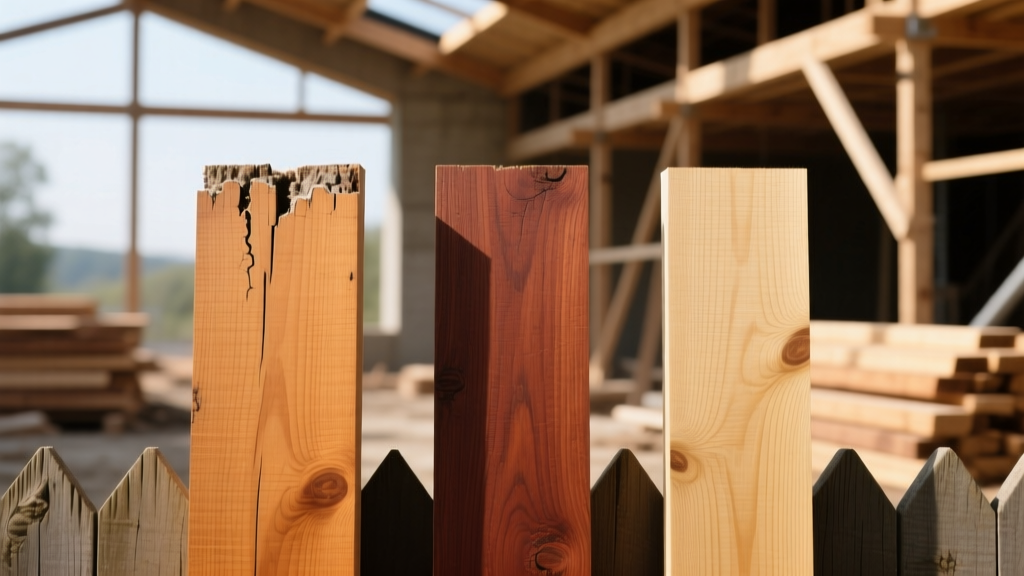
The Geometry of Decay: Why the Dog Ear Cut Matters
The dog ear fence is a staple of residential privacy fencing, defined by pickets where the top corners are removed, typically creating a 1.5-inch to 2-inch drop at a 45-degree angle. While aesthetically pleasing and effective for shedding bulk water off the top edge, this specific geometry introduces a critical vulnerability: exposed end-grain. Wood absorbs moisture 50 to 100 times faster through the end-grain than through the face or edge grain. When the "ears" are cut, the capillary tubes of the wood are severed and exposed directly to the elements. If these cuts are made post-manufacturing on-site with a circular saw, the end-grain is left entirely raw and unprotected, accelerating localized rot and creating the primary failure point for the picket.
Wood Species Lifespan and Decay Resistance Matrix
Not all dog ear fences are created equal. The lifespan of the pickets is dictated by the natural extractives in the wood (like thujaplicins in cedar) or the chemical retention levels in pressure-treated lumber. Below is a comparative analysis of the most common materials used for dog ear pickets in 2026.
| Wood Species / Treatment | AWPA Decay Rating | Expected Picket Lifespan | Primary Failure Mode | Cost Tier (Relative) |
|---|---|---|---|---|
| Western Red Cedar (Heartwood) | Highly Resistant | 15 - 25 Years | Silvering, surface checking | High |
| Western Red Cedar (Sapwood) | Susceptible | 5 - 8 Years | Internal rot, insect boring | Medium |
| Redwood (Heartwood) | Highly Resistant | 20 - 30 Years | Splitting at fastener points | Premium |
| Pressure-Treated Pine (UC3B) | Resistant (Chemical) | 12 - 18 Years | Warping, twisting, cupping | Low |
| Whitewood / SPF (Untreated) | Susceptible | 3 - 5 Years | Rapid basal and ear rot | Budget |
Western Red Cedar: The Extractive Advantage
According to the Western Red Cedar Lumber Association, the natural decay resistance of cedar is derived from water-soluble extractives, primarily thujaplicins. However, these extractives are concentrated almost exclusively in the heartwood. If you purchase lower-grade dog ear pickets (such as STK - Select Tight Knot or lower), you are likely getting a high percentage of sapwood, which lacks these protective chemicals and will decay almost as quickly as untreated pine. For maximum durability, specify "100% Heartwood" or "Clear All Heart" grades, even if it requires a 30% to 40% premium on the material cost.
Pressure-Treated Southern Yellow Pine
Pressure-treated pine is the most common dog ear fence material due to its affordability. For above-ground pickets, the American Wood Protection Association (AWPA) classifies this as Use Category UC3B, requiring a minimum chemical retention of 0.15 pcf (pounds per cubic foot) for Micronized Copper Azole (MCA) or Alkaline Copper Quaternary (ACQ). While the chemicals prevent fungal decay, they do not stabilize the wood against moisture-induced dimensional changes. Treated pine dog ear pickets are highly prone to "picket twist"—a warping phenomenon where the picket spirals along its vertical axis as it dries unevenly after installation.
The "Ear" Vulnerability: Managing End-Grain Wicking
The angled cuts at the top of a dog ear picket act as moisture wicks. During horizontal rain events, water strikes the angled face and is drawn directly into the end-grain. Over time, this repeated wetting and drying cycle causes the top 3 inches of the picket to check (crack) and eventually harbor wood-decaying fungi.
CRITICAL INSTALLATION WARNING: End-Grain Sealing
Never install dog ear pickets straight from the lumber yard without treating the top cuts. Before installation, apply a heavy coat of a wax-based end-grain sealer (such as Anchorseal) or a penetrating alkyd primer to the top 3 inches of the picket, focusing heavily on the angled "ears." This physical barrier reduces end-grain moisture absorption by up to 85%, effectively neutralizing the primary geometric weakness of the dog ear design. The USDA Forest Products Laboratory (FPL Wood Handbook, Chapter 14) notes that sealing end-grain is the single most effective field treatment for slowing biodeterioration in exposed timber.
Fastener Metallurgy and Structural Failure Points
A dog ear fence often outlives its fasteners. The tannins in cedar and redwood are highly reactive to the zinc and iron in standard galvanized nails, resulting in unsightly black streaks running down the face of the picket and premature fastener corrosion. Conversely, the copper-based preservatives in treated pine will rapidly corrode standard aluminum or uncoated steel.
- For Cedar and Redwood: Use Type 304 Stainless Steel fasteners as a minimum. If the fence is within 5 miles of a saltwater coastline, upgrade to Type 316 Marine-Grade Stainless Steel to prevent pitting corrosion. Use #8 x 2-1/2" Star-drive (Torx) deck screws with a type-17 auger point to prevent the wood from splitting near the top "ear" cuts.
- For Pressure-Treated Pine: Hot-dipped galvanized (HDG) fasteners meeting ASTM A153 Class D standards are mandatory. The zinc coating must be thick enough to resist the corrosive copper preservatives. Alternatively, use polymer-coated exterior structural screws (e.g., GRK RSS or FastenMaster), which provide a physical barrier between the steel and the treated wood.
Finish Lifecycles: Penetrating vs. Film-Forming Coatings
The choice of finish dictates the maintenance cycle and the ultimate lifespan of the wood. A common and catastrophic mistake is applying a film-forming sealer (like polyurethane or solid-color acrylic paint) to a dog ear fence.
The Danger of Film-Forming Sealers
Film-forming products create a non-permeable plastic shell over the wood. While they look excellent on day one, they trap moisture vapor inside the picket. When the sun heats the wood, the trapped moisture expands, causing the film to blister, peel, and flake. Once the film is breached at the dog ear cuts, water enters but cannot escape, creating a localized greenhouse effect that accelerates rot. Stripping a peeling film-forming sealer from a textured wood fence requires aggressive chemical strippers or extensive power sanding, often costing more in labor than the original fence installation.
The Superiority of Penetrating Alkyd/Oil Stains
For dog ear fences, use a penetrating, oil-based or alkyd-based semi-transparent stain. These products contain mildewcides and water repellents but do not form a surface film. They soak into the wood pores and allow the fence to "breathe," releasing moisture vapor while repelling liquid water. High-end penetrating stains (such as those utilizing transoxide pigments) typically require a maintenance re-coat every 3 to 5 years, but they will never peel or blister, making maintenance a simple matter of cleaning and re-applying.
Actionable Maintenance Protocol for Maximum Longevity
To push a dog ear fence toward the upper end of its expected lifespan, implement the following targeted maintenance schedule:
- Year 1 (Post-Installation): Allow pressure-treated pine to dry and acclimate for 90 to 120 days before applying any penetrating stain. Cedar can be stained immediately if the wood is kiln-dried (KDAT), or after 30 days if it is green (wet) lumber. Ensure the top ear cuts were sealed prior to this step.
- Year 3 (Inspection & Cleaning): Inspect the bottom 6 inches of the pickets where they meet the soil or grass line. This is the "splash zone" where soil-borne fungi are introduced. Trim back any vegetation touching the fence to ensure airflow. Wash the fence with a low-pressure (under 800 PSI) wash using a dedicated wood cleaner containing oxalic acid to remove tannin stains and surface mildew.
- Year 5 (Re-Coating): Perform the "water drop test." Splash water on the face of the pickets. If it beads up, the stain is still viable. If it absorbs immediately into the wood, it is time to re-apply a penetrating alkyd stain. Apply the stain using an airless sprayer, followed immediately by back-brushing to force the product into the wood pores and ensure uniform coverage on the angled dog ear cuts.
By understanding the specific vulnerabilities of the dog ear geometry and selecting the correct wood species, fasteners, and breathable finishes, you can effectively double the functional lifespan of your privacy fence while minimizing long-term maintenance costs.