White Plastic Fence Scenario Guide: Best Yards & Applications
Discover if a white plastic fence fits your property. Match PVC fencing styles to specific yard scenarios, climates, and budgets with our expert guide.
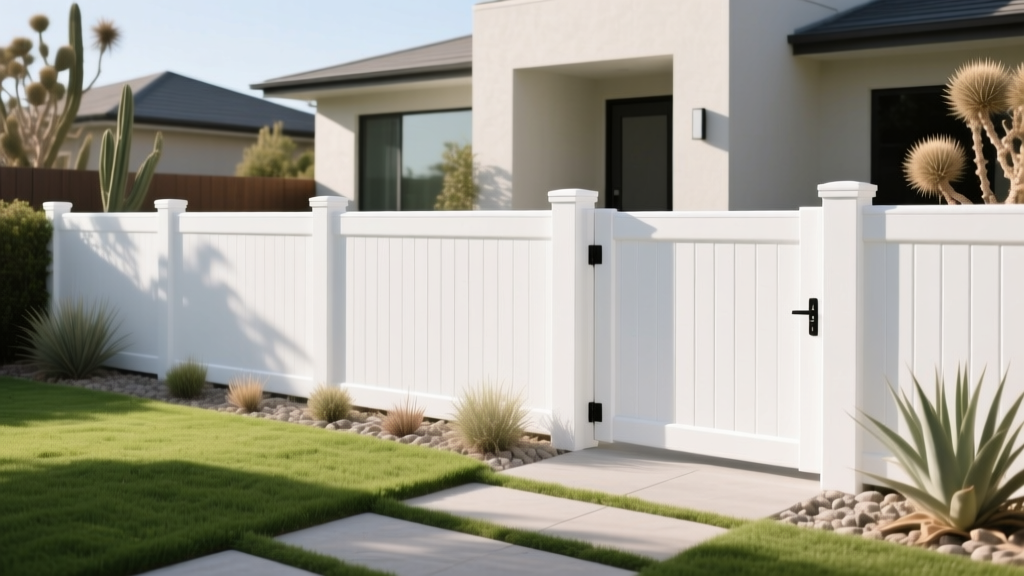
The Material Reality: What You Are Actually Buying
When homeowners search for a white plastic fence, they are technically looking for rigid polyvinyl chloride (PVC) extrusions. However, not all white PVC is engineered equally. The longevity of a white plastic fence in 2026 depends entirely on its extrusion method and UV-inhibitor package. High-quality manufacturers use a co-extrusion process: a thin outer layer of virgin PVC loaded with 8 to 10 parts titanium dioxide (TiO2) per 100 parts resin, fused over a thicker core of recycled PVC. This TiO2 ratio is the critical threshold required to prevent the white plastic from yellowing or chalking under intense UV exposure.
According to material standards outlined by the Vinyl Institute, impact modifiers (typically acrylics) must be blended into the PVC matrix to prevent shattering during cold-weather impacts. When evaluating product specs, demand a minimum wall thickness of 0.135 inches for residential privacy panels and 0.165 inches for commercial or high-wind applications. Anything thinner will warp under summer heat loads and become brittle in freezing temperatures.
Scenario Matching Matrix: Where White Plastic Excels
A white plastic fence is not a universal solution. Its performance varies drastically based on environmental stressors and terrain. Use the matrix below to determine if PVC aligns with your specific property conditions.
| Yard Scenario | White PVC Suitability | Required Configuration & Hardware |
|---|---|---|
| Coastal / Salt-Spray Zones | Excellent | Must use Type 316 marine-grade stainless steel hardware. Standard zinc brackets will rust and streak the white panels. |
| High-Wind Zones (110+ mph) | Good (with caveats) | Requires wind-load rated routed posts (not bracketed), 5x5 posts with 0.165" walls, and 36-inch deep concrete footings. |
| Steep Slopes (>15 degrees) | Poor | Standard 6x8 panels cannot rack beyond 3 degrees. Requires custom stepped installation or switching to aluminum/wood. |
| Damp / Heavy Clay Soil | Excellent | PVC is impervious to rot and fungal decay. Ensure post holes have a 3-inch crushed gravel base for drainage before pouring concrete. |
| Extreme Cold Climates (<20°F) | Moderate | PVC loses impact resistance in deep freezes. Keep snowblowers at least 24 inches away from the fence line to prevent shattering. |
Deep Dive: High-Wind and Coastal Applications
Installing a solid white plastic privacy fence in a coastal or high-wind region introduces severe aerodynamic loads. A standard 6-foot solid panel acts as a sail. If wind catches it at 90 mph, the lateral force can easily exceed 400 pounds per panel. The American Fence Association strictly advises against using face-mounted brackets for high-wind zones.
The Routed Post Solution
For wind-prone scenarios, you must use routed posts. These are thick-walled (minimum 5x5 inches) PVC posts with precision-cut holes where the horizontal rails slide completely through the post. This distributes the wind load across the entire post wall rather than concentrating it on two small metal brackets. Furthermore, the rails must be secured with stainless steel through-screws driven directly through the post and rail to prevent the panels from pulling out during wind-shear events.
The most common aesthetic failure of white plastic fences is rust streaking. Never use standard zinc-plated or electro-galvanized screws. As soon as the zinc coating degrades, the underlying steel will rust, leaving permanent orange streaks down your pristine white PVC. Exclusively use Type 304 or Type 316 stainless steel fasteners for all structural and cosmetic connections.
Deep Dive: Sloped Terrain and Property Lines
Matching a white plastic fence to a sloped yard requires understanding the mechanical limits of PVC extrusions. Unlike wood or chain link, standard PVC privacy panels are rigid, pre-assembled 6-foot by 8-foot frames. They do not naturally 'rack' (tilt into a parallelogram) to follow the ground contour.
- Standard Panels: Can only accommodate a grade change of about 1 to 2 inches over an 8-foot span (roughly 1.5 degrees). Forcing them further will snap the vinyl welds at the rail-to-picket joints.
- Rackable Panels: Specialty rackable white PVC fences use wider rail holes and floating picket designs, allowing them to follow slopes up to 12 to 15 degrees. These cost approximately 20% more than standard rigid panels.
- Stepped Installation: For slopes exceeding 15 degrees, the fence must be 'stepped.' Each 8-foot panel is installed perfectly level, but dropped down incrementally to follow the hill. This leaves triangular gaps at the bottom of the downhill side of each panel, which must be filled with custom-cut PVC kicker boards or landscaping.
2026 Cost & ROI Breakdown by Application
Pricing for white plastic fences has stabilized following the supply chain fluctuations of the early 2020s, but premium UV-inhibited profiles command a distinct premium. Below are the current installed costs per linear foot, assuming standard 100-foot runs with 5x5 routed posts set in concrete.
| Fence Style | Height | Material Cost (per LF) | Installed Cost (per LF) | Best Application Scenario |
|---|---|---|---|---|
| Traditional Picket | 4 ft | $14 - $22 | $28 - $42 | Front yard boundaries, pet containment, decorative framing. |
| Solid Privacy | 6 ft | $22 - $34 | $45 - $65 | Backyard privacy, pool enclosures, noise reduction. |
| Semi-Private (Alternating) | 6 ft | $28 - $40 | $55 - $78 | Yards requiring privacy but needing cross-breeze ventilation. |
| Wind-Load Rated Privacy | 6 ft | $35 - $50 | $70 - $95 | Coastal properties, hurricane zones, open plains. |
Critical Failure Modes & Edge Cases
To ensure your white plastic fence survives its expected 30-year lifespan, avoid these three common installation and application errors:
1. Using PVC Posts for Soil Retention
A 5x5 PVC post is a vertical structural element designed to hold up panels; it is not a retaining wall. If your yard slopes and you plan to backfill dirt directly against the fence panels to level the ground, the lateral hydrostatic pressure from wet soil will bow the PVC posts and snap the bottom rails. If soil retention is required, build a separate timber or segmental block retaining wall at least 12 inches away from the fence line.
2. Improper Concrete Footing Doming
When setting white PVC posts, installers often trowel the wet concrete into a dome shape above the soil grade to shed water. On a PVC fence, this is a critical error. The concrete dome will trap moisture against the bottom of the hollow PVC post, leading to algae growth and internal freezing that cracks the post from the inside out. The concrete footing must be poured 2 inches below final grade, and the void around the post must be backfilled with soil and tamped down.
3. Heat Warping from Reflected Sunlight
White PVC reflects most solar radiation, which is why it stays cooler than dark composite or wood fences. However, if your white plastic fence is installed parallel to a large, south-facing low-E glass window, the window can act as a magnifying glass, focusing intense heat beams onto the fence. This localized heat can exceed 160°F, causing the PVC rails to permanently sag or warp. Maintain a minimum 10-foot setback from large reflective glass surfaces, or plant a shrub buffer.
Final Decision Flowchart: Is White PVC Right for You?
Use this quick diagnostic to finalize your material choice:
- Do you live within 5 miles of the ocean? Yes → Choose white PVC, but mandate 316 stainless steel hardware. No → Proceed to step 2.
- Is your yard sloped greater than 15 degrees? Yes → Avoid standard PVC panels; look into rackable aluminum or stepped custom wood. No → Proceed to step 3.
- Will the fence be used to contain large dogs (60+ lbs) that jump against the fence? Yes → PVC may crack upon heavy, repeated impact; consider welded wire or heavy-gauge aluminum. No → Proceed to step 4.
- Is your primary goal zero-maintenance privacy with a bright, clean aesthetic? Yes → A high-quality, co-extruded white plastic fence with routed posts is your optimal application match.
Many Homeowner Associations restrict 'plastic' fencing but allow 'vinyl' or 'PVC' fencing based on outdated aesthetic prejudices. When submitting your application to the HOA architectural committee, use the terminology 'Rigid PVC Extrusion with TiO2 UV-Inhibitors' and provide manufacturer spec sheets showing the 0.135" wall thickness. This technical framing routinely bypasses generic 'no plastic' clauses in neighborhood covenants.