Metal Fence Panels: Material Taxonomy and Selection Guide
Compare aluminum, steel, and wrought iron metal fence panels. Learn material taxonomy, gauge thickness, coating types, and selection frameworks.
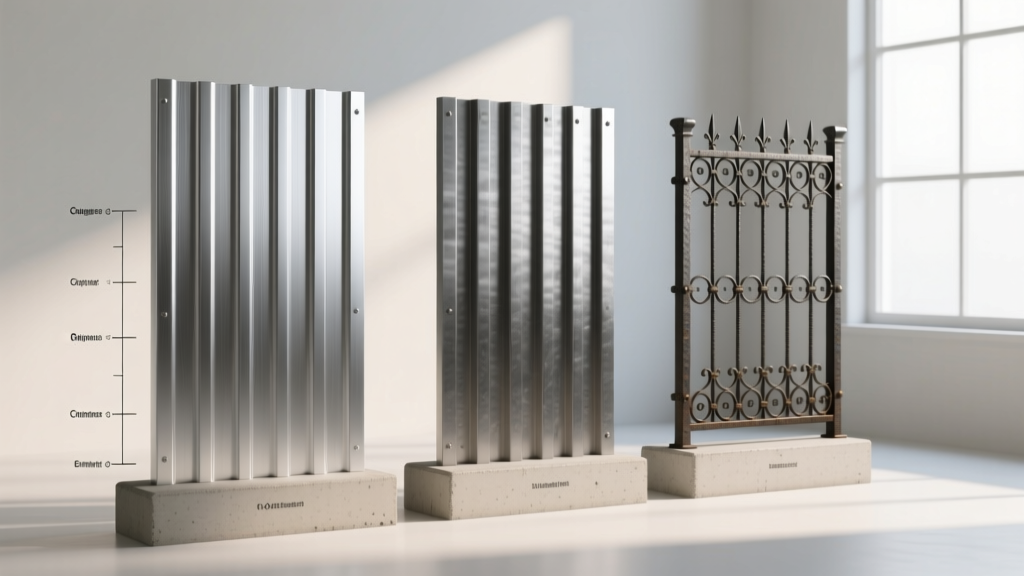
The Core Taxonomy of Metal Fence Panels
When contractors and homeowners refer to 'metal fencing,' they are often conflating three distinct material categories with vastly different structural properties, corrosion resistance profiles, and lifecycle costs. Selecting the correct metal fence panels requires moving beyond aesthetic preferences and understanding the metallurgical taxonomy of the market. The industry is dominated by three primary materials: extruded aluminum, galvanized steel, and traditional wrought iron (and its modern mild-steel imitators).
Aluminum: The Lightweight, Corrosion-Resistant Contender
High-quality residential aluminum fence panels are typically extruded from 6000-series alloys, specifically 6061-T6. This alloy offers an excellent strength-to-weight ratio and inherent rust resistance due to the formation of a passive aluminum oxide layer when exposed to oxygen. Premium panels feature a minimum wall thickness of 0.081 inches for pickets and 0.125 inches for rails. Because aluminum lacks the sheer tensile strength of steel, it is strictly an ornamental and boundary-marking material; it will yield and permanently deform under high-impact loads, making it unsuitable for high-security perimeters or large animal containment.
Galvanized Steel: The High-Security and Commercial Standard
Steel fence panels provide the highest tensile strength and impact resistance in the ornamental category. Modern steel panels are manufactured from cold-rolled steel tubing that undergoes hot-dip galvanization. The critical specification here is the zinc coating weight. Residential panels typically use a G90 coating (0.90 ounces of zinc per square foot), while commercial and high-security panels specify G275 or higher. Steel is significantly heavier than aluminum, requiring more robust post footings, but it offers superior resistance to blunt force and climbing attempts.
Wrought Iron vs. Modern Mild Steel
True wrought iron contains silicate slag inclusions, giving it a distinct grain and exceptional resistance to fatigue and corrosion. However, true wrought iron is rarely manufactured today. What the market currently sells as 'wrought iron fence panels' is almost universally solid mild steel or heavy-gauge steel tubing that has been forged, welded, and painted. While these modern equivalents offer incredible structural rigidity and a premium, heavy feel, they are highly susceptible to oxidation if the protective coating is compromised. Expect to pay a premium for the labor-intensive welding and finishing required for custom steel panels.
Decoding Specifications: Gauge, Alloys, and Coatings
Never assume a higher gauge number means a stronger panel. In the Standard Wire Gauge (SWG) and Manufacturers' Standard Gauge (MSG) systems, a lower number indicates a thicker and stronger metal. A 14-gauge steel panel (0.0747 inches thick) is significantly stronger than a 16-gauge panel (0.0598 inches thick). Always demand the decimal thickness specification from your supplier to avoid marketing manipulation.
Protective Coatings: Galvanization vs. Powder Coating
The longevity of metal fence panels is dictated by their protective coatings. According to ASTM A123 standards, hot-dip galvanizing provides sacrificial cathodic protection; if the steel is scratched, the surrounding zinc corrodes first, protecting the base metal. However, for aesthetic finishes, manufacturers apply a powder coat over the galvanized substrate.
For exterior metal fencing, insist on powder coatings that meet AAMA 2604 standards (High-Performance Coatings). These coatings are formulated with super-durable polyester resins that require a minimum of 3,000 hours of salt-spray testing without blistering or significant color fade. Standard AAMA 2603 coatings will chalk and fade within 3 to 5 years in high-UV environments.
| Material | Standard Thickness / Gauge | Primary Coating | Tensile Yield Strength | Impact Resistance |
|---|---|---|---|---|
| 6061-T6 Aluminum | 0.081 in. (Picket Wall) | Powder Coat (AAMA 2604) | ~40,000 psi | Low (Dents/Yields) |
| Galvanized Steel | 14-Gauge (0.0747 in.) | Hot-Dip Zinc + Powder Coat | ~50,000 psi | High (Resists Blunt Force) |
| Solid Mild Steel ('Iron') | 1/2 in. Solid Square Bar | Primer + Enamel/Powder | ~36,000 psi | Very High (Rigid) |
Material Selection Decision Framework
Choosing the right metal fence panels requires aligning the material properties with your specific environmental and security constraints. Use the following framework to finalize your selection:
Scenario A: Coastal or High-Humidity Environments
Selection: Extruded Aluminum.
Rationale: Salt spray rapidly accelerates the oxidation of steel, even when galvanized. Aluminum's self-passivating oxide layer makes it virtually immune to saltwater corrosion. Ensure all hardware (screws, brackets) is stainless steel to prevent galvanic corrosion.
Scenario B: High-Security or Commercial Perimeter
Selection: 12-Gauge or 10-Gauge Galvanized Steel.
Rationale: Aluminum will bend if subjected to vehicle impact or deliberate cutting tools. Heavy-gauge steel with a G275 zinc coating and anti-climb finials provides the necessary physical barrier and structural rigidity.
Scenario C: Historic Districts or High-End Ornamental
Selection: Solid Steel (Market 'Wrought Iron').
Rationale: Historic commissions often require the authentic look of solid forged bars and complex scrollwork. Tubular steel and aluminum lack the visual weight and custom forgeability required for intricate, period-accurate designs.
Scenario D: Sloped or Uneven Terrain
Selection: Rackable Aluminum or Steel Panels.
Rationale: Standard panels are rigid and require 'stepping' on slopes, leaving awkward triangular gaps at the bottom. Rackable panels feature pivoting picket-to-rail connections that allow the panel to follow the contour of the ground (up to a 30-degree pitch) while maintaining a flush bottom line.
Post Setting and Footing Engineering
The failure of metal fence panels rarely originates in the panels themselves; it almost always begins at the post footing. According to guidelines from the American Fence Association, wind load calculations must dictate the depth and diameter of your concrete footings.
For a standard 6-foot-tall metal fence panel in a region with 90-mph wind loads, a 2.5-inch steel post requires a minimum footing depth of 30 inches and a diameter of 10 inches, filled with 3,000 PSI concrete. In northern climates, the footing must extend at least 6 inches below the local frost line to prevent frost heave from pushing the posts upward and racking the panels. Never use dry-set post mix or crushed gravel for metal fence posts; the lack of tensile adhesion will result in lateral shifting over time.
Lifecycle Economics and Cost Breakdown
While initial material costs often drive purchasing decisions, the 20-year lifecycle cost provides a more accurate financial picture. Metal fence panels require varying degrees of maintenance depending on their metallurgy and coating.
| Material Type | Installed Cost (Per Linear Foot) | 20-Year Maintenance Cost | Expected Lifespan |
|---|---|---|---|
| Aluminum (Residential) | $35 - $55 | $0 - $50 (Washing) | 30+ Years |
| Galvanized Steel | $25 - $45 | $100 - $300 (Touch-up paint) | 20 - 30 Years |
| Solid Steel ('Iron') | $45 - $85 | $500 - $1,200 (Sanding/Repainting) | 50+ Years (If maintained) |
Edge Cases and Critical Failure Modes
Even premium metal fence panels will fail prematurely if specific installation edge cases are ignored. Be aware of the following non-obvious failure modes:
- Galvanic Corrosion: If you mount aluminum panels to steel posts using standard carbon steel screws, the presence of an electrolyte (rainwater) will create a galvanic cell. The aluminum will act as the anode and corrode rapidly around the fastener holes. Always use dielectric washers or stainless steel fasteners when mixing metals.
- Soil Acidity Degradation: In soils with a pH below 5.5, the exterior zinc coating on buried steel posts will dissolve at an accelerated rate. If soil testing reveals high acidity, wrap the buried portion of steel posts in a heavy-duty polyethylene sleeve or apply a bituminous mastic coating before pouring concrete.
- Water Trapping in Tubular Pickets: If tubular steel or aluminum pickets are not properly sealed at the top with welded caps or internal gaskets, water will pool inside the hollow extrusions. During freeze-thaw cycles, the expanding ice will split the metal from the inside out, a failure mode that is entirely hidden until the picket ruptures.
'The most common mistake in metal fencing is treating all powder coats equally. A standard interior-grade powder coat applied to an exterior panel will micro-crack under UV thermal expansion within three years, allowing moisture to reach the substrate and initiate sub-film corrosion.' — Industrial Coatings Engineer
By strictly adhering to material taxonomy, verifying gauge thicknesses, and specifying appropriate ASTM and AAMA coating standards, you ensure that your selected metal fence panels will provide decades of secure, maintenance-free boundary definition.