True Cost to Build Fence: Material Selection and ROI Framework
Discover the true cost to build fence. Compare wood, vinyl, metal, and composite materials using our lifecycle ROI and budget selection framework.

The Hidden Variables in Fence Pricing
Most homeowners calculate the cost to build fence using a simple "price per linear foot" metric provided by initial contractor quotes. This is a critical financial error. A perimeter enclosure is a long-term infrastructure investment, and evaluating it solely on day-one installation costs ignores the realities of material degradation, climate-specific failure modes, and ongoing maintenance. To make a mathematically sound decision, you must apply a Total Cost of Ownership (TCO) framework. TCO calculates the upfront installation cost, adds the projected maintenance and repair expenses over a 20-year period, and factors in the material's functional lifespan. According to industry data compiled by Angi, national averages fluctuate wildly based on material grade and site conditions, making a structured selection matrix essential for accurate budgeting.
The 4-Tier Cost to Build Fence Matrix
The following matrix breaks down the four primary fencing categories. Costs reflect 2026 national averages for a standard 6-foot-tall privacy or semi-privacy fence, including professional installation, standard concrete footings, and basic hardware.
| Material Category | Installed Cost (Per LF) | 20-Year Maintenance Cost | Expected Lifespan | TCO Rating |
|---|---|---|---|---|
| Pressure-Treated Pine | $18 - $32 | $1,200 - $2,400 | 15 - 20 Years | High Upfront ROI / High Upkeep |
| PVC / Vinyl | $35 - $55 | $150 - $300 | 25 - 30+ Years | Best Mid-Range Lifecycle Value |
| Aluminum / Wrought Iron | $40 - $75 | $400 - $1,500 | 30 - 50+ Years | Premium Security / Low Privacy |
| Wood-Plastic Composite | $65 - $110 | $100 - $200 | 25 - 30 Years | Highest Upfront / Lowest Upkeep |
Material Deep-Dive: Upfront vs. Lifecycle ROI
Pressure-Treated Pine (The Budget Baseline)
Pressure-treated (PT) pine remains the most common choice for budget-conscious projects. However, not all PT wood is equal. For fence posts that will be embedded in the ground, you must specify UC4B (Ground Contact, Heavy Duty) retention levels, typically treated with Micronized Copper Azole (MCA). Using standard above-ground (UC3B) lumber for posts will result in ground-line rot within 5 to 7 years. The hidden cost of PT pine is the maintenance cycle: it requires cleaning, brightening, and sealing with a penetrating oil-based stain every 3 to 4 years. At $2.50 to $4.00 per square foot for professional staining, a 150-foot fence will cost roughly $2,200 to maintain over two decades.
PVC / Vinyl (The Mid-Range Sweet Spot)
Vinyl offers the best lifecycle ROI for homeowners seeking privacy without the upkeep of wood. The critical specification to look for is co-extrusion. High-quality vinyl fencing features an inner core of recycled PVC for structural rigidity, capped with a virgin PVC outer layer heavily loaded with titanium dioxide (TiO2). This TiO2 cap acts as a UV block, preventing the material from chalking, yellowing, or becoming brittle. According to the American Fence Association, purchasing cheap, through-and-through vinyl without a co-extruded UV cap will result in catastrophic impact failure (shattering) in cold weather after just a decade of sun exposure.
Aluminum & Wrought Iron (The Premium Perimeter)
Metal fencing is selected for security, pool code compliance, and unobstructed views rather than privacy. Aluminum is virtually maintenance-free if it meets the AAMA 2604 standard for powder coating, which guarantees resistance to chalking and fading for at least five years (though it typically lasts decades). Wrought iron offers superior tensile strength and a classic aesthetic but requires an initial rust-inhibitive primer and must be sanded and repainted every 10 to 15 years. In coastal or high-humidity environments, the cost to build fence with wrought iron increases significantly due to the necessity of marine-grade hot-dipped galvanization prior to powder coating.
Wood-Plastic Composite (The High-End Hybrid)
Composite fencing (such as Trex Seclusions or TimberTech) mimics the matte texture of wood while resisting rot and insects. The primary failure mode in early-generation composites was moisture absorption leading to edge swelling and mold growth. Modern selections must be "fully capped" on all four sides with a polymer shield. While the upfront cost is double that of wood, the 20-year maintenance cost is virtually zero, requiring only occasional washing with a mild detergent. The USDA Forest Products Laboratory notes that while composites excel in moisture resistance, they are more susceptible to thermal expansion than wood, requiring strict adherence to manufacturer-specified gapping during installation to prevent buckling.
The single largest cause of premature fence failure is improper post footing depth. In northern climates, the frost line can extend 36 to 48 inches below grade. If concrete footings are poured above this line, winter freeze-thaw cycles will push the posts upward (frost heave), warping the entire fence line. Digging to 48 inches instead of the standard 24 inches increases excavation labor costs by 30% to 40%, but skipping this step guarantees structural failure within three winters.
Site-Specific Cost Multipliers
Base linear-foot pricing assumes a flat, easily accessible lot with standard soil. Apply the following multipliers to your baseline budget based on your specific site conditions:
- Rocky or Clay Soil: Adds 15% - 25% to labor costs. Augering through heavy clay or shale requires specialized rock bits or manual post-hole digging, drastically slowing production time.
- Sloped Terrain: Adds 20% - 40%. Fences on slopes must be "stepped" (stair-stepped panels) or "racked" (custom-cut pickets following the grade). Racking requires custom cutting and increases material waste by up to 12%.
- Restricted Access: Adds 10% - 15%. If a concrete truck or skid-steer auger cannot access the fence line, all materials and concrete must be moved manually via wheelbarrow.
- Permitting and HOA Fees: Flat fees ranging from $50 to $300, plus potential HOA architectural review delays.
The Selection Decision Tree
Use this conditional framework to lock in your material choice based on your primary constraints:
- IF your strict budget is under $25 per linear foot AND you are willing to perform weekend staining every 3 years ➔ Select UC4B Pressure-Treated Pine.
- IF your budget is $35 - $50 per linear foot AND your priority is zero-maintenance privacy ➔ Select Co-Extruded PVC/Vinyl.
- IF you are enclosing a swimming pool (requiring non-climbable, 48-inch minimum height with self-closing gates) AND want an open sightline ➔ Select AAMA 2604 Powder-Coated Aluminum.
- IF your budget exceeds $70 per linear foot AND you demand the aesthetic of wood with a 30-year, zero-maintenance guarantee ➔ Select Fully Capped Wood-Plastic Composite.
Professional Installation vs. DIY Cost Realities
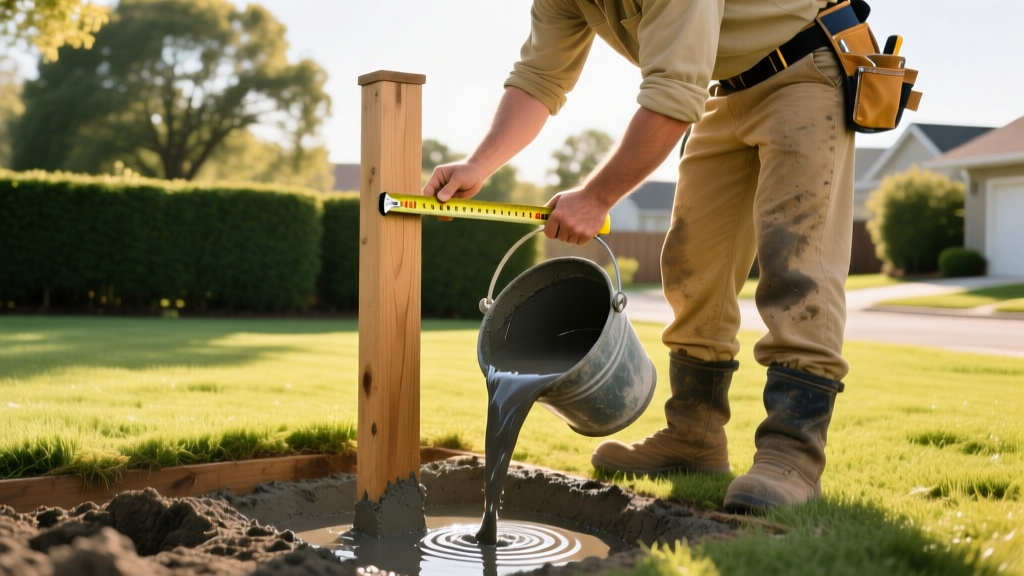
Opting for a DIY installation saves the labor markup (typically 50% of the total project cost), but the hidden expenses of tooling and concrete often catch homeowners off guard. Consider the math for a standard 150-foot fence requiring roughly 20 posts. Each post requires approximately 1.5 to 2 bags of 50 lb. fast-setting concrete mix. At $7.50 per bag, concrete alone will cost $225 to $300. Renting a two-man gas auger costs roughly $85 per day, plus $15 for a shear pin and replacement bits. Furthermore, if you misjudge the frost line or fail to slope the concrete collar away from the wooden post to shed water, the resulting rot or heave will cost more to remediate than the original professional labor would have cost. For vinyl and composite, where manufacturer warranties are frequently voided if installation tolerances (like exact post spacing for pre-routed panels) are off by more than 1/4 inch, professional installation is highly recommended to protect your investment.
Written by
Priya KapoorPriya Kapoor is a real estate market analyst and construction economics researcher with expertise in housing affordability, development feasibility, and infrastructure investment. She holds a Master of Regional Planning from Cornell University and previously worked as a senior analyst at CBRE's Investment Properties group, where she modeled returns for $4B in mixed-use development pipelines. Priya now runs an independent research practice advising developers, municipalities, and REITs on construction cost forecasting and market timing. She publishes the quarterly "BuildMat Market Pulse" report tracking material price indices across 12 commodity categories. Based in Austin, TX, Priya serves on the board of Habitat for Humanity Austin and is a marathon runner.
More from Priya Kapoor
View all
Construction Cost
Cost to Build a 1600 Sq Ft Home in 2026: Full Breakdown
Accurate 2026 cost to build a 1600 sq ft home—material, labor, and regional pricing breakdowns included. Plan your budget with real-time estimates.
Aug 11, 2026

Wood & Lumber
Name the Types of Wood for Pressure Treatment and Preservation
Learn how to name the types of wood best suited for pressure treatment. Compare species treatability, chemical retention levels, and 2026 preservation costs.
Aug 4, 2026

Stone & Masonry
Stone Veneer Suppliers Lindenhurst: 2026 Cost Analysis
Analyze 2026 stone veneer costs in Lindenhurst, NY. Compare local supplier pricing, delivery fees, and Suffolk County installation labor rates.
Aug 4, 2026