Top Split Rail Fencing Brands and Product Lines Reviewed
Compare top split rail fencing brands and product lines. Explore wood, composite, and vinyl options with pricing, dimensions, and installation specs.
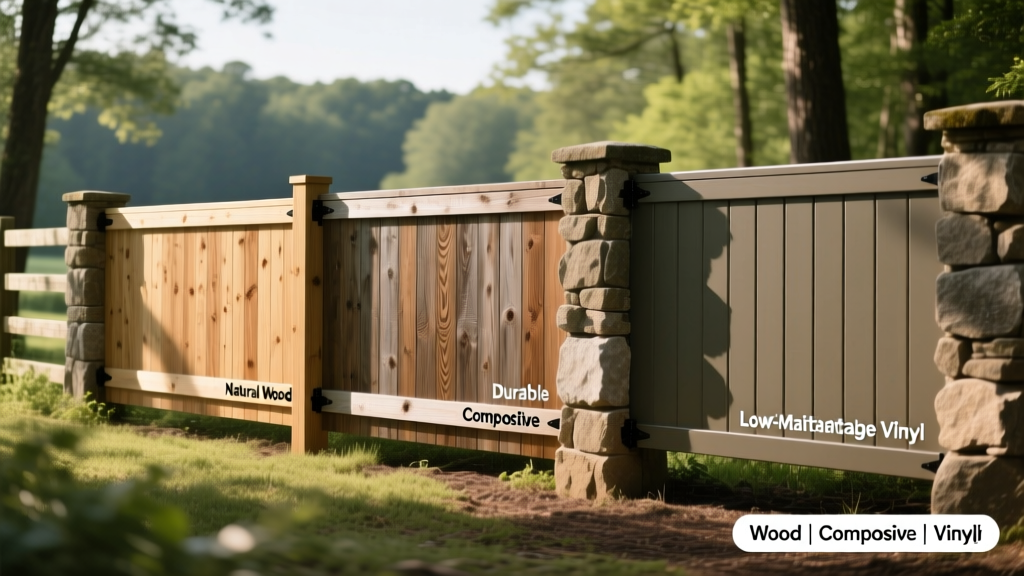
The Split Rail Market: Material Evolution and Specification
Split rail fencing has evolved from a purely agricultural boundary marker to a highly specified aesthetic and zoning solution for residential and commercial properties. Procuring materials for these projects requires navigating distinct categories: traditional Western Red Cedar, pressure-treated Southern Yellow Pine (SYP), and engineered vinyl ranch rails. Each category is dominated by specific product lines with unique grading standards, preservative treatments, and structural limitations. Understanding the exact specifications of these brands is critical for contractors and property managers aiming to balance upfront costs with long-term structural integrity.
Material Specification Matrix
Before selecting a specific brand, it is essential to understand the baseline engineering differences between the primary split rail materials available on the market.
| Material Type | Primary Advantage | Primary Vulnerability | Thermal/Moisture Movement | Fastener Requirement |
|---|---|---|---|---|
| Western Red Cedar | Natural decay resistance (thujaplicins) | Ground-contact rot without gravel base | Shrinks up to 3/4" per 10ft when drying | Stainless steel or hot-dipped galv. |
| Pressure-Treated SYP | High structural strength, ground-contact rated | Warping/twisting if installed while wet | Minimal shrinkage, high twist potential | G185 hot-dipped galvanized or SS |
| Vinyl (Ranch Rail) | Zero maintenance, no rot or insect damage | Rail sagging on spans >10ft without inserts | Expands/contracts up to 1/2" per 10ft | Corrosion-resistant self-tapping screws |
Traditional Wood Product Lines: Cedarline & YellaWood
Cedarline: Western Red Cedar (Select Tight Knot)
Cedarline remains a benchmark for premium Western Red Cedar split rail systems. For residential and high-end commercial applications, specify their Select Tight Knot (STK) grade rather than standard utility grades. STK ensures that knots are sound, tight, and less likely to fall out, preserving the structural integrity of the 3x4 nominal rails.
A critical specification for Cedarline products is the moisture content at the time of installation. Mill-direct cedar is often sold "green" (unseasoned). If you are installing green cedar rails, you must account for significant shrinkage. A standard 11-foot split rail will shrink by up to 3/4 of an inch as it reaches equilibrium moisture content. To prevent the rails from pulling out of the post mortises, installers must maintain a minimum 12-inch overlap at each post junction. Furthermore, cedar contains high levels of tannins; using standard zinc-plated screws will result in severe black staining. Always specify 304 or 316 stainless steel fasteners for attaching wire mesh backing or post caps.
YellaWood: Pressure-Treated Southern Yellow Pine
For high-traffic commercial properties or agricultural perimeters where budget and structural rigidity are paramount, YellaWood’s pressure-treated Southern Yellow Pine lines offer superior bending strength compared to cedar. YellaWood utilizes MCA-C (Micronized Copper Azole) preservative treatment, which is less corrosive to metal hardware than older ACQ treatments but still requires careful fastener selection.
When specifying YellaWood for split rail posts, you must differentiate between use categories as defined by the American Wood Protection Association (AWPA). Standard rails can be rated UC3B (Above Ground), but line posts and corner posts must be stamped UC4A (Ground Contact) or UC4B (Heavy Duty Ground Contact) to resist fungal decay when buried.
Expert Tip: Field-Cut Preservative Application
YellaWood’s factory-applied MCA-C treatment does not penetrate the very center of 4x4 or 6x6 SYP posts. Whenever a post is cross-cut in the field to adjust for grade changes, the exposed untreated core must be flooded with a copper naphthenate end-cut preservative (such as Copper-Green) before the post is set in the ground. Skipping this step voids the manufacturer's limited lifetime warranty and creates a direct pathway for subterranean moisture ingress.
Synthetic Ranch Rail: CertainTeed & Barrette
In the synthetic category, "split rail" is typically manufactured as "ranch rail" using continuous extruded vinyl profiles rather than hand-split timber textures. These systems require precise engineering to mimic the rustic look while surviving extreme wind loads.
CertainTeed Bufftech Ranch Rail
CertainTeed’s Bufftech line dominates the premium vinyl ranch rail market. The defining feature of their 3-rail and 4-rail systems is the internal reinforcement. According to testing standards referenced by ASTM International (ASTM F1043), vinyl fence rails must withstand specific wind loads without permanent deflection. CertainTeed addresses this by engineering the bottom rail with an integrated aluminum or galvanized steel I-beam insert. This prevents the 10-foot spans from sagging under their own weight or bowing under a 20 psf wind load.
The Bufftech line also utilizes a high concentration of titanium dioxide (TiO2) in the top cap layer during the co-extrusion process. This UV inhibitor prevents the chalking and yellowing that plagues lower-tier vinyl fences after 5 to 7 years of direct sun exposure.
Barrette Rustic Vinyl (Embossed Series)
Barrette Outdoor Living targets the aesthetic gap between smooth vinyl and natural wood with their embossed rustic ranch rail lines. Unlike smooth profiles, Barrette uses textured molds that replicate a rough-sawn wood grain. While this provides superior visual depth, the textured surface is more prone to trapping airborne dirt and pollen. Property managers should be advised that while these fences never need painting, they may require an annual low-pressure wash (under 1,500 PSI) to maintain the color contrast in the embossed grooves.
Critical Installation Failure Modes & Engineering Fixes
Warning: The Concrete Collar Trap
Encasing wooden split rail posts in concrete at or below grade is the leading cause of premature rot in wood fencing. Concrete is porous and traps moisture against the wood, accelerating decay at the soil line. The American Fence Association recommends alternative setting methods for wood.
The Fix: Dig the post hole 6 inches deeper than the required local frost line (e.g., 42 inches deep in Climate Zone 5). Fill the bottom 6 inches with 3/4-inch crushed gravel for drainage. Set the post, backfill with native soil or gravel, and only pour a concrete collar above grade, sloping it away from the post to shed surface water.
Vinyl Thermal Expansion Management
When installing CertainTeed or Barrette vinyl ranch rails, installers frequently fail to account for thermal expansion. Vinyl expands and contracts at a rate of approximately 1/16 inch per 10 feet for every 10°F change in temperature. If rails are tightly butted against the inside of the post mortise on a hot day, they will buckle and warp when the temperature drops. Always leave a minimum 1/4-inch gap inside the post cavity to allow for winter contraction.
2026 Linear Foot Pricing & Material Yields
The following pricing matrix reflects Q1 2026 material costs for a standard 3-rail configuration (including 4x4 posts, 3x4 rails, and standard hardware). Labor, site clearing, and equipment rental are excluded.
| Brand / Product Line | Material Type | Cost per Linear Ft (Materials) | Waste Factor | Expected Lifespan |
|---|---|---|---|---|
| Cedarline (STK Grade) | Western Red Cedar | $19.00 - $26.00 | 10% | 15 - 20 Years |
| YellaWood (UC4A Posts) | Pressure-Treated SYP | $13.00 - $17.00 | 8% | 20 - 25 Years |
| CertainTeed Bufftech | Reinforced Vinyl | $29.00 - $38.00 | 5% | 30+ Years |
| Barrette Rustic | Embossed Vinyl | $24.00 - $32.00 | 5% | 25 - 30 Years |
Note on Waste Factors: Wood systems require a higher waste factor (8-10%) due to the mandatory 12-inch rail overlaps and the need to cut rails to fit uneven terrain or property line terminations. Vinyl systems utilize precise bracket-and-screw assemblies with pre-cut 10-foot spans, reducing waste to roughly 5%.
Expert Procurement Verdict
The optimal split rail product line depends entirely on the project's lifecycle budget and aesthetic mandate. For historic districts, equestrian facilities, and high-end residential subdivisions where authentic texture is legally or aesthetically mandated, Cedarline STK Western Red Cedar is the definitive choice, provided the site drainage allows for gravel-set posts.
For municipal parks, commercial perimeters, and agricultural zoning where impact resistance and budget are the primary drivers, YellaWood UC4A Pressure-Treated Pine offers the highest structural yield per dollar. Finally, for HOA common areas and low-maintenance commercial landscapes where long-term OPEX must be minimized, CertainTeed Bufftech Ranch Rail justifies its 60% upfront premium by eliminating the need for cyclical staining and hardware tightening over its 30-year service life.