Wood Picket Fence Species Taxonomy: Cedar vs Pine vs Redwood
Compare cedar, pine, and redwood for your wood picket fence. Learn species taxonomy, rot resistance, costs, and selection tips for lasting durability.
The Botanical and Commercial Taxonomy of Picket Fencing
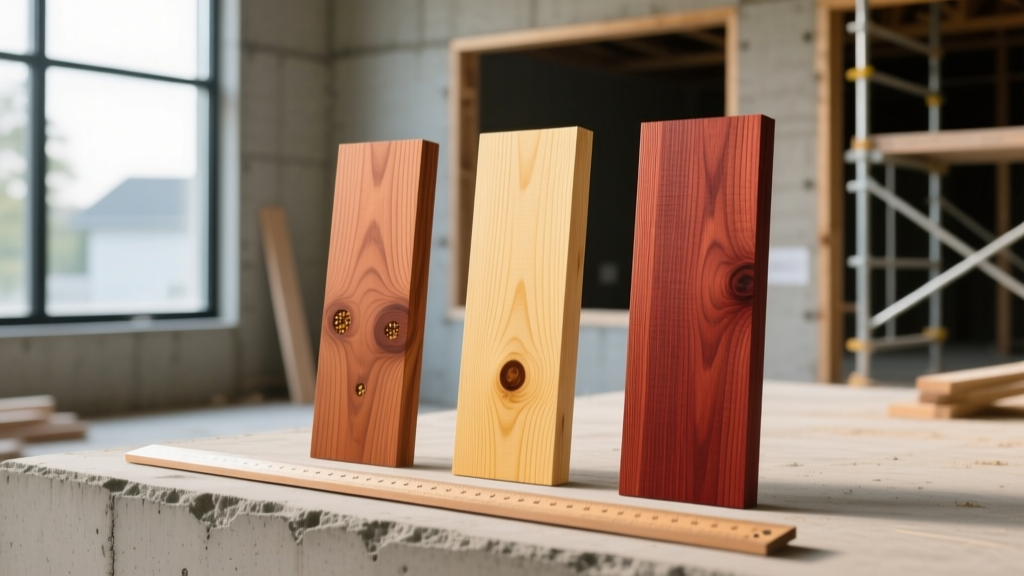
Selecting the right material for a wood picket fence requires moving beyond aesthetic preferences and understanding the botanical and commercial taxonomy of fencing lumber. While hardwoods like Ipe or Cumaru dominate decking, the picket fence category is almost exclusively ruled by softwoods. This is due to the necessary balance of workability, weight, cost, and natural decay resistance. In 2026, the market is dominated by three primary species groups: Western Red Cedar, Pressure-Treated Southern Yellow Pine, and Coastal Redwood. Each species possesses distinct cellular structures, extractive chemical profiles, and grading standards that dictate its lifespan and performance in the field.
Species Deep Dive: The Big Three Softwoods
Western Red Cedar (Thuja plicata)
Western Red Cedar is the benchmark for premium wood picket fences. Its natural durability stems from thujaplicins, water-soluble organic compounds that act as natural fungicides and insect repellents. Unlike pressure-treated woods, cedar's rot resistance is inherent, meaning it does not require chemical preservatives to survive above-ground exposure. However, the heartwood contains the extractives; the sapwood does not. Therefore, specifying the correct grade is critical.
- Select Tight Knot (STK): The commercial sweet spot. Allows small, sound knots but guarantees no structural defects. Priced between $22 and $32 per linear foot installed.
- Clear Heart: 100% heartwood with no knots. Reserved for high-end architectural projects. Costs $38 to $48 per linear foot.
According to the Western Red Cedar Lumber Association, cedar pickets left untreated will weather to a silvery-gray patina within 12 to 18 months due to UV degradation of the surface lignin, though the structural integrity remains intact for 15 to 20 years.
Pressure-Treated Southern Yellow Pine (Pinus taeda)
Southern Yellow Pine (SYP) is a dense, fast-growing softwood that lacks natural decay resistance. To function as a wood picket fence material, it must undergo industrial pressure treatment. Modern treatments have largely abandoned Chromated Copper Arsenate (CCA) for residential use, relying instead on Micronized Copper Azole (MCA) or Alkaline Copper Quaternary (ACQ). These copper-based preservatives protect against fungal decay and termite attack.
The critical specification for SYP fencing is the Use Category defined by the American Wood Protection Association (AWPA). Fence posts buried in the ground must meet the UC4A (Ground Contact) standard, retaining 0.15 pcf (pounds per cubic foot) of copper. The pickets and horizontal rails, being above ground, technically only require UC3B (Above Ground) at 0.05 pcf. However, specifying UC4A for the bottom rails is highly recommended to prevent rot from splash-back and accumulated leaf litter.
Coastal Redwood (Sequoia sempervirens)
Coastal Redwood offers superior dimensional stability and a rich, warm aesthetic. Its decay resistance is driven by high tannin content and complex phenolic compounds. Redwood is graded differently than cedar. The California Redwood Association outlines grades that heavily distinguish between heartwood and sapwood. Construction Heart is the most common fencing grade, containing only heartwood but allowing knots. Construction Common includes sapwood, which is highly susceptible to rot and should be avoided for exterior picket applications. Expect to pay $35 to $55 per linear foot for redwood picket installations.
Material Selection Matrix: Cost, Durability, and Workability
| Species / Treatment | Janka Hardness | Natural Rot Resistance | Avg. Material Cost (per lin. ft.) | Shrinkage / Warping Risk |
|---|---|---|---|---|
| Western Red Cedar (STK) | 350 lbf | High (Heartwood) | $9.00 - $14.00 | Very Low |
| PT Southern Yellow Pine (UC4A) | 690 lbf | None (Relies on MCA/ACQ) | $4.50 - $7.50 | High (Prone to cupping) |
| Coastal Redwood (Const. Heart) | 420 lbf | Very High | $16.00 - $24.00 | Lowest (Exceptionally stable) |
Note: Material costs reflect 2026 regional averages for 6-foot nominal 1x6 pickets and do not include posts, hardware, or labor.
The Hidden Failure Point: Fastener Chemistry and Tannin Bleed
The most common cause of premature aesthetic failure in premium wood picket fences is not the wood itself, but a chemical reaction between the wood extractives and the fasteners. Cedar and Redwood are rich in tannic acid. When exposed to moisture, tannins leach to the surface. If standard galvanized or electroplated zinc nails are used, the tannins react with the iron and zinc, creating permanent, blackish-blue streaks down the face of the pickets.
Fastener Selection Protocol:
- Hot-Dipped Galvanized (ASTM A153): Acceptable for pressure-treated pine. The thick zinc coating resists the corrosive copper in MCA/ACQ treatments. Avoid on cedar/redwood if aesthetics are paramount.
- Type 304 Stainless Steel: The mandatory minimum for inland cedar and redwood installations. Completely immune to tannin bleed.
- Type 316 Stainless Steel: Required for any wood picket fence installed within 5 miles of a coastline. The added molybdenum in 316 SS prevents pitting corrosion from salt spray, which rapidly destroys 304 SS.
Climate-Specific Decision Framework
Choosing the right wood species requires aligning the material's biological traits with your local microclimate. Use this framework to finalize your selection:
1. Humid Subtropical (e.g., Southeastern US)
Recommendation: Pressure-Treated Southern Yellow Pine (UC4A for all components).
Rationale: High humidity and heavy termite pressure overwhelm the natural extractives in cedar and redwood. The deep penetration of MCA preservatives in SYP provides the only reliable defense against subterranean termites and aggressive brown-rot fungi in these zones.
2. Arid / High-UV (e.g., Southwestern US)
Recommendation: Coastal Redwood (Construction Heart).
Rationale: Extreme diurnal temperature swings and low humidity cause severe checking and splitting in dense woods like SYP. Redwood's low shrinkage coefficient and superior dimensional stability prevent the pickets from warping or pulling away from the rails under intense solar radiation.
3. Temperate / Marine (e.g., Pacific Northwest, Northeast Coast)
Recommendation: Western Red Cedar (Select Tight Knot).
Rationale: Frequent rain and moderate temperatures are ideal for cedar. The natural thujaplicins easily manage the moisture load, and the wood's low density allows it to breathe and dry out quickly between rain events, preventing trapped moisture rot.
Reading the Lumber Stamp: Grading Standards
When sourcing materials for a wood picket fence, do not rely solely on visual inspection at the retail yard. Every bundle of structural and appearance lumber carries a grade stamp that verifies its classification. Look for the mill number, the species abbreviation (e.g., WRC for Western Red Cedar, SYP for Southern Pine), and the grading agency logo (such as WWPA or SPIB). For pressure-treated pine, the stamp must explicitly state the AWPA Use Category (UC3B or UC4A) and the preservative retention level. Reject any pickets lacking a legible grade stamp, as unverified material often contains excessive sapwood or fails to meet minimum preservative retention thresholds, leading to localized rot within the first three years of installation.