Top Anti-Fatigue Floor Mat Product Lines Compared
Compare top anti-fatigue floor mat lines from Wearwell, GelPro, and Ergomat. Deep dive into specs, durometer ratings, and commercial vs residential use.
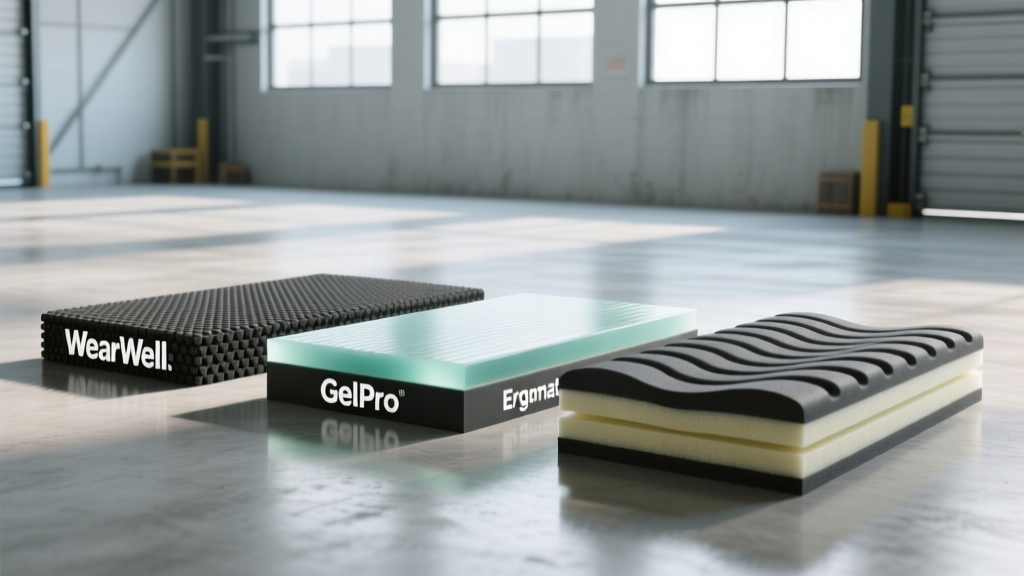
Selecting the correct anti-fatigue floor mat requires moving beyond basic thickness claims and examining material science, compression deflection, and chemical resistance. As of 2026, the market has sharply divided into specialized product lines: heavy-duty nitrile rubber systems for industrial environments, polyurethane-gel composites for residential kitchens, and closed-cell PVC modular tiles for healthcare facilities. This deep-dive analyzes the engineering, pricing, and failure modes of the top three product lines dominating the sector.
The Biomechanics of Compression Deflection
The primary function of an anti-fatigue floor mat is to induce micro-movements in the calf and leg muscles. When standing on a rigid surface, blood pools in the lower extremities (venous pooling), leading to rapid muscle fatigue and lower back strain. According to ergonomic guidelines published by the CDC NIOSH, an effective mat must provide enough yielding to trigger muscle contraction without being so soft that the user bottoms out, which causes instability and joint strain.
This balance is measured using the Shore A durometer scale. A mat with a Shore A rating below 45 is generally too soft for prolonged standing; the foam collapses under an average 180-pound load, transferring the impact directly to the concrete subfloor. The optimal range for commercial anti-fatigue floor mat systems is between 55 and 65 Shore A, providing a calculated compression deflection that absorbs shock while maintaining a stable base for lateral movement.
Wearwell ErgoDeck II: The Industrial Nitrile Standard
For manufacturing floors, machine shops, and commercial kitchens, Wearwell’s ErgoDeck II series remains the benchmark. Unlike bonded foam mats that delaminate under heavy rolling loads, the ErgoDeck II Max is molded from 100% nitrile rubber. Nitrile is inherently resistant to animal fats, petroleum-based oils, and industrial solvents that rapidly degrade standard PVC or polyurethane foams.
Never deploy open-cell polyurethane mats in commercial food prep areas. Animal fats and frying oils will penetrate the cellular structure, causing the mat to become rancid, harbor bacterial growth, and structurally disintegrate within 6 to 8 months. Always specify closed-cell nitrile or PVC for grease-heavy environments.
Specifications and Pricing
- Material: 100% closed-cell nitrile rubber
- Thickness: 3/4 inch (19mm)
- Durometer: 58-62 Shore A
- Slip Resistance: Meets ASTM F1677 (Dynamic Coefficient of Friction > 0.5 on wet surfaces)
- Cost: $8.50 to $11.00 per square foot (typically sold in 3x3 or 3x5 interlocking tiles)
The interlocking puzzle-edge design allows for wall-to-wall coverage without trip hazards between tiles. However, the nitrile composition makes these mats exceptionally heavy (a 3x5 tile weighs nearly 40 lbs), which complicates daily removal for subfloor cleaning.
GelPro NewLife Designer: The Residential Polyurethane Premium
In the residential sector, particularly for kitchen islands and stand-up home offices, the GelPro NewLife Designer series prioritizes aesthetic integration and immediate step-in comfort. The core technology utilizes a dual-density polyurethane foam encapsulating a proprietary gel layer. This combination slows the rebound rate of the mat, preventing the "bouncy" feeling of cheaper foam mats that cause ankle fatigue over time.
As of 2026, GelPro has transitioned to low-VOC polyurethane formulations to comply with stricter indoor air quality standards, eliminating the off-gassing issues that plagued earlier PVC-based residential mats. The top surface features a stain-resistant polyurethane skin that repels common kitchen spills, though it is not rated for heavy industrial chemicals.
Specifications and Pricing
- Material: Dual-density polyurethane foam with gel core
- Thickness: 3/4 inch to 1 inch (tapered edges)
- Durometer: 48-52 Shore A (softer for barefoot or socked feet)
- Cost: $16.00 to $24.00 per square foot (sold in pre-cut runners like 20x39 or 20x72)
Ergomat ErgoTile: The Modular Healthcare Solution
Hospitals and laboratories require floor mat systems that can withstand continuous rolling traffic from gurneys and crash carts while providing fatigue relief for nurses at stationary charting stations. Ergomat’s ErgoTile 2000 line uses a high-density, closed-cell PVC compound. PVC offers a middle ground: it is lighter than nitrile rubber but more resistant to chemical sterilization agents (like quaternary ammonium compounds) than polyurethane.
The ErgoTile features a patented "fatigue-dome" underside. Instead of a flat bottom, the mat rests on hundreds of small hemispherical domes. This design allows the mat to flex and compress dynamically underfoot, increasing the ergonomic benefit without requiring a thicker, heavier mat profile that would impede wheelchair movement.
Product Line Comparison Matrix
| Brand / Line | Core Material | Thickness | Shore A Durometer | Best Application | Avg Cost / Sq Ft |
|---|---|---|---|---|---|
| Wearwell ErgoDeck II | Nitrile Rubber | 3/4" | 58 - 62 | Industrial, Kitchens | $9.50 |
| GelPro NewLife | PU Foam / Gel | 3/4" - 1" | 48 - 52 | Residential Kitchens | $20.00 |
| Ergomat ErgoTile | Closed-Cell PVC | 14mm | 55 - 60 | Healthcare, Labs | $14.50 |
ADA Compliance and Edge Profile Failures
A frequently overlooked failure mode in commercial floor mat installations is the edge profile. The ADA Design Standards mandate strict guidelines for changes in level to prevent trip hazards and ensure wheelchair accessibility. A vertical change in level up to 1/4 inch can be vertical. Changes between 1/4 inch and 1/2 inch must be beveled with a slope no greater than 1:2. Any change exceeding 1/2 inch must be treated as a ramp with a maximum slope of 1:12.
Because most premium anti-fatigue mats are 3/4 inch thick, their edges technically require a 1:12 ramp slope to be fully ADA compliant. For a 3/4 inch mat, this means the beveled edge must extend 9 inches outward from the mat's core. Most manufacturers use a steep 1:4 bevel to save space, which creates a pronounced trip hazard for pedestrians and a physical barrier for wheelchair casters. When specifying mats for public-facing commercial spaces, facility managers must either choose low-profile mats (1/2 inch thick with a 6-inch bevel) or utilize recessed subfloor trays that drop the mat flush with the surrounding concrete.
Chemical Degradation and Maintenance Protocols
The lifespan of a floor mat is dictated by its chemical interaction with cleaning agents. OSHA emphasizes that slipping hazards are a primary concern in workplaces utilizing matting, meaning the mats themselves must be cleaned regularly without degrading the surface traction.
- Polyurethane Mats: Highly susceptible to hydrolysis. Clean only with pH-neutral soap and water. Avoid bleach-based cleaners, which will cause the PU skin to flake and expose the absorbent foam core.
- PVC Mats: Resistant to most commercial floor strippers and quaternary disinfectants. However, prolonged exposure to high-heat steam cleaning will warp the interlocking tabs.
- Nitrile Rubber Mats: Exceptionally durable. Can withstand degreasers, industrial solvents, and high-pressure power washing. The only limitation is prolonged UV exposure, which causes surface chalking and micro-cracking if used in outdoor loading docks.
By matching the specific chemical and mechanical demands of your environment to the precise polymer formulation of the mat, you can extend the functional lifespan of the system from an average of 14 months to over five years, while maintaining the ergonomic compression deflection required to protect worker health.