Best Carpet Rakes for Pet Hair and Deep Pile in 2026
Compare top carpet rakes like Grandi Groom and Roberts. Learn pile-specific raking techniques to lift pet hair and extend carpet lifespan.
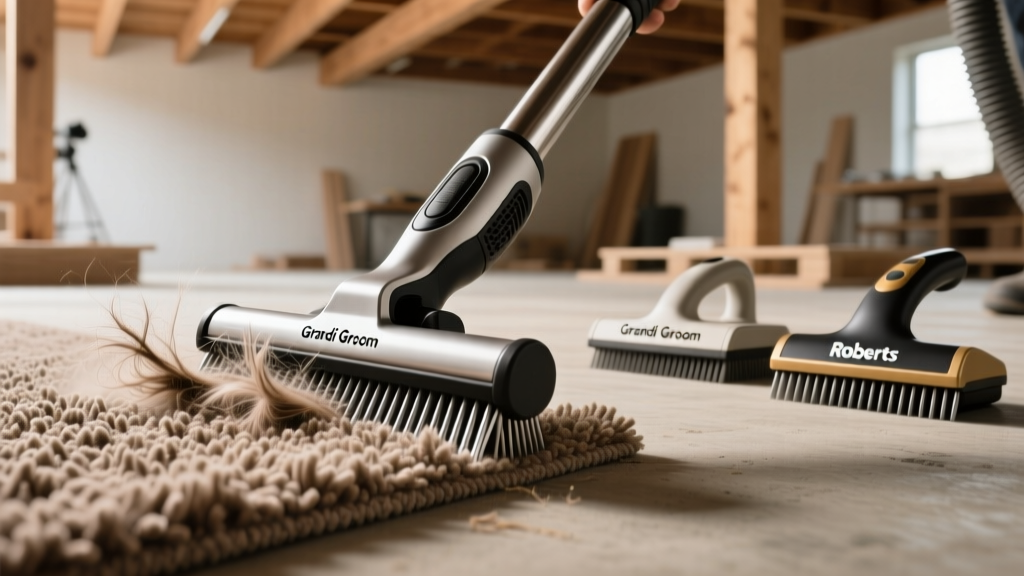
The Physics of Carpet Pile Lifting and Soil Abrasion
Carpet fibers, particularly solution-dyed nylon and polyester, suffer from a mechanical failure mode known as traffic lane compaction. When foot traffic repeatedly compresses the pile, the fibers bend past their elastic recovery point. This creates a physical barrier that traps soil particles (typically 1 to 100 microns in size) and pet dander below the vacuum's airflow threshold. According to the Carpet and Rug Institute (CRI), abrasive soil particles act as micro-blades that sever fiber strands at the base, leading to premature balding in high-traffic zones.
A carpet rake solves this by mechanically altering the fiber geometry. By penetrating the thatch layer and lifting the pile to a standing position, the rake exposes the carpet base to the vacuum's CFM (cubic feet per minute) suction. Furthermore, raking breaks the static bond that holds pet hair to synthetic fibers, allowing for complete extraction rather than surface-level grooming.
Brand Deep-Dive: Professional vs. Consumer Rakes
Not all carpet rakes are engineered equally. The market is divided between professional-grade extruded nylon tools, consumer-grade polypropylene models, and specialized rubber-blade extractors. Below is a technical comparison of the three dominant product lines used by restoration professionals and homeowners in 2026.
| Brand & Model | Bristle Material | Handle & Width | Price Range | Best Application |
|---|---|---|---|---|
| Grandi Groom 18" Pro | Heat-set Extruded Nylon | Aluminum / 18-inch | $48 - $55 | Cut pile, Saxony, heavy matting |
| Roberts 10" Carpet Rake | Stapled Polypropylene | Hardwood / 10-inch | $15 - $20 | Light maintenance, low-traffic |
| Evriholder Furemover | TPE Rubber Blade (60A) | Plastic / 12-inch | $12 - $18 | Surface pet hair, loop piles |
Grandi Groom: The Industry Standard
The Grandi Groom utilizes heat-set extruded nylon bristles cut to exactly 1.5 inches. The heat-setting process gives the bristles a 'memory angle,' allowing them to flex under pressure and snap back to their original 45-degree orientation. This prevents the splaying commonly seen in cheaper models. The 18-inch aircraft-grade aluminum head covers approximately 25% more square footage per stroke than standard consumer models, reducing operator fatigue during whole-house pre-vacuuming.
Roberts: The Budget DIY Option
Roberts manufactures a 10-inch rake using stapled polypropylene bristles. While adequate for occasional spot-cleaning of pet hair, polypropylene lacks the tensile strength of nylon. Under heavy use, the bristles will permanently splay outward within 4 to 6 months, reducing the tool's ability to penetrate deep into high-pile frieze carpets. It is best reserved for low-traffic guest rooms or apartments.
Evriholder: The Rubber Blade Alternative
Instead of bristles, the Evriholder uses a thermoplastic elastomer (TPE) squeegee blade with a Shore A durometer of roughly 60. This rubber edge creates high friction against pet hair, rolling it into easily removable cylinders. However, it does not lift matted carpet pile; it only clears surface debris.
Pile-Specific Raking Protocols and Failure Modes
Using the wrong rake on a specific carpet construction will cause irreversible damage. The Institute of Inspection, Cleaning and Restoration Certification (IICRC) S100 standard emphasizes matching mechanical agitation to the carpet's tuft bind and construction type.
Never use a nylon or polypropylene bristle rake on level-loop, multi-loop, or Berber carpets. The stiff bristles will catch the continuous yarn loops, pulling them out of the latex backing and causing 'snags' or 'runs' that unravel the carpet. For loop-pile constructions, use only a smooth rubber blade (like the Evriholder) or a soft-bristle grooming brush.
Cut Pile, Plush, and Saxony
These carpets benefit most from stiff nylon rakes like the Grandi Groom. The individual yarn tufts are cut at the top, allowing the bristles to slide between the fibers without snagging. Raking these piles restores the optical reflectivity of the fiber, eliminating the dark 'traffic lanes' that make carpets look prematurely soiled.
Frieze and Shag
Frieze carpets feature highly twisted yarns that naturally curl. Raking a frieze carpet requires a lighter touch and wider bristle spacing. Aggressive raking with a dense-bristle tool can untwist the yarns, leading to a frizzy, degraded appearance. Use a rubber rake to pull hair, followed by gentle nylon grooming in the direction of the natural nap.
The 45-Degree Pre-Vacuum Technique
To maximize soil extraction and minimize fiber stress, professional cleaners utilize a specific raking methodology before deploying hot water extraction or dry vacuuming.
- Clear Macro-Debris: Manually remove large objects, coins, and heavy debris that could bend the rake's bristles or scratch the carpet backing.
- Establish the Nap Direction: Run your hand over the carpet to find the natural lay of the pile (the direction it feels smoothest).
- Set the Angle: Hold the rake handle at a 45-degree angle to the floor. Do not press straight down; let the weight of the aluminum head provide the downward pressure.
- Execute Overlapping Strokes: Pull the rake toward your body, against the natural nap, using overlapping 12-inch strokes. This forces the fibers to stand upright.
- Immediate Extraction: Vacuum the area within 10 minutes of raking. If left un-vacuumed, airborne dust will settle back into the newly opened fiber base.
Economic Impact: Soil Abrasion and Carpet Lifespan
The financial argument for integrating a carpet rake into your maintenance routine is rooted in replacement deferral. According to the Environmental Protection Agency (EPA), carpets act as primary sinks for indoor particulate matter. When a carpet is properly maintained through mechanical lifting and deep extraction, its functional lifespan can be extended by 30% to 50%.
Consider the cost analysis for a 2,000-square-foot home with mid-grade nylon carpet (installed cost: $8.50 per sq. ft., totaling $17,000). Without mechanical raking, traffic lanes typically mat and bald within 5 to 7 years, necessitating early replacement. By implementing a weekly 45-degree raking protocol before vacuuming, homeowners remove up to 30% more deep-seated abrasive silica than vacuuming alone. This preserves the fiber integrity, pushing the replacement cycle to 10 to 12 years. The $50 investment in a professional-grade Grandi Groom rake yields a potential savings of thousands of dollars in deferred capital expenditures, while simultaneously improving indoor air quality by removing trapped allergens and pet dander from the breathing zone.
Tool Maintenance and Bristle Care
Even professional nylon rakes require maintenance. Over time, pet hair and micro-fibers will wrap tightly around the base of the bristles, reducing their effective penetration depth. Once a month, use a seam ripper or a specialized comb cleaner to slice and remove the hair accumulated at the bristle base. If the nylon bristles begin to splay outward at angles greater than 15 degrees from vertical, the heat-set memory has failed, and the rake head must be replaced to prevent surface scratching on delicate polyester fibers.