How to Clean Cork Flooring: The Ultimate Maintenance Playbook
Master how to clean cork flooring with our expert playbook. Learn daily routines, stain removal, and recoating tips to protect your investment.
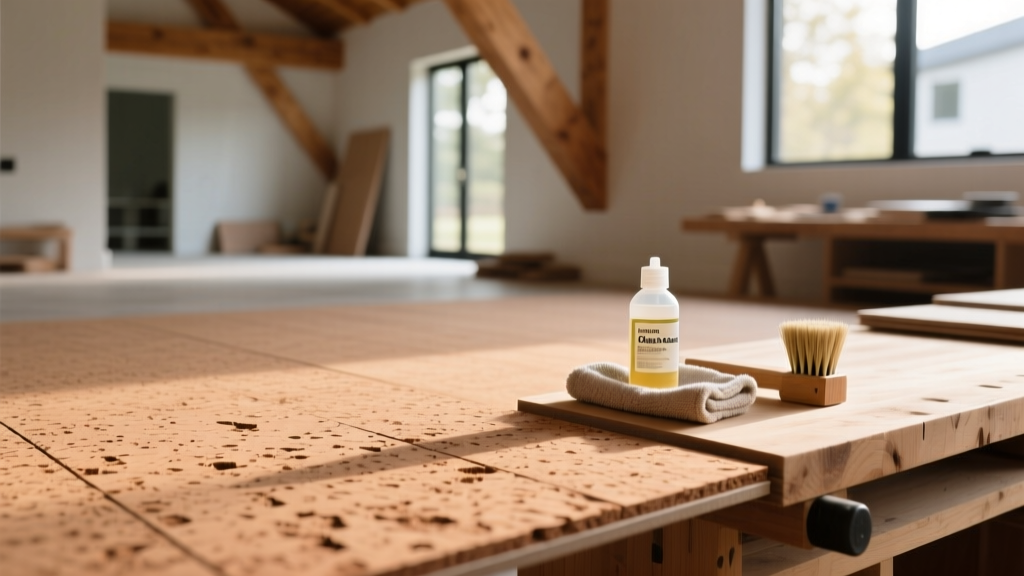
The Chemistry of Cork: Why Standard Cleaners Fail
Cork flooring is fundamentally different from hardwood or laminate. Harvested from the bark of the Quercus suber (cork oak) tree, the material contains suberin, a natural waxy substance that makes it inherently resistant to mold, mildew, and rot. However, nearly all modern cork flooring installed in residential settings features a High-Density Fiberboard (HDF) core for structural stability and is topped with a water-based polyurethane or UV-cured acrylic finish.
Understanding this layered anatomy is critical. While the cork surface is resilient, the HDF core is highly susceptible to moisture swelling, and the polyurethane topcoat can be chemically degraded by improper pH levels. According to the EPA's guidelines on indoor air quality, many traditional household cleaners emit high levels of VOCs and contain alkaline or acidic compounds that strip modern floor finishes, leaving a dull, irreversible haze.
Daily & Weekly Cleaning Playbook
The most common failure mode for cork flooring is not chemical damage, but physical abrasion from trapped grit. Cork compresses underfoot, meaning sharp particles like sand or pet dander can become embedded in the microscopic pores of the finish, acting like sandpaper every time you walk across the room.
Phase 1: Dry Dusting (The 80% Rule)
80% of your cleaning routine should be entirely dry. Use a 36-inch microfiber dust mop with a density of at least 300 GSM (grams per square meter). Avoid traditional bristle brooms, which flick dust into the air and fail to capture fine particulate matter.
- Frequency: Daily in high-traffic zones (kitchens, entryways); twice weekly in bedrooms.
- Technique: Push the mop in a continuous figure-eight motion to keep debris on the leading edge of the pad. Never lift the mop mid-stroke.
- Vacuuming: If using a vacuum, disable the beater bar (rotating brush). Use a hard-floor setting with soft felt wheels to prevent micro-scratches on the UV-cured topcoat.
Phase 2: The Damp Mopping Protocol
When dry dusting is no longer sufficient, move to a damp mop. The golden rule for cork is spray the pad, not the floor. Spraying liquid directly onto the cork risks pooling in the micro-bevel seams, which can wick into the HDF core and cause irreversible edge-swelling.
- Select the Right Cleaner: Use a pH-neutral (between 6.0 and 8.0), non-rinsing floor cleaner. Industry leaders like Bona formulate specific hard-surface cleaners that evaporate quickly without leaving a residue.
- Mist the Microfiber Pad: Lightly mist the cleaning solution directly onto a clean, damp microfiber mop pad. The pad should feel slightly cool to the touch, but you should not be able to wring a single drop of water out of it.
- Mop with the Grain: Glide the mop in the direction of the cork grain or plank layout. Overlap each stroke by 2 inches.
- Drying Time: The floor should dry within 2 to 3 minutes. If water remains visible after 5 minutes, you have used too much liquid.
Tackling Stains, Scuffs, and Pet Accidents
Cork's natural tannins can react unpredictably to certain spills. Below is a targeted matrix for resolving specific contaminants without damaging the polyurethane wear layer.
| Contaminant | Targeted Solution | Dwell Time | Action Protocol |
|---|---|---|---|
| Red Wine / Coffee | 3% Hydrogen Peroxide + Baking Soda paste | 3-5 Minutes | Apply paste, cover with plastic wrap, wipe clean with a damp cloth. Do not scrub. |
| Pet Urine | Enzymatic Cleaner (e.g., Nature's Miracle) | 10 Minutes | Blot heavily. Apply enzyme spray to break down uric acid. Fan dry immediately. |
| Rubber Heel Scuffs | Clean Tennis Ball or Art Gum Eraser | N/A | Rub the scuff mark vigorously with the tennis ball. The friction lifts rubber without harming poly. |
| Cooking Grease | 1 drop Dawn Dish Soap in 1 cup warm water | 1 Minute | Dampen cloth, wipe grease, follow immediately with a plain water damp cloth to remove soap. |
Deep Cleaning and Annual Recoating
Even with meticulous maintenance, the water-based polyurethane wear layer on cork flooring will begin to micro-fracture in high-traffic pathways (like the space between a kitchen island and sink) after 3 to 5 years. When water no longer beads up on the surface but instead soaks in, darkening the cork, it is time for a screen and recoat.
The Screen and Recoat Process
Major manufacturers such as Wicanders and Amorim explicitly state that failing to maintain the topcoat voids the structural warranty. You do not need to sand down to the bare cork; you only need to abrade the existing polyurethane so the new coat can bond.
- Preparation: Buff the floor with a 120-grit screening pad attached to a rotary floor machine. This scratches the surface of the old finish.
- Cleaning: Vacuum thoroughly, followed by a wipe-down with a mineral spirits-dampened tack cloth to remove all microscopic dust.
- Application: Apply a commercial-grade, two-component water-based polyurethane (such as Bona Traffic HD). Use a T-bar applicator for even distribution.
- Environmental Controls: Maintain room temperature between 65°F and 75°F, and relative humidity between 40% and 60%. Water-based polys will flash-dry too quickly in low humidity, causing lap marks.
- Cost Expectation: Professional screening and recoating typically costs between $1.50 and $2.75 per square foot in 2026, depending on regional labor rates and the condition of the existing floor.
The Cork Flooring 'Never' List
To protect the structural integrity of your HDF core and the aesthetic of the cork veneer, strictly avoid the following:
- Steam Mops: The combination of 212°F heat and forced moisture will instantly delaminate the cork veneer from the HDF core and cause severe edge-cupping.
- Wax or Oil Soaps: Products like Murphy's Oil Soap leave a lipid residue that creates a slippery hazard and makes future polyurethane recoating impossible without a full chemical strip.
- Rolling Casters: Hard plastic or metal casters on office chairs will crush the cork cells permanently. Always use a polycarbonate chair mat or replace casters with soft, non-marking polyurethane wheels.
- Direct Sunlight Baking: Cork is sensitive to UV degradation. Use UV-blocking window films or sheer curtains to prevent the natural tannins from yellowing or graying over time.
Frequently Asked Questions
Can I use a Swiffer WetJet on my cork floors?
No. The proprietary cleaning solution dispensed by automated wet-mopping systems is often too alkaline for cork finishes, and the system dispenses far more liquid than is safe for the HDF seams. Stick to a manual spray-and-wipe method with a pH-neutral cleaner.
My cork floor has a white, cloudy haze. How do I fix it?
A white haze is typically moisture trapped beneath a compromised polyurethane layer, or a buildup of improper cleaning waxes. If it is wax buildup, a professional floor cleaner can strip it using a specialized solvent. If it is moisture damage, the affected planks must be replaced, as the HDF core has likely swollen.
How do I protect cork flooring from heavy furniture?
Use wide, load-distributing felt pads (at least 2 inches in diameter) under all heavy furniture legs. Cork has excellent memory and will bounce back from temporary compression, but continuous point-loads from heavy sofas or bookshelves without wide pads will permanently crush the cellular structure over time.