Ultimate Maintenance Guide for Popular Marine Flooring Options
Learn how to clean, protect, and repair popular marine flooring options like EVA foam and synthetic teak to extend your boat's deck lifespan.

The Unique Challenges of Marine Environments
Marine environments subject decking materials to extreme degradation vectors that residential floors never face. The UV index on open water is amplified by up to 30% due to reflection off the water's surface, accelerating polymer breakdown. Simultaneously, saltwater crystallization, fuel spills, and constant moisture intrusion test the limits of any marine decking. Understanding the specific maintenance protocols for your chosen material is the difference between a deck that lasts 15 years and one that requires a $5,000 replacement in five.
Material-Specific Maintenance Protocols
Different marine flooring options require vastly different chemical and mechanical care routines. According to maintenance guidelines from leading manufacturers like SeaDek and Flexiteek, using the wrong brush stiffness or pH level can void your warranty and permanently scar the surface.
EVA Foam (e.g., SeaDek, GatorStep, Treadmaster)
EVA (Ethylene-Vinyl Acetate) foam is the dominant choice for modern sportfishing and center console boats due to its shock absorption and non-skid properties. However, its micro-cellular surface is prone to trapping fish blood, sunscreen, and fuel.
- Routine Cleaning: Use a mild, non-acidic detergent like Dawn dish soap or a dedicated marine cleaner such as Star brite Sea Safe. Apply with a medium-soft bristle brush (nylon bristles that flex easily under thumb pressure).
- Stain Removal: For fish blood or rust, a melamine sponge (Magic Eraser) can be used, but only with light pressure. Aggressive scrubbing with melamine will sand away the textured top layer and the UV protectant.
- Fuel Spills: Wipe up gasoline or diesel immediately. If left for more than 15 minutes, fuel will cause the EVA cells to expand and blister permanently. Use a specialized marine degreaser for residual stains, never a petroleum-based solvent.
Synthetic Teak (e.g., Flexiteek 2G, Esthec, NuTeak)
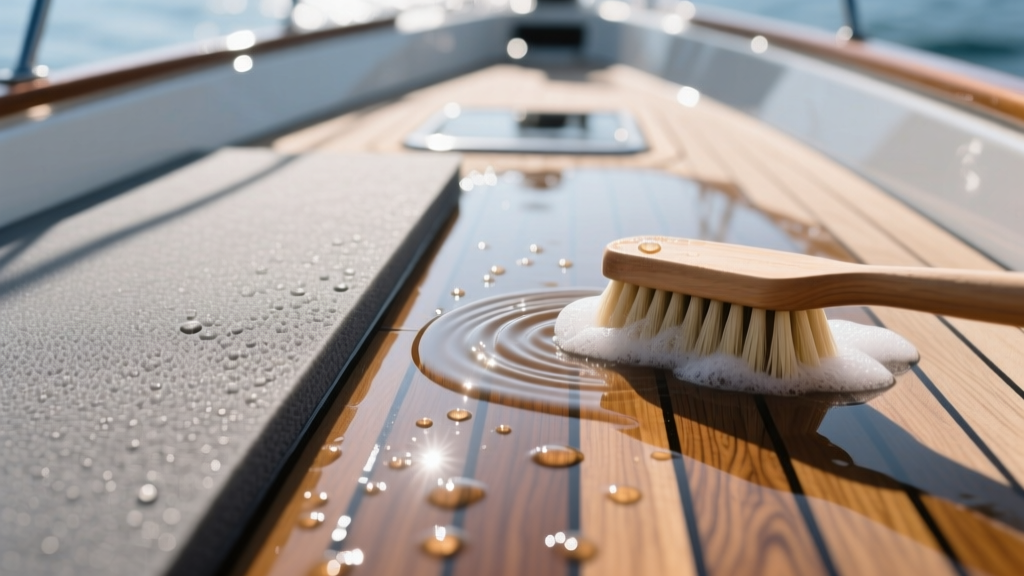
Synthetic teak provides the classic look of natural wood without the annual sanding and oiling. Made from advanced PVC composites, it is highly resistant to rot but can scuff and stain if neglected.
- Routine Cleaning: Wash with warm soapy water and a white Scotch-Brite non-abrasive pad. Avoid dark-colored scrub pads, which can leave dye transfer marks on lighter synthetic teak shades.
- Deep Stain Extraction: For stubborn stains (like berry juice or heavy rust), a 10% bleach-to-water solution can be applied and left for 10 minutes before rinsing.
- Sanding Scuffs: Unlike EVA foam, synthetic teak is solid throughout. Deep scuffs from boat hooks or anchor chains can be sanded out using 120-grit aluminum oxide sandpaper, always sanding in the direction of the simulated wood grain.
- Pressure Washing: If using a pressure washer to clean the deck, keep the nozzle at least 12 inches away and never exceed 1,500 PSI. Higher pressures will gouge the PVC and destroy the integrated non-skid texture.
Marine Woven Vinyl (e.g., Infinity Luxury Woven Vinyl, AquaMat)
Woven vinyl is popular for cockpits and cabin soles due to its drainage capabilities and mildew resistance. The primary maintenance focus here is preventing mold growth in the weave crevices.
- Mildew Prevention: Spray a 50/50 mixture of white vinegar and water onto the flooring monthly. This alters the surface pH, making it inhospitable to mold spores without degrading the vinyl polymers.
- UV Protection: Apply a marine-grade UV protectant, such as 303 Aerospace Protectant, every 90 days during the boating season to prevent the vinyl threads from becoming brittle and fraying at the seams.
Seasonal Deep Cleaning and Winterization Matrix
Adhering to a seasonal schedule ensures your marine flooring options survive the off-season intact. The BoatUS maintenance archives emphasize that improper winterization is the leading cause of premature flooring delamination.
| Season | Primary Action | Chemicals & Tools Required |
|---|---|---|
| Spring (Commissioning) | Remove winter covers, inspect for trapped moisture, perform deep clean. | Mild marine soap, soft bristle brush, wet/dry vacuum. |
| Summer (Peak Use) | Bi-weekly rinse downs, immediate fuel/spill extraction, UV conditioning. | Freshwater hose, microfiber towels, 303 Aerospace UV spray. |
| Fall (Pre-Winter) | Heavy degreasing, stain removal, apply protective wax to synthetic teak. | Marine degreaser, 120-grit sandpaper (for teak), synthetic wax. |
| Winter (Storage) | Ensure 100% dryness before covering to prevent trapped condensation mold. | Moisture absorbers (DampRid), breathable canvas covers (never plastic). |
Repairing Common Marine Flooring Damage
Even with meticulous care, accidents happen. Knowing how to execute field repairs can save you from ordering a full deck replacement.
Step-by-Step EVA Foam Patch Repair
If your EVA foam gets gouged by a fishing gaff or anchor, you can seamlessly patch it using a manufacturer-matched offcut and marine adhesive.
- Template the Damage: Use a compass or template tool to trace a perfect circle or diamond around the gouge. Avoid irregular shapes, which draw the eye.
- Excavate the Damage: Use a fresh, sharp utility knife to cut out the damaged section down to the fiberglass substrate. Remove all old adhesive using a plastic putty knife and a citrus-based adhesive remover.
- Cut the Patch: Cut your replacement EVA foam piece using the exact same template. Ensure the grain direction of the patch matches the surrounding deck.
- Adhere and Seal: Apply a marine-grade contact adhesive (such as 3M Fastbond 90-32) to both the substrate and the back of the patch. Wait 5 minutes for the adhesive to become tacky, press firmly, and roll with a J-roller to ensure full contact and push out air bubbles.
Resurfacing Faded Synthetic Teak
If synthetic teak loses its color due to years of UV exposure, it cannot be stained like real wood. However, it can be lightly sanded and rejuvenated using a specialized PVC restorer compound. Apply the compound with a dual-action polisher equipped with a medium-cut foam pad, working in 2x2 foot sections until the original pigment is drawn back to the surface.
Neglecting your marine flooring options is an expensive mistake. Replacing EVA foam on a standard 24-foot center console costs between $40 and $65 per square foot (totaling $2,500 - $4,500 installed). Synthetic teak replacement runs $150 to $250 per square foot. Conversely, an annual maintenance budget of just $50 to $80 for specialized cleaners, UV sprays, and patch kits can extend the life of these materials by 5 to 8 years, yielding an ROI of over 3,000%.
Frequently Asked Questions
Can I use a steam cleaner on marine EVA foam or synthetic teak?
No. Steam cleaners operate at temperatures exceeding 212°F (100°C). This heat will melt the adhesive bonding the EVA foam to the fiberglass deck, causing immediate delamination. For synthetic teak, extreme heat can warp the PVC planks and open the caulking seams, allowing water intrusion beneath the deck.
How do I remove dried fish blood from white EVA foam without yellowing it?
Rehydrate the dried blood with a mixture of cold water and a few drops of enzymatic pet stain remover. Let it sit for 10 minutes to break down the proteins, then gently agitate with a soft microfiber cloth. Avoid hot water, which will coagulate the proteins and set the stain permanently into the foam's micro-cells.
Is it necessary to remove synthetic teak decking to fix a deck soft spot?
Yes. If the fiberglass substrate beneath synthetic teak becomes soft due to core rot, the teak must be carefully routed out or heated and peeled back to access the damaged coring. Because synthetic teak is installed with aggressive polyurethane adhesives, removal often destroys the planks, meaning you should factor in the cost of replacement planks when repairing underlying deck rot.
Written by
Priya KapoorPriya Kapoor is a real estate market analyst and construction economics researcher with expertise in housing affordability, development feasibility, and infrastructure investment. She holds a Master of Regional Planning from Cornell University and previously worked as a senior analyst at CBRE's Investment Properties group, where she modeled returns for $4B in mixed-use development pipelines. Priya now runs an independent research practice advising developers, municipalities, and REITs on construction cost forecasting and market timing. She publishes the quarterly "BuildMat Market Pulse" report tracking material price indices across 12 commodity categories. Based in Austin, TX, Priya serves on the board of Habitat for Humanity Austin and is a marathon runner.
More from Priya Kapoor
View all
Construction Cost
Cost to Build a 1600 Sq Ft Home in 2026: Full Breakdown
Accurate 2026 cost to build a 1600 sq ft home—material, labor, and regional pricing breakdowns included. Plan your budget with real-time estimates.
Aug 11, 2026

Wood & Lumber
Name the Types of Wood for Pressure Treatment and Preservation
Learn how to name the types of wood best suited for pressure treatment. Compare species treatability, chemical retention levels, and 2026 preservation costs.
Aug 4, 2026

Stone & Masonry
Stone Veneer Suppliers Lindenhurst: 2026 Cost Analysis
Analyze 2026 stone veneer costs in Lindenhurst, NY. Compare local supplier pricing, delivery fees, and Suffolk County installation labor rates.
Aug 4, 2026