Floor Covering Options: The Ultimate Maintenance Guide
Master the upkeep of popular floor covering options. Learn pH-specific cleaning, wear layer preservation, and expert troubleshooting for every material.

The Chemistry of Clean: Why Generic Cleaners Destroy Floors
The most common mistake homeowners make when maintaining various floor covering options is treating all surfaces with a single, universal cleaning solution. Floor finishes are highly reactive chemical layers. Using an alkaline cleaner (pH > 8) on polyurethane-sealed hardwood will gradually saponify and dull the finish, while using an acidic cleaner (pH < 5, like vinegar) on calcium-carbonate-based natural stone will cause immediate micro-etching.
Hardwood and Engineered Wood: Moisture and Finish Preservation
Wood flooring, whether solid or engineered, is protected by either a surface finish (aluminum oxide or polyurethane) or a penetrating finish (hardwax oil). The maintenance protocols for these two categories are fundamentally different.
Surface-Sealed Wood (Polyurethane/Aluminum Oxide)
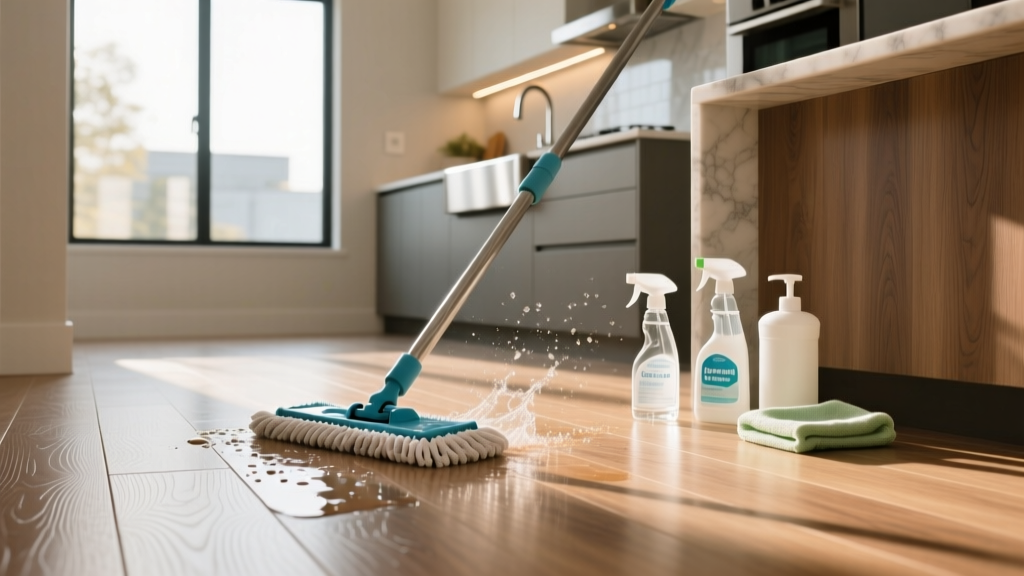
Surface-sealed floors require minimal moisture. The goal is to clean the urethane layer without allowing water to penetrate the microscopic seams between planks, which causes edge-cupping and black staining (tannin reaction).
- Daily: Dry dust with a microfiber pad. Avoid vacuums with beater bars, which can micro-scratch the aluminum oxide coating.
- Weekly: Damp mop using a pH-neutral cleaner specifically formulated for urethane, such as Bona Hardwood Floor Cleaner. Never use steam mops; the 212°F steam forces moisture into the seams and delaminates engineered wood veneers.
Penetrating-Sealed Wood (Hardwax Oils like Rubio Monocoat)
Hardwax oils bond with the wood fibers at a molecular level but leave the surface more vulnerable to staining. Maintenance requires periodic re-oiling rather than just cleaning.
- Cleaning: Use soap specifically designed for oiled floors (e.g., Rubio Surface Care) which leaves a microscopic protective lipid layer behind.
- Annual Maintenance: Apply a maintenance oil (like Rubio Refresh) to high-traffic zones to replenish the depleted wax matrix.
For comprehensive manufacturer guidelines on wood floor upkeep, consult the National Wood Flooring Association consumer resources.
Luxury Vinyl Plank (LVP) and Resilient Flooring
Luxury Vinyl Plank (LVP) and Luxury Vinyl Tile (LVT) dominate the market due to their waterproof cores (WPC or SPC). However, their vulnerability lies in the clear polyurethane wear layer, which typically ranges from 12 mils (residential) to 22 mils (commercial).
| Cleaner Type | pH Level | Effect on LVP Wear Layer |
|---|---|---|
| Ammonia-based Glass Cleaner | 11.0 - 12.0 | Severe Damage: Strips urethane, causes permanent clouding. |
| White Vinegar Solution | 2.5 - 3.0 | Moderate Damage: Degrades wear layer over time, leaves streaks. |
| Dedicated LVP Cleaner | 6.5 - 7.5 | Optimal: Cleans without stripping the factory finish. |
| Dish Soap (Diluted) | 8.0 - 9.0 | Poor: Leaves a sticky, dirt-attracting film if not rinsed. |
Natural Stone and Porcelain: Grout and Sealant Integrity
While porcelain tile is virtually impervious to water (absorption rate < 0.5%), natural stone options like marble, travertine, and limestone are highly porous and chemically reactive. Maintaining stone floor covering options revolves around preserving the impregnating sealer and the structural integrity of the grout lines.
The Water Drop Test for Stone Sealant
To determine if your natural stone requires re-sealing, perform this standardized test:
- Place 3 to 4 drops of water on the stone surface in a high-traffic area.
- Wait exactly 5 minutes.
- Wipe the water away and observe the stone. If a dark, damp spot remains, the impregnating sealer has failed, and the stone is absorbing moisture. Re-seal immediately with a fluoropolymer-based impregnator.
For detailed protocols on natural stone preservation, refer to the Natural Stone Institute care guidelines.
Carpet and Textiles: Extraction and Fiber Protection
Carpet maintenance is less about surface cleaning and more about soil suspension and fiber protection. Dry soil acts as an abrasive; every footstep grinds dirt into the nylon or polyester fibers, causing permanent traffic lane discoloration (often mistaken for staining).
'Vacuuming removes up to 85% of dry soil. For deep cleaning, hot water extraction (HWE) is the only method recognized by major fiber manufacturers. The water temperature at the carpet face must reach between 150°F and 200°F to effectively melt and suspend oleaginous (oil-based) soils.'
When selecting equipment, ensure your vacuum carries the Carpet and Rug Institute (CRI) Seal of Approval. This certification guarantees the vacuum provides adequate soil removal without causing excessive fiber abrasion or dust emission.
Troubleshooting Matrix: Common Floor Covering Failures
When maintenance fails, identifying the exact failure mode is critical to reversing the damage. Use this diagnostic matrix to address common issues across different floor covering options.
| Symptom | Material Affected | Root Cause | Corrective Action |
|---|---|---|---|
| White, cloudy haze | Hardwood / LVP | Wax buildup or alkaline cleaner residue. | Strip with a urethane-safe ammonia-free remover; reapply neutral cleaner. |
| Dull, etched spots | Marble / Limestone | Acidic spill (citrus, wine, vinegar) dissolving calcium carbonate. | Mechanical polishing with a marble polishing powder (tin oxide) and a buffing pad. |
| Black edges on planks | Engineered Wood | Moisture intrusion causing tannin bleed and mold growth. | Identify moisture source; replace affected planks; treat subfloor with antimicrobial. |
| Crunchy / stiff fibers | Carpet | Soap residue left behind after hot water extraction. | Re-extract using only hot water and an acidic rinse agent (pH 4.0) to neutralize alkaline soap. |
Proper maintenance of your chosen floor covering options extends their lifecycle by decades. By matching the chemical properties of your cleaning agents to the specific material science of your flooring, you protect both your investment and the structural integrity of the installation.
Written by
Sarah WhitfieldSarah Whitfield is a chartered quantity surveyor (MRICS) and construction cost analyst with 15 years of experience in material pricing, procurement strategy, and project budgeting. She earned her degree in Construction Management from the University of Reading (UK) and has worked on projects ranging from $2M custom homes to $180M mixed-use developments across North America and Europe. Sarah currently leads cost estimating for BuildMat Insight, maintaining a proprietary database of 4,000+ material price points updated quarterly. She is a frequent contributor to RSMeans cost data panels and has presented at the International Cost Engineering Council (ICEC) congress. Based in Denver, CO, Sarah is an avid trail runner and volunteer mentor for Women in Construction.
More from Sarah Whitfield
View all
Wood & Lumber
What Are the Different Types of Wood? A Builder's Guide
Compare structural softwoods, finish hardwoods, and engineered lumber. Analyze Janka ratings, MOE values, and 2026 pricing for construction.
Aug 4, 2026

Walls & Panels
Steel Framing vs Wood Framing: Corrosion and Moisture Defense
Compare steel framing vs wood framing for moisture resistance. Learn about galvanized coatings, condensation risks, and corrosion protection strategies.
Jul 21, 2026

Stone & Masonry
How to Cut Stone Veneer: Wet Saw vs Grinder Comparison
Compare the best tools for cutting stone veneer. We review wet saws, angle grinders, and chop saws to help you achieve clean, chip-free cuts.
Jul 21, 2026