The Complete Carpet Beetles Control Playbook for Floors
Master carpet beetles control with our flooring maintenance playbook. Learn inspection steps, targeted treatments, and prevention for rugs and hardwood.
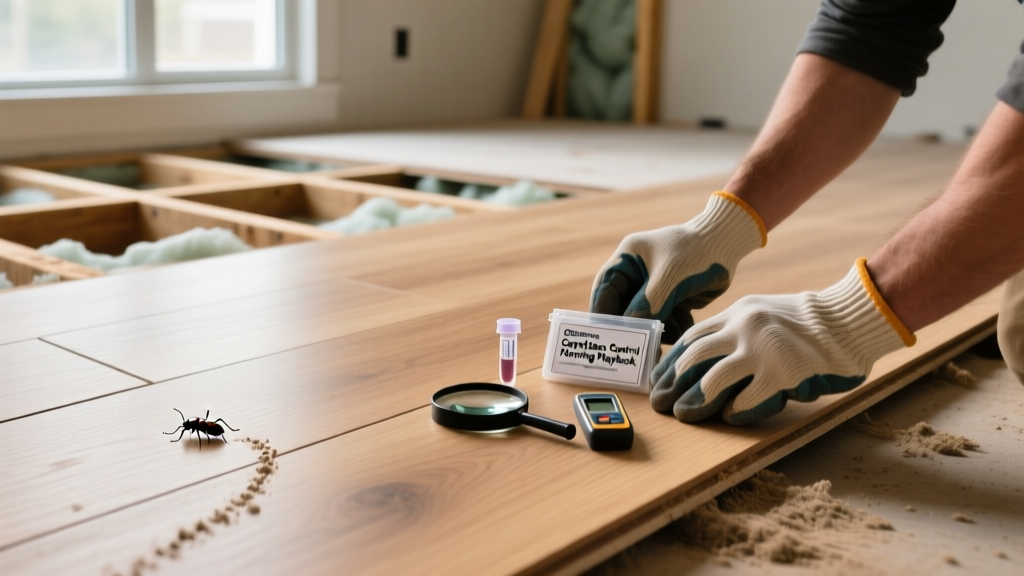
The Biology of Flooring Damage
Adult carpet beetles do not damage flooring; they feed on pollen and nectar. The destruction is caused entirely by their larvae, which possess a biological requirement for keratin—a structural protein found in animal hair, wool, silk, and feathers. While synthetic carpets (nylon, polyester) and hard surfaces (hardwood, tile, concrete) are immune to direct consumption, the organic debris that accumulates in floor crevices, rug pads, and baseboard gaps provides an ideal breeding ground.
Larvae actively avoid light, making the transition zones between area rugs and hardwood floors, as well as the undisturbed perimeters beneath heavy furniture, the primary epicenters of an infestation. Effective carpet beetles control requires shifting focus from surface cleaning to targeting these micro-environments where larvae molt and feed on accumulated skin cells, pet hair, and natural fibers.
Phase 1: Strategic Inspection and Identification
Before deploying treatments, you must map the infestation. Carpet beetle larvae are small (4-5mm), carrot-shaped, and covered in bristly hairs. They leave behind distinct frass (feces) that resembles fine, granular sand, alongside shed casings.
Inspection Priority Matrix
- Zone 1 (High Risk): The outer 12 inches of wall-to-wall carpeting, specifically where it meets the baseboard. Use a bright LED flashlight angled low to the floor to cast shadows that reveal larvae and casings.
- Zone 2 (Medium Risk): Beneath area rugs, specifically focusing on natural fiber rug pads (jute, felt) which larvae will consume if food sources are scarce.
- Zone 3 (Low Risk): Exposed hardwood and laminate. Inspect only the expansion gaps and floor vents where organic dust accumulates.
Phase 2: Eradication Protocols
Over-the-counter bug bombs are largely ineffective against carpet beetles because the aerosolized pyrethrins fail to penetrate the deep fibers and crevices where larvae hide. Instead, utilize targeted chemical and thermal interventions.
Chemical and Desiccant Treatments
| Treatment Type | Active Ingredient / Method | Application Strategy | Efficacy & Notes |
|---|---|---|---|
| Insect Growth Regulator (IGR) | Hydroprene (e.g., Gentrol) | Spray along baseboards and under rug edges. | Disrupts molting; prevents larvae from reaching adulthood. Lasts up to 90 days. |
| Non-Repellent Insecticide | Dinotefuran (e.g., Alpine WSG) | Dissolve in water; apply to transition zones. | Undetectable to pests; transfers through contact. Highly effective for deep crevices. |
| Desiccant Dust | Food-Grade Diatomaceous Earth (DE) | Apply microscopically thin layer in floor vents and subfloor gaps. | Lacerates insect exoskeletons. Must be amorphous silica. If applied too thickly, beetles will simply walk around it. |
Thermal Eradication Techniques
For severe infestations in valuable wool rugs or sensitive flooring environments where chemicals are prohibited, thermal treatment is the gold standard. According to entomological research from Penn State Extension, carpet beetles at all life stages are killed when exposed to specific temperature thresholds.
- Heat Treatment: The ambient temperature of the room or rug must reach 120°F (49°C) and be maintained for a minimum of 30 minutes. Professional structural heat treatments typically cost between $800 and $1,500 for a standard 2,000 sq ft home.
- Cold Treatment: Small to medium area rugs can be sealed in heavy-duty polyethylene bags and placed in a deep freezer at 0°F (-18°C) for 72 hours. Standard kitchen freezers often fluctuate above this threshold, so a dedicated chest freezer is required.
Phase 3: Flooring-Specific Cleaning Playbooks
Once the active population is neutralized, the mechanical removal of dead larvae, eggs, and food sources is critical to prevent a secondary hatch.
Wool and Natural Fiber Rugs
Vacuuming alone is insufficient for woven textiles. You must employ a multi-step mechanical cleaning process:
- Agitation: Take the rug outside and use a stiff-bristled broom to vigorously beat the pile. This dislodges eggs and larvae embedded deep in the foundation knots.
- Directional Vacuuming: Use a canister vacuum with a beater-bar attachment. Vacuum slowly (one foot per second) in the direction of the nap, then repeat against the nap to lift the fibers and expose the base.
- Steam Cleaning: Use a commercial-grade hot water extractor. The water temperature must exceed 150°F at the wand tip to ensure the temperature at the rug base remains above the 120°F lethal threshold for larvae.
Hardwood, Laminate, and LVP Perimeters
Hard surfaces do not harbor larvae in the material itself, but the expansion gaps and baseboard shoe molding act as highways for pests.
- Crevice Tool Protocol: Attach the narrow crevice tool to your vacuum. Run it firmly along the seam where the floor meets the baseboard. The high suction velocity is required to pull heavy larvae and dense frass out of the expansion gaps.
- Enzymatic Floor Cleaners: After vacuuming, mop the perimeter with an enzymatic cleaner (such as those containing protease enzymes). These cleaners break down the residual keratin and organic proteins that attract scavenging larvae, effectively removing the food trail.
Preventative Maintenance Schedule
Sustaining a pest-free flooring environment requires a structured maintenance cadence. The Cornell NYSIPM program emphasizes that sanitation is the most critical long-term defense against fabric and carpet pests.
| Frequency | Action Item | Target Area |
|---|---|---|
| Weekly | High-suction vacuuming with a HEPA filter. | Wall-to-wall carpets, high-traffic rug zones. |
| Monthly | Crevice tool detailing and baseboard wiping. | Hardwood perimeters, under heavy furniture, floor vents. |
| Bi-Annually | Professional hot water extraction (steam cleaning). | All natural fiber rugs and wall-to-wall wool carpets. |
| Annually | Inspect and reapply IGR (Insect Growth Regulator). | Baseboards, closet floors, and storage areas. |
When to Call a Professional Exterminator
DIY protocols are highly effective for localized infestations. However, you should transition to professional pest management under the following conditions:
- Widespread Structural Infestation: If you find larvae in multiple rooms, inside HVAC floor vents, or emerging from subfloor gaps, the colony has likely established in the wall voids or insulation. Professional fumigation or whole-home heat treatment is required.
- Recurring Hatches: If you continue to see adult beetles on windowsills or larvae on floors three weeks after a thorough chemical and thermal treatment, you are dealing with a hidden satellite colony that requires professional detection dogs or thermal imaging to locate.
- Valuable Textile Preservation: For antique Persian or silk rugs, improper chemical application can cause dye bleeding or fiber degradation. Professional textile restorers have access to specialized anoxic (oxygen-deprivation) chambers that eradicate pests without chemical exposure, typically costing $15 to $25 per square foot.
By executing this targeted playbook, you eliminate the biological requirements of the pest, protect the structural integrity of your flooring investments, and establish a long-term defensive perimeter against future infestations.