Carpet Deodorizer Match Guide: Pet, Smoke, and Musty Odors
Match the right carpet deodorizer to specific odor scenarios. Expert guide on enzymatic, ozone, and powder treatments for pet, smoke, and musty smells.
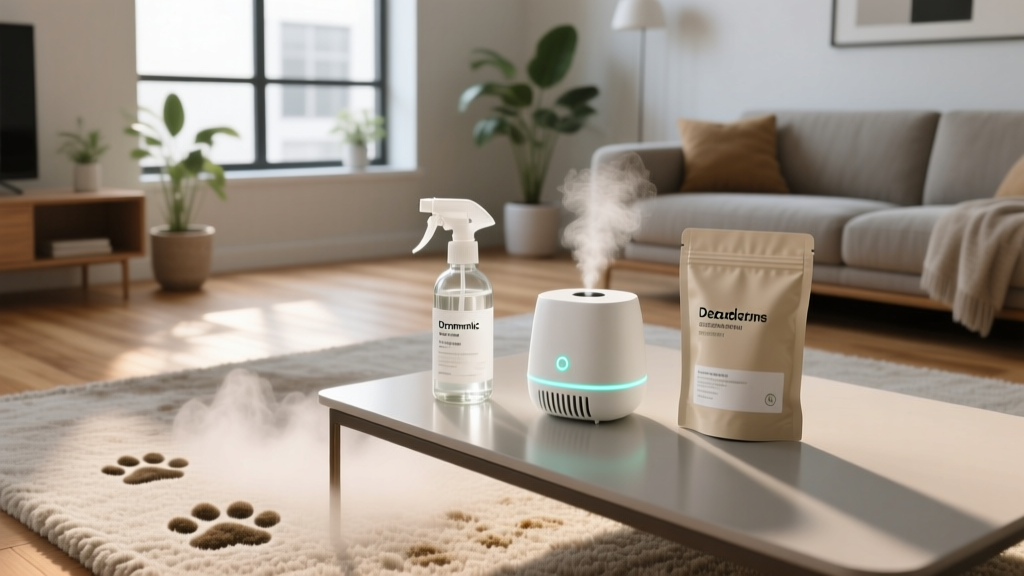
The Chemistry of Carpet Odors: Why One Size Fails All
Carpet fibers act as massive mechanical filters, trapping up to 40 pounds of dust, biological matter, and volatile organic compounds (VOCs) annually in an average household. When odors emerge, they are the off-gassing result of specific chemical reactions occurring deep within the carpet backing and subfloor. Applying a generic masking agent or a mismatched carpet deodorizer fails because it only addresses the olfactory symptoms, not the molecular source. Effective odor elimination requires matching the deodorizer's active chemistry to the specific molecular structure of the odor-causing compound.
According to the Institute of Inspection, Cleaning and Restoration Certification (IICRC), improper chemical selection not only fails to remove odors but can permanently set stains or degrade carpet fibers. This guide provides a scenario-matching framework to select the precise deodorization chemistry for biological, combustion, and fungal odor sources.
Scenario Matching Matrix: Odor Source vs. Deodorizer Type
Use the following matrix to identify the primary chemical culprit behind your carpet odor and select the corresponding treatment class. Costs reflect professional-grade materials applied by technicians or advanced DIYers.
| Odor Scenario | Primary Chemical Culprit | Recommended Deodorizer Class | Application Method | Est. Cost / Sq Ft |
|---|---|---|---|---|
| Pet Urine / Feces | Uric acid crystals, mercaptans | Bacterial/Enzymatic digesters | Saturation & sub-surface dwell | $0.15 - $0.35 |
| Cigarette / Fire Smoke | Tar resins, nicotine, VOCs | Hydroxyl generators, encapsulation | Air treatment & dry powder | $0.40 - $0.80 |
| Musty / Damp | Microbial VOCs (mVOCs), mycotoxins | Quaternary ammonium, hydrogen peroxide | Hot water extraction (HWE) | $0.20 - $0.45 |
| General Foot Traffic | Sebum, tracked organic decay | Silica-based absorbing powders | Dry agitation & vacuuming | $0.05 - $0.10 |
Biological Odors: Pet Urine and Enzymatic Breakdown
Pet urine is uniquely problematic because it undergoes a two-stage chemical degradation. Fresh urine is slightly acidic, but as it dries, bacteria convert urea into ammonia, raising the pH to 10 or higher. The resulting uric acid crystals bond tightly to carpet fibers and the polyurethane backing, becoming insoluble in water and resistant to standard alkaline carpet shampoos.
Why Enzymes and Bacteria Matter
Many commercial products are labeled as enzymatic, but true odor elimination requires a dual-action bacterial and enzymatic carpet deodorizer. Enzymes (like urease and protease) act as catalysts to break down large organic molecules into smaller fragments. However, enzymes do not consume the waste. Live bacterial spores (typically Bacillus strains) are required to ingest these smaller fragments and digest the uric acid crystals entirely.
Protocol for Sub-Surface Saturation:
- Locate the contamination using a UV flashlight (365nm wavelength) to identify the exact perimeter of the urine spread.
- Apply the bacterial/enzymatic solution at a ratio of 1.5 times the volume of the original accident. The liquid must penetrate through the carpet, the padding, and reach the subfloor.
- Cover the treated area with a 4-mil polyethylene plastic sheet and tape the edges. This prevents the solution from evaporating, maintaining the moisture required for the bacteria to remain active.
- Allow a minimum dwell time of 24 to 48 hours before removing the plastic and extracting the residual moisture.
Combustion Residues: Smoke and Hydroxyl Generators
Smoke odors from tobacco or minor kitchen fires are caused by microscopic tar and resin particles that embed themselves into the carpet pile. Traditional liquid deodorizers often fail because adding moisture to tar residues can drive them deeper into the fiber matrix.
The Shift from Ozone to Hydroxyl Technology
Historically, ozone (O3) generators were the industry standard for smoke deodorization. However, the Environmental Protection Agency (EPA) explicitly warns against using ozone generators in occupied spaces due to severe respiratory risks and the potential to create harmful secondary pollutants like formaldehyde.
In 2026, the professional standard has shifted to hydroxyl radical generators. Hydroxyl radicals (OH) are highly reactive but have a lifespan of only a few seconds, making them safe to use in occupied rooms. They actively break down the molecular bonds of VOCs and smoke resins without the lung-irritating risks of ozone. For carpet-specific smoke treatment, hydroxyl air treatment is paired with a dry encapsulation powder applied to the carpet, which absorbs the tar residues and is subsequently vacuumed away.
Fungal and Moisture Odors: Quats and Oxidizers
A musty, earthy odor indicates the presence of mold or mildew thriving in the carpet backing or padding, usually due to high humidity, poor ventilation, or a previous water leak. The odor itself is caused by microbial volatile organic compounds (mVOCs). According to guidelines from the Centers for Disease Control and Prevention (CDC), porous materials with active mold growth often require removal, but surface-level mildew and dormant spores can be treated.
To neutralize musty odors and kill fungal spores, utilize a quaternary ammonium compound (quat) or a stabilized hydrogen peroxide (6% to 10% concentration) deodorizer. Quats leave a residual antimicrobial barrier that prevents regrowth, while hydrogen peroxide acts as a powerful oxidizer that shreds the cell walls of fungi and breaks down mVOCs into harmless water and oxygen.
Fiber Constraints: Wool vs. Synthetic pH Limits
The most common reason a carpet deodorizer fails or ruins a rug is the failure to match the chemical pH to the carpet fiber type. Applying a high-alkaline deodorizer to a natural fiber will cause irreversible hydrolysis.
- Wool Carpets: Wool is a protein-based fiber. It is highly sensitive to alkalinity. Any deodorizer or cleaning solution applied to wool must have a pH between 4.5 and 8.5. Solutions with a pH above 9 will strip the natural lanolin, cause the cuticle scales to open, and lead to permanent fiber distortion and browning. Always verify that the product carries the WoolSafe approval mark.
- Nylon and PET (Polyester) Carpets: Synthetic fibers are highly resilient and can tolerate alkaline deodorizers with a pH up to 10.5 or 11.0. This makes them suitable for heavy-duty enzymatic and quat-based treatments that would destroy wool.
- Polypropylene (Olefin): Highly stain-resistant but oleophilic (oil-attracting). Avoid solvent-based deodorizers on olefin, as the fibers will absorb the solvent and trap the oily residue, leading to rapid re-soiling.
Professional Application Protocol: Step-by-Step Extraction
Regardless of the deodorizer chemistry selected, the physical removal of the suspended odor compounds is mandatory. Leaving the deodorizer in the carpet will result in a sticky residue that attracts new dirt. Follow this Hot Water Extraction (HWE) protocol:
- Dry Soil Removal: Vacuum the carpet thoroughly using a commercial upright with a beater bar. This removes dry particulate matter that would otherwise turn into mud when the liquid deodorizer is applied.
- Pre-Test: Apply a drop of the selected deodorizer to an inconspicuous area (like a closet corner). Blot with a white microfiber towel. If dye transfers to the towel, the solution is too alkaline or contains a harsh solvent; abort and select a neutral-pH alternative.
- Application and Agitation: Apply the deodorizer evenly. For synthetic carpets, use a counter-rotating brush machine (CRB) to agitate the solution deep into the pile and backing. For wool, use a soft-bristle groomer to avoid fiber damage.
- Controlled Dwell: Allow the product to dwell for the manufacturer's specified time (typically 10 to 15 minutes for oxidizers, 24+ hours for bacterial digesters). Do not let the carpet dry out during the dwell phase.
- Hot Water Extraction: Rinse the carpet using a truck-mounted or high-end portable HWE unit. The rinse water should be heated to 150°F - 200°F (for synthetics only; use 120°F for wool) to melt and flush out suspended soils and deodorizer residues. Use an acidic rinse agent (pH 3.5 - 4.5) to neutralize any remaining alkalinity and restore the carpet's optimal pH.