Industrial Floor Scrubber Rental Green Bay: The Maintenance Playbook
Discover the ultimate playbook for industrial floor scrubber rental in Green Bay. Compare models, costs, and cleaning strategies for concrete and epoxy.
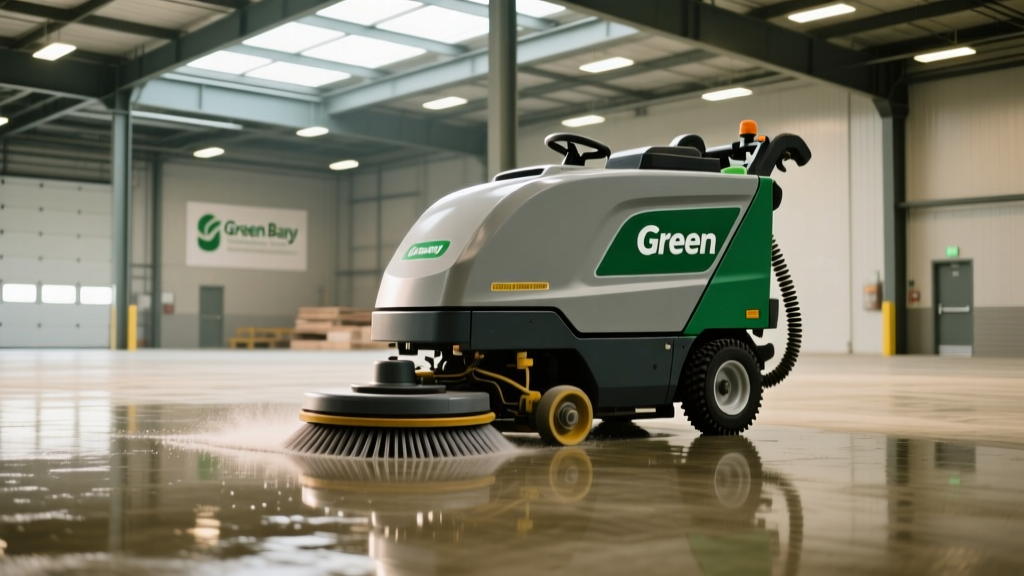
The Green Bay Industrial Flooring Challenge
Maintaining large-scale industrial flooring in Green Bay, Wisconsin, requires navigating a unique set of environmental and operational variables. Facilities in Brown County—ranging from paper manufacturing plants and food processing facilities to cold-storage logistics hubs—subject their floors to extreme abuse. During the winter months, forklifts constantly track in calcium chloride brine and rock salt, which rapidly degrades concrete sealers and epoxy coatings. Meanwhile, paper mills generate fine alkaline dust that, when mixed with water, creates a stubborn, adhesive residue.
Renting an industrial floor scrubber is the most cost-effective method for deep-cleaning these surfaces without the capital expenditure of purchasing a $15,000 to $40,000 machine. However, simply renting a machine is not enough; executing a proper maintenance playbook is critical to preventing floor degradation and maintaining OSHA Walking-Working Surfaces compliance. This guide details the exact machine specifications, chemical protocols, and operational strategies required for Green Bay facilities in 2026.
Machine Sizing: Walk-Behind vs. Ride-On Scrubbers
Selecting the wrong scrubber footprint is the most common error facility managers make when renting. The choice between a walk-behind and a ride-on model depends entirely on your aisle width, racking configuration, and total square footage.
| Specification | Walk-Behind (32-Inch) | Ride-On (34 to 45-Inch) |
|---|---|---|
| Ideal Facility Size | 10,000 to 40,000 sq. ft. | 40,000 to 200,000+ sq. ft. |
| Minimum Aisle Width | 6 feet (allows 180-degree turns) | 9 to 12 feet (requires wide turning radius) |
| Productivity Rate | 12,000 to 18,000 sq. ft./hour | 35,000 to 60,000 sq. ft./hour |
| Power Source Options | Corded, AGM Battery, Lithium-Ion | AGM Battery, Lithium-Ion, Propane (LP) |
| Best Green Bay Application | Narrow-aisle cold storage, meat packing | Paper mill warehouses, wide-span logistics |
If your Green Bay facility processes food (e.g., cheese manufacturing or meat packing), you must rent a battery-powered scrubber. Propane (LP) scrubbers emit carbon monoxide and unburned hydrocarbons, which violate FDA and local health department air quality regulations in enclosed food-prep environments. Always specify Lithium-Ion or AGM battery models when booking your rental.
The Paper Dust and Winter Brine Protocol
Green Bay's heavy concentration of paper mills and packaging facilities introduces a specific cleaning hazard: paper dust. If a facility attempts to wet-scrub a floor heavily laden with paper dust, the water instantly converts the dust into a papier-mâché slurry. This slurry clogs the scrubber's vacuum squeegee, burns out the vacuum motor, and leaves a hardened, uneven crust on the floor.
Step 1: Dry Pre-Sweeping (Non-Negotiable)
Before the scrubber touches the floor, use an industrial walk-behind sweeper or a commercial HEPA-filtered backpack vacuum to remove 95% of dry particulate. Never rely on the scrubber's squeegee to pick up dry debris.
Step 2: Neutralizing Winter Chlorides
Calcium chloride and rock salt tracked in from Green Bay's winter roads are highly corrosive. According to the Portland Cement Association, chloride ions penetrate concrete pores and initiate the corrosion of embedded rebar, leading to catastrophic spalling. To neutralize this:
- Alkaline Pre-Treatment: Apply a heavy-duty alkaline degreaser (pH 11-12) diluted at 4 oz per gallon of warm water. This breaks down the oily film that traps salt crystals.
- Agitation: Allow the solution to dwell for 5 to 7 minutes. Do not let it dry.
- Neutral Rinse: Run the scrubber with clean, warm water and a neutral pH (7.0) floor cleaner to extract the suspended chlorides. Ensure the vacuum squeegee is fully engaged to pull all moisture off the surface.
Pad Selection and Chemical Dilution Matrix
Using the incorrect scrubbing pad will either fail to remove scuff marks or permanently scratch high-gloss epoxy and polished concrete. Pad color coding is standardized across the industry, but the application varies by floor type. Refer to this matrix when ordering your rental consumables.
| Floor Type | Pad Color | Abrasive Level | Recommended Chemical (EPA Safer Choice) | Dilution Rate |
|---|---|---|---|---|
| Epoxy / Urethane | Red or Blue | Light/Medium Scrub | Neutral pH Daily Cleaner | 1 to 2 oz / gallon |
| Polished Concrete | White or Beige | Polishing / Burnishing | Concrete Conditioner / Guard | 2 to 4 oz / gallon |
| Sealed Concrete (Heavy Soil) | Green | Heavy Scrub | Alkaline Degreaser (pH 11) | 4 to 6 oz / gallon |
| VCT / Linoleum (Stripping) | Black | Aggressive Stripping | Floor Stripper (pH 12+) | 8 to 12 oz / gallon |
Note: Always verify chemical compatibility with your flooring manufacturer. Utilizing EPA Safer Choice certified chemicals ensures that runoff discharged into municipal water systems meets local Brown County environmental regulations.
2026 Rental Pricing and Brown County Logistics
Rental rates for industrial scrubbers fluctuate based on seasonal demand, with peak pricing typically occurring in late spring when facilities conduct post-winter deep cleans. Below are the standard 2026 rental rates for the Green Bay and greater Fox Valley area.
| Equipment Class | Daily Rate | Weekly Rate (5 Days) | Monthly Rate (20 Days) |
|---|---|---|---|
| 32' Walk-Behind (Battery) | $95 - $135 | $350 - $450 | $900 - $1,150 |
| 34' Ride-On (Battery) | $275 - $350 | $950 - $1,200 | $2,400 - $2,900 |
| 45' Ride-On (Battery) | $375 - $475 | $1,300 - $1,600 | $3,200 - $3,800 |
| Consumables (Pads/Chemicals) | Billed separately; expect $40-$80 per pad and $60-$120 per 5-gallon pail of chemical. | ||
Ride-on scrubbers weigh between 800 and 1,500 lbs. If you do not have a facility with a dock-height loading bay and a pallet jack, you must pay for dealer delivery. In the Green Bay area, delivery and pick-up fees typically range from $125 to $250 each way, depending on your proximity to the rental depot (usually located near the I-43 or US-41 corridors). Factor this into your total budget.
Pre-Rental Inspection and Operator Safety
Before signing the rental agreement and operating the machine, conduct a rigorous 5-point inspection. Rental depots occasionally deploy machines with worn squeegee blades, which will leave streaks of dirty water on the floor, creating severe slip hazards.
The 5-Point Scrubber Inspection Checklist
- Squeegee Blade Durometer and Wear: Check the rubber blade at the rear of the deck. It should be flexible but firm (typically 60A to 70A durometer). If the edges are curled, torn, or heavily grooved, demand a replacement blade before leaving the depot.
- Vacuum Motor Suction Test: Turn on the vacuum motor without the water flowing. Place your hand over the recovery tank exhaust port. You should feel strong, consistent suction. Weak suction indicates a clogged filter or a failing motor.
- Solution Valve Calibration: Test the water flow rate. A standard 32-inch machine should dispense roughly 0.5 to 1.0 gallons per minute. If it floods the floor, the solenoid valve is stuck open.
- Battery Terminal Integrity: Inspect the battery terminals for blue/white corrosion. Corroded terminals cause voltage drops, leading to the machine stalling in the middle of a large warehouse aisle.
- Drive Traction Tires: Ensure the drive tires are not bald. Smooth tires on a wet, polished concrete floor will cause the machine to slide during turns, potentially damaging racking uprights.
OSHA Compliance and Slip Mitigation
Wet floors are a primary catalyst for workplace injuries. Under OSHA regulations, employers must mitigate slip-and-fall hazards during the cleaning process. When operating the scrubber, always deploy high-visibility wet floor signage at all entry points of the cleaning zone. Furthermore, operators must wear slip-resistant footwear with a minimum coefficient of friction (COF) rating of 0.50 on wet surfaces. By combining the right machine sizing, strict chemical protocols, and rigorous safety checks, Green Bay facility managers can extend the lifespan of their industrial flooring while maintaining a safe, compliant work environment.