Carpet Fresh Deep Dive: Best Powders, Sprays, and Foams for 2026
Explore the Carpet Fresh product line for 2026. Compare powders, sprays, and foams for nylon, polyester, and wool carpets with cost and application data.
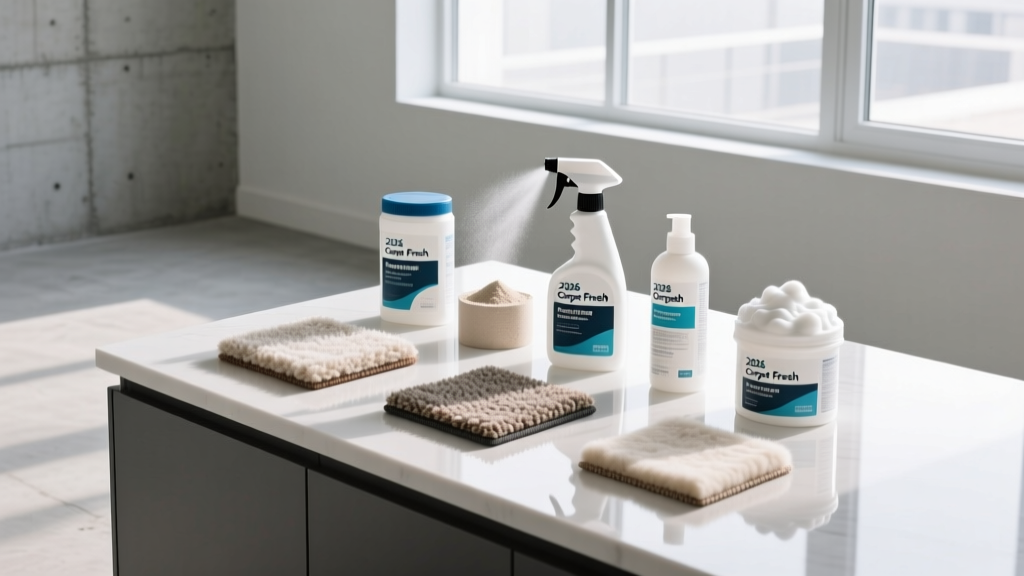
The Science of Carpet Maintenance: Inside the Carpet Fresh Ecosystem
With professional carpet installation costs averaging between $4.50 and $11.00 per square foot in 2026, protecting this textile investment requires targeted, chemically sound maintenance. While hot water extraction remains the gold standard for deep soil removal, interim maintenance dictates the day-to-day indoor air quality and olfactory comfort of a space. The Carpet Fresh brand has evolved from a simple baking soda deodorizer into a multi-tiered chemical ecosystem designed to neutralize volatile organic compounds (VOCs), break down organic soils, and manage moisture at the fiber level.
According to the Environmental Protection Agency (EPA), carpets act as massive air filters, trapping particulate matter, allergens, and odor-causing bacteria. When these traps reach capacity, off-gassing occurs. Carpet Fresh formulations address this by utilizing a dual-action matrix: alkaline odor neutralizers paired with porous zeolite minerals that physically trap odor molecules rather than merely masking them with heavy fragrances.
2026 Product Line Matrix: Powders, Sprays, and Foams
Selecting the correct Carpet Fresh variant depends entirely on the soil type, carpet fiber composition, and required dwell time. Below is a technical breakdown of the current product lineup, including localized pricing and formulation data.
| Product Variant | Formulation Base | Avg. Price / Ounce (2026) | Dwell Time | Primary Use Case |
|---|---|---|---|---|
| Carpet Fresh Original Powder | Sodium Bicarbonate & Zeolite | $0.32 | 15 - 30 Minutes | Routine odor control, dry soil absorption |
| Carpet Fresh Pet Odor Eliminator | Enzymatic Liquid Spray | $0.48 | 10 - 15 Minutes | Uric acid breakdown, biological stains |
| Carpet Fresh Heavy Duty Foam | Surfactant & Solvent Blend | $0.55 | 45 - 60 Minutes | Oily soils, high-traffic lane extraction |
| Carpet Fresh No-Residue Spray | Water & Cyclodextrin Complex | $0.41 | 5 - 10 Minutes | Quick refresh, low-moisture environments |
Fiber Compatibility: A Critical Guide for Textile Longevity
Applying the wrong chemical formulation to a specific carpet fiber can lead to irreversible damage, including pH-induced yellowing, degradation of stain-resistant treatments, and fiber embrittlement. The Carpet and Rug Institute (CRI) emphasizes that chemical pH must be matched to the fiber's tolerance levels.
Nylon 6,6 and Nylon 6
Nylon remains the most durable synthetic fiber on the market. However, modern nylon carpets are treated with fluoropolymer stain blockers (e.g., Scotchgard). High-alkaline cleaners can strip these treatments over time. Carpet Fresh powders (pH ~8.2) are safe for nylon provided they are fully extracted. The Heavy Duty Foam should be used sparingly on nylon, as its aggressive surfactants can leave a sticky residue that accelerates re-soiling if not thoroughly vacuumed.
PET Polyester and Triexta (PTT)
Polyester fibers are inherently hydrophobic but highly oleophilic, meaning they repel water but aggressively attract oils from bare feet and pets. For PET carpets, the Carpet Fresh Heavy Duty Foam is the superior choice. The solvent blend cuts through sebum and cooking oil aerosols that settle into the pile. Triexta, a newer polymer with inherent stain resistance, requires minimal chemical intervention; the No-Residue Spray is ideal for maintaining Triexta without disrupting its factory-engineered surface tension.
CRITICAL WARNING: Wool and Natural Fibers
Never use Carpet Fresh Original Powder or Heavy Duty Foam on wool, silk, or jute carpets. Wool requires a strictly neutral to slightly acidic environment (pH 5.0 to 8.0). The alkaline nature of baking soda-based powders will cause the cuticle scales of the wool fiber to open and fray, leading to permanent yellowing, texture degradation, and accelerated wear. For wool, rely exclusively on CRI-approved, wool-safe enzymatic sprays.
Cost-Benefit Analysis: Interim Care vs. Professional Extraction
Homeowners often debate the financial utility of consumer-grade carpet care versus scheduling professional hot water extraction (HWE). While HWE is mandatory for warranty compliance (typically required every 12 to 18 months), interim use of the Carpet Fresh line significantly extends the intervals between professional cleanings by preventing soil from grinding into the fiber base.
- Professional HWE Cost: $0.35 to $0.55 per square foot. For a 1,500 sq ft carpeted area, a single cleaning costs between $525 and $825.
- Carpet Fresh Powder Regimen: Using 1.5 lbs of powder per 1,500 sq ft application costs approximately $12.00. Applied bi-monthly, the annual cost is $72.00.
- Carpet Fresh Foam Regimen: Targeted application to high-traffic lanes (approx. 30% of total carpet area) costs roughly $45.00 annually.
By utilizing Carpet Fresh powders and foams to manage surface soils and odors, homeowners can safely extend professional HWE intervals from 12 months to 18 or 24 months, yielding a net savings of $400 to $600 over a five-year period without violating most manufacturer warranties, provided annual documentation is kept.
Optimized Application Protocol for Maximum Efficacy
The most common failure mode with dry powder deodorizers is improper extraction, which leaves a gritty residue that acts as an abrasive on carpet fibers. Follow this precise mechanical protocol for Carpet Fresh powders:
- Dry Soil Pre-Extraction: Vacuum the carpet thoroughly before application. If powder is applied over existing dry soil, it binds to the dirt, creating a heavy sludge that standard vacuums cannot lift.
- Controlled Dispersion: Apply the powder at a rate of 1 ounce per 10 square feet. Use a shaker top to ensure an even, light dusting. Over-application does not increase odor elimination; it only increases extraction difficulty.
- Mechanical Agitation: Use a carpet rake or a soft-bristled broom to work the powder down to the primary backing. Odor sources (pet dander, spilled milk) reside at the base of the tuft, not at the fiber tips.
- Dwell Time: Allow the zeolite minerals to absorb VOCs for exactly 20 to 30 minutes. Exceeding 45 minutes allows ambient humidity to activate the baking soda, causing it to clump.
- Multi-Pass Extraction: Execute three vacuum passes. The first pass should be slow (1 foot per second) with the beater bar engaged to agitate the pile. The second and third passes should be performed with the beater bar disengaged (suction only) to pull the fine particulate out of the backing without scattering it.
Troubleshooting Common Application Failures
Issue: Persistent White Residue After Vacuuming
Diagnosis: This occurs when the powder encounters residual moisture in the carpet pad or when the vacuum's HEPA filter is saturated. Correction: Check the vacuum's cyclonic separator or bag. Fine silica and sodium bicarbonate dust rapidly clog micro-filters, reducing suction by up to 60% without triggering a visual 'full' indicator. Clean the filter and perform a final pass using a hard-floor attachment (suction only, no brush roll) to lift the remaining dust from the base of the pile.
Issue: Foam Leaves a Sticky, Re-soiling Patch
Diagnosis: Carpet Fresh Heavy Duty Foam contains anionic surfactants. If the foam is not blotted or extracted after the dwell time, the surfactant dries into a hygroscopic (moisture-attracting) sticky film that pulls new dirt from foot traffic. Correction: Mist the sticky area lightly with distilled water, blot aggressively with a clean microfiber towel to lift the surfactant residue, and allow to dry completely. In the future, always follow foam application with a damp extraction step.
'The efficacy of any interim carpet maintenance product is entirely dependent on the mechanical action of the vacuum. A $500 carpet deodorizer will fail if extracted with a machine suffering from a compromised belt or clogged filtration.' — Textile Maintenance Industry Standards, 2025
Understanding the chemical interactions between Carpet Fresh formulations and your specific carpet fiber ensures that you maintain both the aesthetic and structural integrity of your flooring. By matching the correct product variant to the soil type and adhering to strict extraction protocols, you transform a simple deodorizing step into a critical component of your long-term asset management strategy.