Carpet Install Cost Guide: Room Scenarios & 2026 Pricing
Discover the true carpet install cost for 2026. Match materials, padding, and labor rates to specific room scenarios for accurate budget planning.
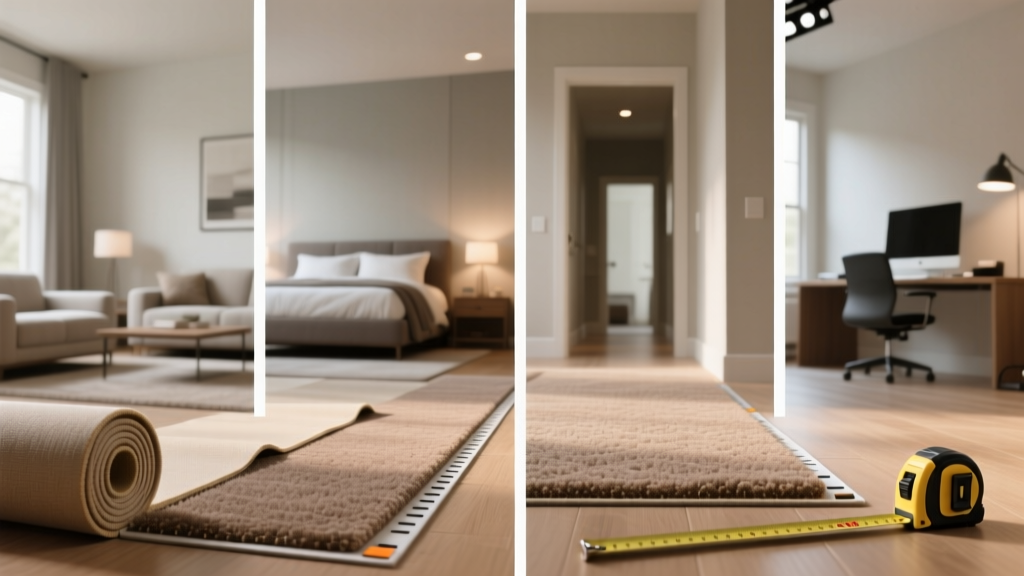
The True Cost of Carpet Installation in 2026
Calculating an accurate carpet install cost requires moving beyond national averages. In 2026, the baseline price for professional carpet installation ranges from $5.50 to $12.00 per square foot, encompassing the carpet fiber, padding, and labor. However, treating every room in your home as a uniform flooring project is a costly mistake. The application-fit of your carpet—matching the fiber type, face weight, and underlayment to the specific traffic and moisture profile of a room—dictates both the upfront price and the long-term replacement cycle.
- Material (Carpet): $2.00 – $8.00 per sq. ft.
- Underlayment (Pad): $0.50 – $1.75 per sq. ft.
- Professional Labor: $1.50 – $3.50 per sq. ft.
- Average Total Installed: $7.50 per sq. ft.
According to Forbes Home Improvement, labor and material costs have stabilized in 2026, but premium eco-friendly fibers and specialized moisture-barrier pads have seen a 4% price increase. To maximize your investment, we must break down carpet installation by specific room scenarios.
Scenario 1: High-Traffic Family Rooms & Hallways (Durability Focus)
Living rooms, main hallways, and playrooms demand high resilience and stain resistance. The primary failure mode in these areas is matting and crushing, where the carpet fibers permanently bend under repeated foot traffic.
Material & Pad Specifications
- Fiber: Nylon 6,6 or Triexta (PTT polymer). Both offer superior memory and bounce-back compared to polyester.
- Face Weight: 50 to 65 ounces per square yard. Anything below 40 oz will crush within two years in a high-traffic zone.
- Pile Height: Low to medium (1/4 inch to 1/2 inch). Shorter, denser piles resist crushing.
- Padding: 8-pound density rebond urethane (7/16 inch thick). This provides the necessary firm support to prevent the carpet backing from flexing and tearing.
Cost Breakdown
Expect to pay between $7.50 and $11.00 per square foot fully installed. Premium stain-treated Nylon 6,6 pushes the material cost to the $5.00–$7.00 range, while standard labor and 8lb rebond pad add roughly $3.50.
Scenario 2: Master Bedrooms & Low-Traffic Zones (Comfort Focus)
Bedrooms prioritize underfoot comfort, acoustic dampening, and thermal insulation over extreme durability. Because foot traffic is minimal and mostly restricted to soft-soled shoes or bare feet, you can prioritize plush textures without sacrificing longevity.
Material & Pad Specifications
- Fiber: Wool, wool-blends, or high-end PET Polyester. Wool offers natural temperature regulation and luxury, while polyester provides exceptional softness at a lower price point.
- Face Weight: 60 to 80 ounces per square yard. Heavier face weights create a denser, more luxurious feel.
- Pile Height: High pile or frieze (3/4 inch to 1 inch). Longer fibers yield to the foot, creating a plush sensation.
- Padding: Memory foam or premium prime urethane (1/2 inch thick). Memory foam excels in bedrooms by providing a cloud-like step and superior sound deadening.
Cost Breakdown
The carpet install cost for luxury bedroom scenarios ranges from $8.00 to $15.00+ per square foot. Authentic wool carpets easily exceed $10.00 per square foot for the material alone, and memory foam padding adds $1.25 to $1.75 per square foot.
Scenario 3: Basements & Moisture-Prone Areas (Risk Mitigation)
Installing traditional broadloom carpet over a concrete basement slab is a high-risk application. Concrete is porous and emits moisture vapor; trapping this vapor under a traditional pad leads to mold, mildew, and delamination of the carpet backing.
Material & Pad Specifications
- Fiber: Olefin (polypropylene) or solution-dyed PET polyester. These fibers are inherently hydrophobic and will not absorb water or support mold growth.
- Format: Carpet tiles or glue-down broadloom. Carpet tiles allow you to replace individual squares if water damage occurs.
- Padding: Synthetic felt pad with a moisture barrier, or direct glue-down (no pad). Never use standard rebond foam in a basement, as it acts as a sponge.
Cost Breakdown
Basement installations are highly cost-effective, averaging $4.50 to $7.50 per square foot. Olefin carpet is cheap ($2.00–$3.50 per sq. ft.), and glue-down labor eliminates the cost of tack strips and padding, though it requires meticulous subfloor prep.
Comprehensive 2026 Cost Matrix by Scenario
| Room Scenario | Optimal Fiber | Pad Type | Material Cost / Sq Ft | Total Installed / Sq Ft |
|---|---|---|---|---|
| High-Traffic Living | Nylon 6,6 / Triexta | 8lb Rebond (7/16") | $4.00 - $7.00 | $7.50 - $11.00 |
| Master Bedroom | Wool / Plush Polyester | Memory Foam (1/2") | $5.00 - $12.00 | $8.00 - $15.00+ |
| Basement / Below Grade | Olefin / PET Tiles | Direct Glue / Synthetic | $2.00 - $4.50 | $4.50 - $7.50 |
| Staircases | Low-Pile Nylon | Heavy Felt / Rebond | N/A (Priced per step) | $18.00 - $30.00 / step |
Hidden Variables That Spike Your Carpet Install Cost
When requesting quotes from contractors, the base square-footage rate rarely tells the whole story. Angi's 2026 flooring data highlights several ancillary costs that frequently catch homeowners off guard:
- Old Carpet Tear-Out & Disposal: $0.50 to $1.25 per square foot. If your existing pad is glued down or contains asbestos (in homes built pre-1980), abatement and scraping can double this rate.
- Subfloor Leveling & Prep: $2.00 to $4.50 per square foot. Concrete slabs with moisture issues require an epoxy vapor barrier, while plywood subfloors with squeaks or uneven seams require sanding and screwing down to prevent visible telegraphing through the new carpet.
- Furniture Moving: $50 to $150 per room. Installers charge a premium to carefully move heavy items, particularly if they must disassemble and reassemble bed frames or entertainment centers.
- Staircase Installation: Stairs are priced per step, not by square foot. Expect to pay $18 to $30 per step. The labor is highly technical, requiring precise wrapping around the nosing and secure stapling into the risers.
Decision Framework: DIY vs. Professional Installation
While laying carpet seems like a viable weekend DIY project, the installation methodology dictates the lifespan of the floor. The Home Depot's installation guidelines and the Carpet and Rug Institute (CRI) Standard 104 strictly mandate the use of a power stretcher for broadloom carpet.
"A knee kicker is only a positioning tool, not a stretching tool. Relying solely on a knee kicker fails to generate the 300+ pounds of lateral force required to lock the carpet onto the tack strips, inevitably leading to wrinkles, buckling, and voided manufacturer warranties within the first year."
When to DIY
Limit DIY installation to carpet tiles, peel-and-stick carpet squares, or small, enclosed areas like closets where a power stretcher physically cannot fit. For these, a knee kicker and a wall trimmer are sufficient.
When to Hire a Pro
Any room larger than a walk-in closet requires professional installation. The cost of renting a power stretcher ($50–$80/day) and purchasing specialized tools (seam iron, knee kicker, stair tool, wall trimmer) often negates the savings of DIY, especially when factoring in the risk of ruining expensive material during the seaming process.
Quick Answers: Carpet Installation FAQs
How much extra carpet should I buy for waste?
Always calculate a 10% to 15% waste factor. Carpet comes in standard 12-foot or 15-foot rolls. If your room is 13 feet wide, you must buy a 15-foot roll, resulting in a 2-foot strip of unavoidable waste. Complex room layouts with multiple closets and angles will push waste closer to 15%.
Does a thicker pad mean better carpet?
No. A pad that is too thick (over 1/2 inch) or too soft causes the carpet backing to flex excessively when walked on. This flexing breaks the latex bind holding the tufts in place, leading to shedding and delamination. The CRI recommends a maximum thickness of 7/16 inch for standard residential applications.
How long does professional installation take?
A professional two-person crew can install 1,000 to 1,500 square feet of carpet in a single day, assuming the space is empty and the subfloor is prepped. Add 2 to 4 hours if old carpet removal and furniture moving are included in the scope of work.