Floor Joist Maintenance: Cleaning and Inspecting Crawlspaces
Master floor joist maintenance with this crawlspace playbook. Learn to clean cavities, treat mold, manage moisture, and prevent structural sagging.
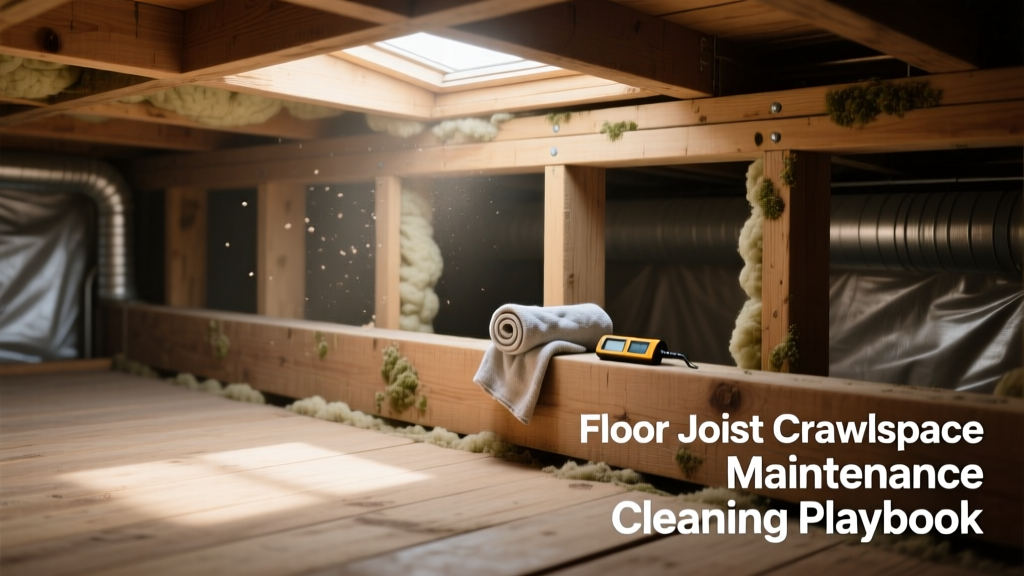
The Diagnostic Inspection: Assessing Joist Health
The structural integrity of your flooring system relies entirely on the condition of the floor joist cavity. While homeowners focus on surface cleaning, the crawlspace or basement environment dictates the lifespan of the subfloor and finish materials above. A compromised floor joist leads to squeaky hardwood, cracked tile grout, and spongy laminate. Effective maintenance begins with a rigorous diagnostic inspection.
Tools for Precision Diagnostics
Visual inspection is insufficient for detecting early-stage rot or internal moisture accumulation. Equip yourself with the following:
- Pin-Type Moisture Meter: Use a professional-grade meter like the Wagner Meters Orion 910. Pinless meters struggle with thick dimensional lumber and often yield false readings on joist faces.
- Ice Pick or Awl: For probing suspected decay. If the tool penetrates the wood with minimal pressure, the structural fibers have been compromised by fungal hyphae.
- High-Lumen Headlamp: Minimum 500 lumens to spot fine fungal mycelium or termite frass in shadowed webbing.
Measuring Deflection and Sag
String a mason line tightly from one end of the joist span to the other. Measure the gap between the string and the bottom edge of the joist at the midpoint. According to the USDA Forest Products Laboratory, standard residential floor joists should not exceed a deflection limit of L/360 under live loads. If your 12-foot span sags more than 0.4 inches, the joist requires structural intervention, not just cleaning.
The Cleaning Protocol: Debris, Dust, and Biological Growth
Crawlspace joists accumulate decades of dust, cobwebs, fallen insulation, and organic debris. This detritus acts as a sponge, trapping ambient moisture against the wood and creating an ideal microclimate for wood-decaying fungi.
Step-by-Step Cavity Cleaning
- Clear the Floor: Remove all fallen fiberglass batts, trash, and organic debris from the crawlspace dirt floor. Do not leave cellulose materials resting against the joist ends or rim boards.
- HEPA Vacuuming: Use a commercial HEPA-filtered vacuum to remove dust and cobwebs from the joist webs, flanges, and subfloor sheathing. Avoid aggressive sweeping, which aerosolizes mold spores and pest droppings.
- Mechanical Scrubbing: For surface mold or mildew on the joists, use a stiff wire brush to remove the top layer of colonized wood fibers. Do not use a power washer; introducing bulk water into a confined crawlspace will spike humidity and accelerate decay.
- Chemical Remediation: Apply a mold-stain remover and encapsulant. Products like Concrobium Mold Control crush mold spores at the root without using bleach (which can degrade wood lignin). Spray generously and allow to dry completely.
Homes built before 1980 may have asbestos-containing pipe insulation or lead-based paint on joist cavities. If you suspect asbestos wrapping near floor joists, halt cleaning immediately and consult a licensed abatement professional. Disturbing friable asbestos releases hazardous fibers into the home's air supply.
Moisture Management and Pest Deterrence
Cleaning is only temporary if the underlying moisture and pest vectors are not addressed. The Environmental Protection Agency (EPA) emphasizes that controlling indoor moisture is the only permanent solution to mold prevention.
Borate Wood Treatments
After cleaning and drying the joists, apply a borate-based wood preservative. Glycol-based borates like Bora-Care penetrate deeply into raw timber, providing permanent protection against subterranean termites, powderpost beetles, and wood-rot fungi. Mix the solution according to manufacturer specifications (typically a 1:1 ratio with water for active infestations, or 1:5 for preventative maintenance) and apply via pump sprayer until the wood surface is thoroughly wetted.
Vapor Barrier Installation
Bare earth in a crawlspace releases up to 12 gallons of water vapor per day per 1,000 square feet. Install a minimum 12-mil cross-laminated polyethylene vapor barrier over the entire crawlspace floor. Overlap seams by at least 12 inches and seal with specialized butyl mastic tape. Run the barrier up the foundation walls and fasten it to the rim board, ensuring no exposed soil remains.
Structural Triage: Sistering and Hardware Replacement
Sometimes, maintenance reveals structural failure. If a floor joist is severely notched for plumbing, cracked, or exhibits deep rot, it must be reinforced.
The Sistering Technique
Sistering involves bolting a new joist directly alongside the damaged one. For optimal load transfer, use Laminated Veneer Lumber (LVL) rather than standard SPF dimensional lumber, as LVL is less prone to shrinking and warping. Apply a continuous bead of PL Premium 3x polyurethane construction adhesive between the joists, then secure them using 1/2-inch galvanized carriage bolts staggered every 16 inches, or structural screws like the Simpson SDWS series.
Upgrading Joist Hangers
Inspect the metal joist hangers at the ledger boards. Older installations often feature hangers missing nails or suffering from galvanic corrosion. Referencing the Simpson Strong-Tie Repair and Retrofit guidelines, replace corroded hangers and ensure every hole is filled with the correct fastener—specifically 1.5-inch hot-dipped galvanized hanger nails or approved structural screws, never drywall or deck screws.
Floor Joist Diagnostic Thresholds
| Diagnostic Metric | Acceptable Range | Action Threshold |
|---|---|---|
| Wood Moisture Content | 8% - 14% | > 19% (High risk for fungal decay) |
| Mid-Span Deflection (12ft joist) | < 0.4 inches | > 0.5 inches (Requires sistering) |
| Crawlspace Relative Humidity | 30% - 50% | > 60% (Requires active dehumidification) |
| Awl Penetration Depth | < 1/8 inch | > 1/4 inch (Indicates advanced rot) |
Frequently Asked Questions
Can I use bleach to clean mold off my floor joists?
No. Chlorine bleach is primarily water and only treats the surface of the wood. The water content can actually feed the root structure of the mold inside the porous timber, and the chlorine rapidly dissipates. Use a dedicated encapsulant or borate treatment instead.
How often should I inspect my crawlspace joists?
Conduct a thorough inspection and light cleaning twice a year—ideally in late spring and early autumn. These transitional seasons allow you to address moisture accumulation from winter snowmelt or heavy summer rains before it causes long-term structural damage.
Does spray foam insulation on joists cause rot?
Closed-cell spray foam is generally safe and acts as a vapor barrier, but open-cell foam can trap moisture against the wood if the exterior grading is poor or if there is a plumbing leak. If using foam, ensure the crawlspace is fully encapsulated and conditioned to prevent trapped moisture from rotting the joist behind the insulation.