Floor Sink Durability: Lifespan Analysis & Material Guide
Analyze floor sink durability, comparing cast iron, stainless steel, and PVC lifespans, load ratings, and failure modes for commercial builds.
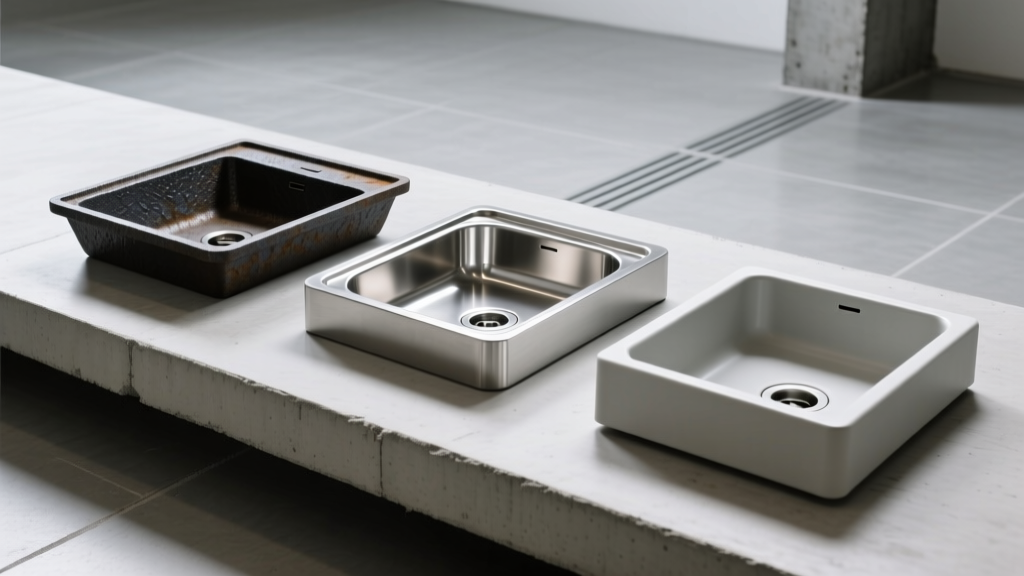
The Anatomy of Floor Sink Degradation
A floor sink is not merely a drain; it is a structural and plumbing intersection subjected to extreme thermal cycling, corrosive chemical exposure, and dynamic point-loads. While the plumbing infrastructure beneath the slab may last a century, the floor sink receptor itself is a wear item. Understanding the precise failure modes of these receptors is critical for specifying the right unit for commercial kitchens, laboratories, and industrial processing facilities.
Degradation rarely occurs uniformly. It typically initiates at three specific vulnerability zones:
- The Grate-to-Receptor Lip: Repeated impact from heavy carts causes micro-fractures in the receiver ledge, eventually leading to grate collapse.
- The Clamp Ring Assembly: Differential thermal expansion between the receptor body and the waterproofing membrane clamp ring creates sheer stress, tearing the membrane and causing sub-slab leaks.
- The Coating Substrate: In epoxy-coated cast iron models, impact chips expose the raw iron to moisture, triggering subsurface oxidation that blisters and flakes the surrounding coating.
Material Lifespan Matrix: Cast Iron vs. Stainless Steel vs. PVC
Material selection dictates the baseline lifespan of the receptor. As of 2026, supply chain stabilization has normalized pricing for marine-grade stainless steels, altering the traditional cost-benefit analysis that heavily favored cast iron. Below is a comparative matrix of standard 12-inch by 12-inch floor sink receptors.
| Material Specification | Expected Lifespan | Avg. Unit Cost (2026) | Max Load Rating | Primary Failure Mode |
|---|---|---|---|---|
| Epoxy-Coated Cast Iron | 30 - 50 Years | $650 - $1,200 | Heavy / H-20 | Epoxy chipping & subsurface rust |
| 304 Stainless Steel | 40 - 60 Years | $800 - $1,500 | Medium / Heavy | Pitting from chlorides & acids |
| 316 Stainless Steel | 50 - 75+ Years | $1,400 - $2,200 | Heavy / Extreme | Galvanic corrosion at welds |
| PVC / HDPE | 15 - 25 Years | $250 - $450 | Light Duty | UV/Chemical degradation, cracking |
Load Ratings and Grate Failure Mechanics
The receptor body may survive for decades, but the grate is the first component to fail if load ratings are mismatched to the environment. According to IAPMO standards and ANSI A112.6.7 guidelines, grates are classified by their static and dynamic load-bearing capacities.
Decoding Load Classifications
- Light Duty (Up to 2,500 lbs): Suitable for pedestrian traffic and light hand carts. Typically constructed from stamped stainless steel or standard polymers.
- Medium Duty (Up to 7,500 lbs): Required for commercial kitchens with motorized pallet jacks or heavy prep carts. Usually fabricated from heavy-gauge stainless steel or ductile iron.
- Heavy Duty / H-20 Highway Loading (Up to 32,000 lbs): Mandatory for loading docks, fire stations, and industrial bays where forklifts or fire trucks may cross. These grates feature reinforced cross-ribbing and are almost exclusively cast ductile iron.
A common failure scenario occurs when a facility specifies a heavy-duty cast iron receptor but pairs it with a standard medium-duty stainless steel grate to save $200 upfront. The concentrated point-load of a forklift wheel (which can exceed 10,000 lbs on a single tire contact patch) will instantly shear the grate's cross-members, dropping the vehicle into the sink and causing catastrophic damage to both the vehicle and the plumbing infrastructure.
The Hidden Culprit: Waterproofing Membrane Tearing
The most expensive failure associated with a floor sink has nothing to do with the metal receptor itself. It involves the waterproofing membrane integrated into the floor assembly. When a floor sink is installed over a structural concrete slab, a pan liner or sheet membrane is clamped between the receptor body and an adjustable clamp ring.
"Over 70% of sub-slab water infiltration complaints in commercial facilities trace back to compromised floor sink clamp rings, not the primary plumbing stack. The sheer force of thermal expansion in the surrounding concrete slab pulls the membrane taut, tearing it away from the mechanical clamp."
— Adapted from American Society of Plumbing Engineers (ASPE) technical bulletins on commercial drainage.
To mitigate this, modern specifications require a double-clamp ring system with an integral weep ring. The weep ring allows moisture that penetrates the top grout layer to safely enter the drain body rather than pooling beneath the tile and degrading the membrane adhesive. If your specification does not explicitly call out a weep ring assembly, you are guaranteeing a membrane failure within the first decade of thermal cycling.
Real-World Cost & Replacement Analysis
When evaluating the total cost of ownership, facility managers must look beyond the initial invoice price of the unit. The cost to replace a failed floor sink is heavily skewed toward demolition and labor, not materials.
Grate Replacement
Material Cost: $150 - $450
Labor Cost: $80 - $150
Downtime: 1 hour
Verdict: Routine maintenance. Always keep two spare grates on-site for high-traffic zones.
Receptor Body Swap
Material Cost: $800 - $1,500
Labor Cost: $1,200 - $2,500
Downtime: 24 - 48 hours
Verdict: Requires saw-cutting the surrounding floor, breaking concrete, and re-pitching the floor to the new receptor.
Membrane Repair
Material Cost: $300 - $600
Labor Cost: $3,500 - $6,000+
Downtime: 3 - 5 days
Verdict: Catastrophic. Requires removing the entire floor finish (tile/epoxy), replacing the pan liner, and pouring a new mud bed.
Extending Lifespan: A Maintenance Protocol
Maximizing the operational life of a floor sink requires a proactive, scheduled maintenance protocol rather than reactive cleaning. Implement the following quarterly checklist to prevent premature degradation:
- Inspect the Receiver Ledge: Run a gloved hand along the interior lip where the grate seats. If you detect spalling in cast iron or deformation in steel, the grate is impacting the ledge too hard. Replace the grate with a model featuring a wider flange to distribute the load.
- Torque the Clamp Ring Bolts: Concrete slabs shift and settle. Every six months, use a torque wrench to check the bolts securing the waterproofing clamp ring. They must be tightened in a star pattern to 15-20 ft-lbs (verify manufacturer specs) to maintain uniform pressure on the membrane without cutting it.
- Clear the Weep Holes: Use a pipe cleaner or compressed air to clear the weep holes in the clamp ring. If these clog with grout or debris, hydrostatic pressure will build up beneath the floor finish, leading to tile tenting and adhesive failure.
- Passivation for Stainless Steel: In harsh chemical environments, the passive chromium oxide layer on stainless steel can be stripped. Apply a commercial citric acid-based passivation gel annually to restore the protective layer and prevent surface rust.
By aligning material specifications with exact chemical and load environments, and enforcing rigorous clamp-ring maintenance, facility operators can easily push floor sink lifespans past the 50-year mark, avoiding the massive capital expenditure of sub-slab membrane repairs.