Pro Carpet Washer Application: Step-by-Step Deep Extraction Guide
Master the application procedures for a pro carpet washer. Learn exact chemical dilutions, wand overlapping, and IICRC drying protocols.
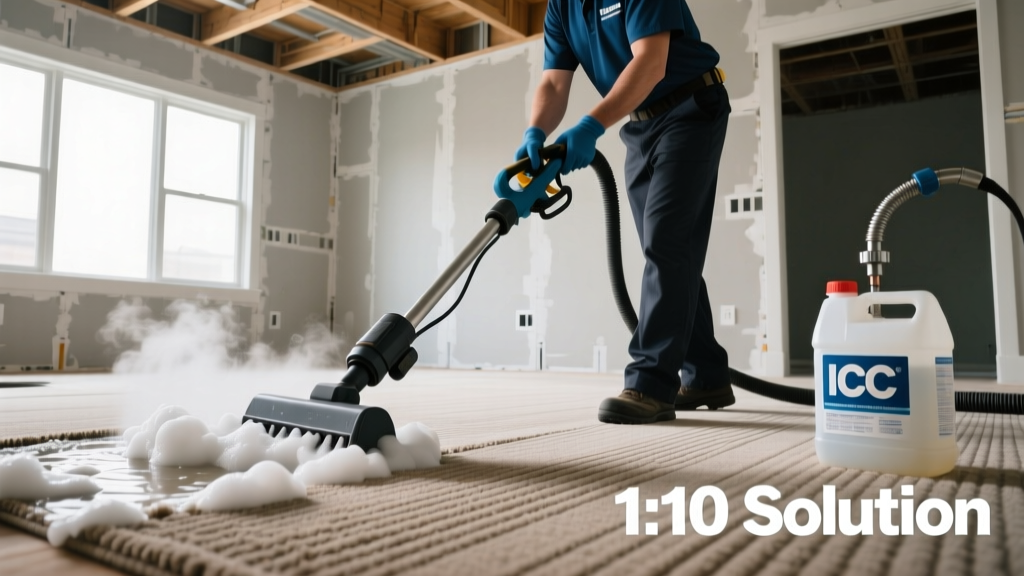
Deploying a pro carpet washer—technically known as a hot water extraction (HWE) unit—requires precise calibration, chemical knowledge, and strict adherence to fluid dynamics. Unlike consumer-grade rental units, professional extractors operate at higher PSI and utilize advanced vacuum lift to pull deep-seated soil from the carpet backing. According to the IICRC S100 Standard for professional cleaning of textile floor coverings, improper extraction techniques can lead to rapid re-soiling, wicking, and delamination of the carpet secondary backing. This guide details the exact application procedures for operating a pro carpet washer in commercial and high-traffic residential environments.
Machine Calibration and Fluid Dynamics
Before introducing moisture to the textile, the pro carpet washer must be calibrated to the specific fiber type and soil load. Modern 2026 extraction units, whether portable or truckmounted, rely on a balance of water pressure, temperature, and vacuum lift.
- Water Pressure (PSI): For standard synthetic carpets (nylon, polyester), set the pump pressure between 150 and 300 PSI. For delicate natural fibers like wool, drop the pressure to 50–100 PSI to prevent fuzzing or fiber distortion.
- Temperature: Heat the solution tank to 150°F–180°F. Hot water reduces the surface tension of the cleaning solution, allowing it to penetrate the carpet backing and dissolve lipid-based soils faster. Note: Never exceed 150°F on wool or heat-set polypropylene to avoid shrinkage or melting.
- Vacuum Lift: The Carpet and Rug Institute (CRI) Seal of Approval requires extractors to generate sufficient water lift. Ensure your unit pulls at least 100 inches of water lift at the wand head to effectively remove the injected moisture and suspended soil.
Pre-Application Protocols: Dry Soil and Chemistry
The most critical failure point in HWE application occurs before the pro carpet washer is even turned on. Up to 79% of carpet soil is dry, particulate matter. If this is not removed via dry vacuuming first, the injection of water will turn it into a mud-like slurry that sinks into the carpet backing, causing rapid re-soiling once dry.
After a thorough dry vacuuming using a CRI-approved commercial upright, apply an alkaline pre-spray. The pre-spray breaks down the bond between the soil and the fiber. Allow a strict dwell time of 10 to 15 minutes. Do not let the pre-spray dry on the carpet. Follow this with mechanical agitation using a Counter-Rotating Brush (CRB) machine to lift the pile and work the chemistry deep into the backing.
Chemical Matrix and pH Matching
Selecting the correct chemistry prevents fiber damage and ensures the pro carpet washer can effectively flush the soil. Use the following matrix to match your pre-spray and rinse agents:
| Fiber Type | Pre-Spray pH | Dilution Ratio (oz/gal) | Rinse Agent pH | Target Final pH |
|---|---|---|---|---|
| Nylon 6 / Nylon 6,6 | 9.5 – 10.5 | 4 – 6 oz | 4.0 – 5.0 (Acid) | 5.5 – 6.5 |
| Polyester / PET | 10.0 – 11.0 | 6 – 8 oz | 4.5 – 5.5 (Acid) | 6.0 – 7.0 |
| Polypropylene (Olefin) | 10.5 – 11.5 | 6 – 8 oz | 4.0 – 5.0 (Acid) | 5.5 – 6.5 |
| Wool (Natural) | 7.0 – 8.0 (Neutral) | 2 – 4 oz | None (Water only) | 5.5 – 6.5 |
Operating the Pro Carpet Washer: The Extraction Sequence
Once the pre-spray has dwelled and been agitated, connect the solution hose and vacuum hose to the extraction wand. The physical technique used to operate the pro carpet washer dictates the final moisture content and soil removal efficiency.
- The Wet Pass: Depress the solution trigger and pull the wand toward you in a straight, smooth line at a pace of roughly 1 foot per second. This injects the hot rinse water (which should contain an acidic neutralizing rinse agent for synthetics) into the carpet.
- The Dry Pass: Release the solution trigger immediately upon reaching the end of the stroke. Push the wand forward over the exact same path without spraying water. This dry vacuum pass is crucial for extracting the maximum amount of suspended soil and moisture.
- Stroke Overlap: Each subsequent pull must overlap the previous stroke by exactly 50%. This ensures uniform moisture distribution and prevents streaking or 'banding' in the carpet pile.
Never hold the solution trigger down while pushing the wand forward. Pushing the wand with water flowing forces soil deeper into the carpet backing and wastes solution. Only trigger the water on the pull-back stroke, and always perform at least one dedicated dry-vacuum pass over heavily soiled traffic lanes.
Post-Extraction Drying and Wicking Prevention
The application procedure does not end when the machine is turned off. Managing the drying environment is critical to prevent 'wicking'—a phenomenon where deep-seated soil and moisture travel up the capillary action of the carpet fibers as they dry, creating brown spots 12 to 24 hours later.
To achieve the IICRC-recommended dry time of under 6 hours, implement the following drying protocol immediately after extraction:
- Air Movement: Deploy axial air movers (drying fans) in a triangular pattern, aiming the airflow across the surface of the carpet at a 45-degree angle. Use one air mover per 100 square feet of cleaned area.
- Dehumidification: In humid climates or tightly sealed commercial buildings, use Low Grain Refrigerant (LGR) dehumidifiers to pull ambient moisture from the air, accelerating the evaporation rate from the carpet.
- HVAC Integration: Set the building's HVAC system to 'Fan On' rather than 'Auto' to ensure continuous air exchange. If the ambient temperature is below 65°F, introduce heat to raise the room temperature to 72°F–75°F, which increases the air's moisture-holding capacity.
Troubleshooting Common Extraction Failures
Even with a high-end pro carpet washer, operator error or environmental factors can cause issues. Use this diagnostic framework to resolve common post-cleaning defects:
1. Rapid Re-soiling (Carpet looks dirty within a week)
Cause: Sticky alkaline residue left behind from over-applying pre-spray or failing to use an acidic rinse agent.
Fix: Re-extract the area using hot water mixed with an acidic neutralizer (pH 4.0) to strip the sticky residue. Ensure your vacuum lift is pulling adequately to remove the suspended chemistry.
2. Brown Wicking Spots
Cause: Over-wetting the carpet pad, or failing to remove deep cellulosic browning (common in jute backings or natural fiber rugs).
Fix: Mist the affected area lightly with a specialized cellulosic browning treatment (acidic). Agitate gently with a white nylon brush, and perform a targeted dry-vacuum extraction. Place an air mover directly over the spot.
3. Stiff or Crunchy Carpet Pile
Cause: High pH residue crystallizing on the fibers, or failure to groom the carpet post-cleaning.
Fix: Apply a light mist of acid rinse, extract, and immediately groom the carpet pile with a carpet rake while damp to separate the fibers and prevent matting.
Mastering the pro carpet washer requires moving beyond simple spray-and-vacuum tactics. By calibrating your machine's PSI and temperature, matching your chemistry to the specific textile, enforcing strict 50% stroke overlaps, and aggressively managing the drying environment, you ensure a deep, residue-free clean that preserves the structural integrity of the flooring.