Flooring Jack Performance Specs: Clamping Force, Jaw Width, and Material Compatibility
Analyze flooring jack performance specs, including clamping force, jaw width, and material compatibility for hardwood and LVP installations.
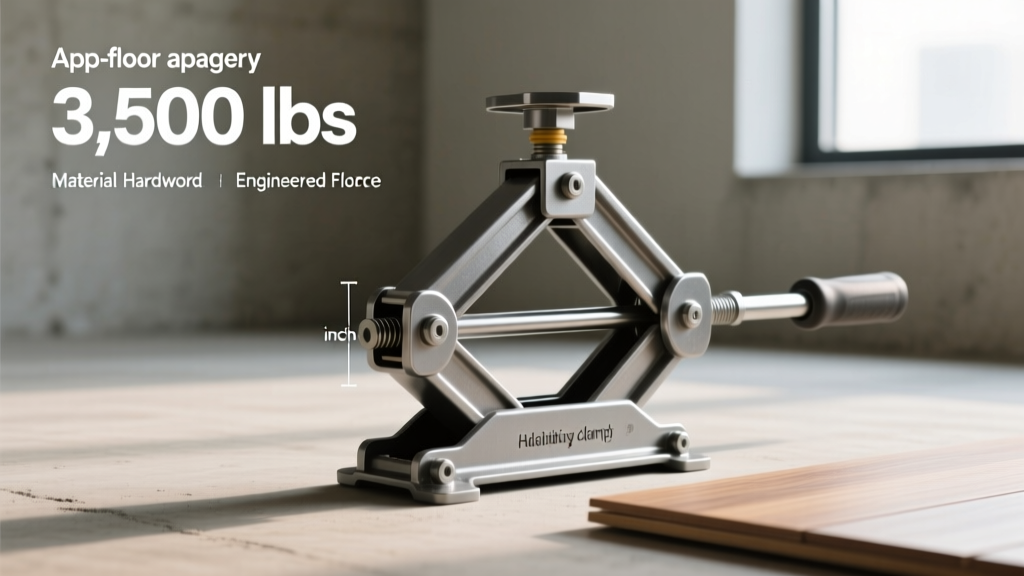
The Mechanics of a Flooring Jack: Beyond the Pull Bar
While traditional pull bars and tapping blocks rely on blunt impact force, a mechanical flooring jack utilizes continuous, controlled lateral pressure to seat tongue-and-groove and click-lock flooring systems. As flooring tolerances have tightened to sub-millimeter precision in modern manufacturing, the specifications of the flooring jack—specifically clamping force, jaw width, and baseplate footprint—have become critical variables in preventing edge crush, locking mechanism failure, and subfloor damage.
Selecting a flooring jack based purely on price or brand recognition often leads to catastrophic installation failures, particularly when working with high-density exotic hardwoods or fragile luxury vinyl plank (LVP) click-lock systems. Understanding the engineering specifications of these tools is mandatory for professional installers and advanced DIYers aiming for zero-gap seams.
Critical Performance Specifications Matrix
Flooring jacks generally fall into three mechanical categories. The following matrix breaks down the performance specifications and ideal use cases for each mechanism type.
| Jack Type | Max Clamping Force | Jaw Width Range | Best Application | Avg. Price Range |
|---|---|---|---|---|
| Ratcheting Board Jack | 800 - 1,500 lbs | 2" - 6" | Solid hardwood, engineered wood, bamboo | $80 - $160 |
| Lever-Action Seam Puller | 400 - 700 lbs | 10" - 16" | LVP, WPC, SPC rigid core click-lock | $120 - $250 |
| Pneumatic Flooring Assist | 1,000 - 2,000+ lbs | Adjustable / Custom | High-Janka exotics, large-format commercial | $400 - $800+ |
Jaw Width and Edge Protection: The LVP vs. Hardwood Divide
The most frequently misunderstood specification on a flooring jack is the jaw width. The width of the clamping jaw directly dictates the Pounds per Square Inch (PSI) exerted on the flooring edge. This calculation is the difference between a perfectly seated seam and a destroyed locking mechanism.
The Physics of Edge Crush
If a ratcheting flooring jack generates 1,000 lbs of clamping force and features a narrow 4-inch jaw (assuming a 1-inch contact depth), the contact area is 4 square inches. This results in 250 PSI of concentrated lateral force. While solid oak can easily withstand this pressure, modern LVP and SPC (Stone Plastic Composite) click-lock mechanisms—particularly 5G drop-lock systems—will fracture or deform under pressures exceeding 150 PSI.
According to guidelines published by the Resilient Floor Covering Institute (RFCI), damaging the microscopic milled edges of an LVP locking system voids most manufacturer warranties regarding moisture infiltration. When installing rigid core vinyl, always use a lever-action seam puller with a minimum 12-inch jaw width to distribute the clamping force below 80 PSI, or use a sacrificial MDF block between the jack jaw and the plank edge.
Clamping Force Requirements by Material Density
Not all flooring materials require the same lateral force to achieve a tight seam. The required clamping force is heavily dictated by the Janka hardness rating of the wood species, the milling tolerance of the board, and the ambient humidity levels during installation.
- Low-Density Engineered & Pine (Janka < 1,000): Requires 300 - 500 lbs of clamping force. Excessive force will cause the softer wood fibers to compress and permanently dent, leading to visible seam ridges once the wood acclimates and expands.
- Standard Domestic Hardwoods (Oak, Maple, Hickory | Janka 1,200 - 1,800): Requires 600 - 1,000 lbs. The National Wood Flooring Association (NWFA) notes that seasonal drying can cause slight board shrinkage, requiring higher mechanical force to pull boards tightly together during winter installations before face-nailing.
- Exotic Hardwoods & Strand Woven Bamboo (Janka > 2,000): Requires 1,200 - 1,800+ lbs. These materials possess extreme rigidity. If the subfloor has even a 1/16-inch variance in flatness, a high-tonnage flooring jack is required to force the boards into the same plane while the adhesive or fasteners set.
Baseplate Footprint and Subfloor Compatibility
A flooring jack pushes against the subfloor to generate lateral leverage. If the baseplate footprint is too small, the tool will act as a hydraulic press, denting plywood, OSB, or crushing concrete screeds.
For standard 3/4-inch tongue-and-groove installations over 5/8-inch plywood, a baseplate measuring at least 4x6 inches is required to distribute the downward leverage force. When working over softer substrates like radiant heat sleeper systems or acoustic underlayment mats, installers must utilize jacks with oversized 8x10 inch baseplates, or place a 1/2-inch steel spreader plate beneath the jack to prevent localized subfloor compression.
Troubleshooting Common Jack Failures and Edge Cases
Even with correctly specified tools, operational errors and mechanical wear can lead to installation defects. Use this diagnostic framework to identify and resolve flooring jack issues on the job site.
Symptom: The jack slips off the board edge under high tension.
- Cause A: Worn TPE (Thermoplastic Elastomer) grip pads on the jaw. Over time, sawdust and polyurethane finish build up on the rubber, reducing the coefficient of friction.
- Fix A: Clean the jaw pads with isopropyl alcohol. If the vulcanized rubber is glazed or torn, replace the pads immediately. Do not rely on bare metal jaws.
- Cause B: Incorrect micrometer depth stop setting. If the jaw is set too high, it catches the tongue rather than the structural shoulder of the groove.
- Fix B: Calibrate the depth stop to engage exactly 1/8-inch below the wear layer surface, ensuring the force is applied to the thickest part of the milling profile.
Symptom: The board edge splinters or crushes despite using the correct jaw width.
- Cause: End-grain vulnerability on short boards or cuts. The end-grain of solid hardwood lacks the lateral shear strength of the long-grain edge.
- Fix: Never apply a flooring jack directly to the end-grain of a board to pull it laterally. Always apply the jack to the long edge. If you must tighten an end-joint, use a specialized end-joint puller with a 90-degree hook profile, or utilize a strap clamp anchored to the opposite wall.
Symptom: The locking mechanism clicks, but a hairline gap remains visible.
- Cause: Debris in the groove or a micro-fracture in the LVP click-lock extrusion caused by an initial impact from a tapping block before the jack was applied.
- Fix: Release the jack tension, vacuum the groove with a soft-brush attachment, and inspect the extrusion with a magnifying glass. If the SPC core is chipped, the board must be discarded. Re-engage the jack slowly, watching the seam close uniformly from end to end.
Final Specification Checklist for Procurement
Before purchasing or deploying a flooring jack for a commercial or high-end residential project, verify the following specifications on the tool's data sheet:
- Maximum Tonnage: Ensure it exceeds the required lateral force for your specific material's Janka rating by at least 20%.
- Jaw Material: Must feature replaceable, non-marking TPE or vulcanized rubber pads. Bare steel or hard plastic jaws are unacceptable for pre-finished flooring.
- Leverage Ratio: Look for a minimum 4:1 mechanical advantage ratio on lever-action models to reduce installer fatigue during multi-day installations.
- Baseplate Dimensions: Verify the surface area is adequate for your specific subfloor material to prevent structural indentation.